Tel: +86-532-83130887 Email: eiffel@qdhaijia.net

Views: 0 Author: Site Editor Publish Time: 2025-12-09 Origin: Site
Are you looking to speed up your textile production while maintaining high-quality standards? The demand for faster, more efficient fabric manufacturing is pushing companies to seek advanced solutions. Enter the air jet machine—a powerful tool revolutionizing the weaving process.
In this article, we’ll discuss the best air jet machines for textile manufacturing. You’ll learn about their performance, key features, and why they’re becoming the go-to choice for manufacturers worldwide.
An air jet loom is a shuttleless weaving machine that uses compressed air to propel the weft yarn across the warp threads. This eliminates the need for a shuttle, which is traditionally used to carry the weft yarn back and forth through the shed formed by the warp threads. Instead, air jets are directed through the shed, carrying the weft through at high speed. This innovative system drastically improves production speeds and reduces mechanical complexity.
The main advantage of this system is that it allows for faster production speeds, greater flexibility in fabric types, and reduced wear on the yarn. Traditional looms, such as rapier looms, require more mechanical parts and are often slower due to the back-and-forth motion of the shuttle. In comparison, air jet looms provide a more streamlined, efficient alternative, allowing manufacturers to significantly increase productivity while also enhancing fabric quality.
Air jet looms have evolved significantly over the past few decades. Early models were slower and had more limitations in terms of yarn types and fabric production. However, with advancements in technology, modern air jet looms can operate at speeds of up to 1,100 picks per minute (ppm) and can handle a wide variety of yarn types and fabric designs. These machines have greatly expanded the possibilities for fabric production, allowing manufacturers to meet the growing demand for high-quality textiles at a faster pace.
Today, air jet looms are favored for their speed, versatility, and efficiency. With ongoing technological improvements, they continue to outperform traditional machines, particularly in areas such as energy consumption, ease of maintenance, and the ability to produce a broader range of fabric types. These advancements make air jet looms a long-term investment for manufacturers looking to keep up with the ever-evolving textile industry.
When compared to other types of weaving machines, such as rapier and projectile looms, air jet looms offer several key advantages. The primary benefit is speed—air jet looms can weave fabric much faster than traditional looms. This is due to the air propulsion system, which allows for continuous and high-speed yarn insertion, creating a smooth and efficient weaving process.
Additionally, air jet looms are more adaptable than traditional looms, allowing them to handle a wider variety of yarn types, from lightweight silks to heavy denims. This versatility makes air jet looms suitable for a broader range of fabric types, making them an ideal choice for manufacturers who need flexibility in their production lines. While rapier looms are more suited for specific yarns and slower production rates, air jet looms allow for greater variety and higher production output. Water jet looms, while effective for specific materials like silk, are limited by the need for water and may not be as efficient with all yarn types as air jet looms.
Air jet looms are designed for high-speed production, with some models achieving speeds of over 1,000 picks per minute. This high speed enables manufacturers to meet increasing demand for textile production without sacrificing quality. The advanced air propulsion system reduces friction, which in turn decreases yarn breakage, resulting in less downtime during production cycles and a more stable production process.
In addition to speed, air jet looms are more energy-efficient than traditional looms. They use compressed air to propel the yarn, which consumes less power compared to the mechanical systems used in older loom models. This energy efficiency allows manufacturers to reduce operational costs while maintaining high levels of output, making air jet looms a cost-effective solution for large-scale textile production.
One of the standout features of air jet looms is their versatility. These machines are capable of weaving a wide range of fabrics, from delicate silks and fine cotton to heavy-duty denims and specialty fabrics. The adjustable air nozzles allow manufacturers to fine-tune the machine to handle different yarn types and fabric densities, making air jet looms suitable for various textile applications, whether it’s creating lightweight, breathable fabrics or heavy-duty materials.
Air jet looms are also capable of producing complex fabric patterns, such as jacquard and plaid, thanks to their ability to control the weft insertion with precision. The flexibility in fabric production makes them a great choice for textile manufacturers who need to create both simple and intricate designs in large quantities.
Yarn breakage is a common challenge in traditional weaving methods, especially when using high-speed machines. However, air jet looms significantly reduce the risk of yarn breakage by using compressed air to propel the weft yarn smoothly through the warp threads. This system minimizes friction between the yarn and mechanical components, leading to fewer disruptions in the weaving process. As a result, air jet looms improve operational stability and reduce the need for frequent maintenance, helping manufacturers maintain consistent productivity.
By reducing yarn breakage, air jet looms contribute to a more efficient production process. Fewer interruptions during the weaving cycle allow for a higher overall output, ultimately leading to a more cost-effective production environment.
Air jet looms are highly energy-efficient compared to traditional looms. Since they use compressed air to propel the yarn, they require less power than machines with more mechanical parts. This results in a lower overall energy consumption, which not only reduces operating costs but also helps manufacturers reduce their carbon footprint.
In addition to being energy-efficient, air jet looms produce less waste and are easier to maintain, which further contributes to their eco-friendly appeal. As the textile industry faces increasing pressure to adopt sustainable practices, air jet looms provide a solution that meets environmental standards while maintaining high production levels.
The HA-9020N Series is a reliable air jet loom designed for home textile applications, particularly for cotton fabric production. This model is capable of handling medium to heavy yarns and is well-suited for mass production of custom textile designs. It features double nozzles that enhance the speed and efficiency of yarn insertion, ensuring both high output and excellent fabric quality.
Why It's Recommended: This loom is ideal for manufacturers focused on producing large volumes of cotton-based fabrics. It offers excellent weaving performance and maintains energy efficiency, making it a great option for large-scale production environments.

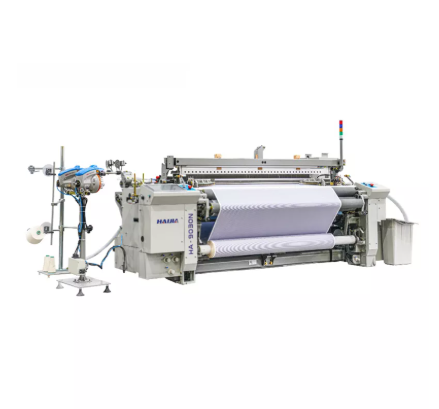
The HA-9030N Series features a sub-nozzle angle design that allows for precise control over the weft insertion process. This makes it an ideal choice for fine fabrics and intricate patterns, such as jacquard weaves. The flexibility of the nozzle angle settings ensures that the loom can adapt to different fabric types, from delicate silks to durable denim.
Why It's Recommended: Its adaptability and ability to create intricate patterns make this loom a top choice for manufacturers producing a wide variety of fabric styles, including decorative textiles. It’s particularly suited for businesses that require high customization in their production lines.
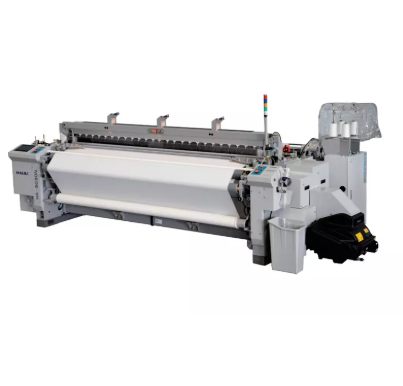
The High-Speed HA-9030N is designed for high-demand textile production. This machine features an advanced sub-nozzle angle system, allowing it to achieve speeds of up to 1,100 picks per minute, making it ideal for large-scale manufacturers that need to meet high-volume demands without compromising fabric quality.
Why It's Recommended: Perfect for high-speed, large-scale production, this model offers superior performance and flexibility, making it an excellent option for manufacturers who prioritize fast production cycles while maintaining fabric integrity.
| Model | Fabric Type | Speed (Picks per Minute) | Key Features | Recommended For |
|---|---|---|---|---|
| HA-9020N Series | Cotton, Medium-Heavy | Up to 800 ppm | Double nozzles, mass production | Large-scale cotton fabric production |
| HA-9030N Series Sub-Nozzle Angle | Fine fabrics, Jacquard | Up to 1,000 ppm | Adjustable nozzle angle, intricate patterns | High customization, delicate designs |
| High-Speed HA-9030N Series | Various fabrics | Up to 1,100 ppm | Sub-nozzle angle, high-speed production | Large-scale, high-volume production |
| Fabric Type | Recommended Loom Model | Key Features |
|---|---|---|
| Cotton | HA-9020N Series | Best for medium to heavy yarns, ideal for cotton production |
| Silk | HA-9030N Series Sub-Nozzle Angle | Suitable for fine fabrics, adjustable nozzle for delicate yarns |
| Denim | High-Speed HA-9030N Series | High-speed production, ideal for heavy-duty fabrics |
| Jacquard | HA-9030N Series Sub-Nozzle Angle | Produces intricate patterns with precision |
When selecting an air jet loom, consider the types of fabrics you plan to produce and the required production speed. Air jet looms are highly versatile, but some models are better suited for fine fabrics, while others excel at handling heavy-duty yarns. Speed is also an essential factor—choose a machine that matches your production volume and time requirements. A loom designed for higher speeds is crucial for large-scale production, while a more adaptable model may be necessary for smaller, more specialized runs.
While air jet looms typically require a higher initial investment compared to traditional looms, their higher speed and efficiency lead to faster returns on investment. The total cost of ownership includes not only the initial purchase price but also ongoing operating costs, such as energy consumption, maintenance, and the potential for higher output. The ROI of an air jet loom is typically much faster than that of slower, more traditional machines, making it a long-term investment in your production line.
| Machine Type | Initial Investment | Annual Operational Costs | Output (Units/Year) | ROI (Months) |
|---|---|---|---|---|
| Air Jet Loom | $500,000 | $50,000 | 500,000 units | 24 months |
| Traditional Loom | $300,000 | $75,000 | 350,000 units | 36 months |
Maintenance is a crucial consideration when selecting an air jet loom. Machines with fewer moving parts and more automated systems typically require less maintenance, which can save you time and money in the long run. Additionally, look for a manufacturer that offers solid after-sales support, including readily available replacement parts and technical assistance. A reputable brand with reliable support ensures that your air jet loom will continue to operate smoothly for years.
As technology continues to improve, air jet looms are becoming even more efficient. Future innovations may include increased weaving speeds, better energy efficiency, and even greater precision in weft insertion. These advancements will help manufacturers increase productivity while reducing energy costs and improving the quality of the final fabric.
With sustainability becoming a key focus in the textile industry, air jet looms align perfectly with eco-friendly practices. Their reduced energy consumption and minimal waste production contribute to a greener manufacturing process. Manufacturers looking to reduce their environmental impact can rely on air jet looms to meet sustainability goals while still producing high-quality textiles.
The demand for air jet looms is expected to continue to grow, driven by increasing production needs and the push for sustainable manufacturing practices. As technology continues to improve, air jet looms will remain a key player in the textile industry, offering a combination of high efficiency, flexibility, and low environmental impact.
Air jet looms are essential for textile manufacturers aiming to boost production speed, reduce costs, and enhance fabric quality. Whether you need to produce large volumes of cotton fabrics or intricate jacquard designs, there is an air jet loom model to meet your needs. Consider factors like production requirements, budget, and fabric types to select the best machine for your business.
Haijia offers a range of air jet looms designed to deliver value through speed, efficiency, and versatility, ensuring optimal performance across various textile applications.
A: An air jet machine is a shuttleless loom that uses compressed air to propel the weft yarn through the warp threads, enabling faster and more efficient fabric production.
A: Air jet machines increase production speed by using air propulsion, allowing for high-speed yarn insertion and minimizing downtime due to reduced yarn breakage.
A: Air jet machines are ideal for textile manufacturing as they offer faster production speeds, versatility in fabric types, and reduced energy consumption, improving efficiency.
A: Air jet machines can handle a wide range of fabrics, from lightweight silks to heavy-duty denims, making them highly versatile for various textile applications.
A: The cost of an air jet machine depends on its model and capabilities, with prices generally higher than traditional looms due to their advanced technology and efficiency.