Tel: +86-532-83130887 Email: eiffel@qdhaijia.net

Views: 0 Author: Site Editor Publish Time: 2026-04-20 Origin: Site
Why does water jet loom price in India vary so much across suppliers and models, and how can buyers avoid overpaying or choosing the wrong machine for their production needs? Many textile manufacturers struggle to understand what really drives pricing differences and how configuration, speed, and fabric type all play a role. In this article, you will learn what affects water jet loom pricing, how to compare machines, and how to choose the right solution for efficient and cost-effective production.
The price of a water jet loom in India does not follow a single fixed standard. It depends heavily on machine configuration, production scale, and fabric requirements. Buyers often find that entry-level machines are suitable for basic polyester fabrics, while high-end models are designed for demanding applications like fine denier or wide-width textiles. Because of this, the price range can vary significantly across suppliers and regions.
To make this clearer, here is a simplified comparison of typical pricing levels based on configuration:
| Machine Level | Typical Features | Price Range (USD) |
|---|---|---|
| Entry-level | Basic speed, narrow width, single nozzle | 9,000 – 12,000 |
| Mid-range | Stable structure, wider width, improved automation | 12,000 – 20,000 |
| High-end | High speed, multi-nozzle, advanced control systems | 20,000 – 30,000+ |
When browsing Indian platforms, you will notice that many listings show “Ask for Price” instead of a number. This is not a lack of transparency. It reflects how customized water jet loom machines actually are. Each buyer may require a different setup, so suppliers prefer to quote based on real production conditions.
Here are the main reasons behind this pricing approach:
Machine specifications vary significantly
Each water jet loom can differ in width, speed, and nozzle system. These variations directly change the cost structure. A wider loom or higher RPM machine will naturally increase the price.
Fabric requirements influence configuration
Different fabrics need different tension control, weaving speed, and stability. A machine for lightweight polyester is not the same as one for dense technical fabrics.
Automation level changes total cost
Fully automatic systems include electronic let-off, take-up, and monitoring. These features improve efficiency but increase the initial investment.
Instead of a fixed price, suppliers usually provide a tailored quotation. This helps buyers avoid overpaying for unnecessary features or under-specifying their equipment.
Buyers in India often compare new machines with used or refurbished ones. The price gap can be attractive, but the decision should go beyond the initial cost. A lower purchase price does not always mean lower overall investment.
Here is a structured comparison to help understand the difference:
| Category | New Water Jet Loom | Used / Refurbished Loom |
|---|---|---|
| Initial Cost | Higher upfront investment | Lower purchase price |
| Performance | Stable, high-speed, optimized efficiency | May vary depending on condition |
| Lifespan | Longer operational life | Shorter remaining lifespan |
| Maintenance | Lower in early years | Higher and less predictable |
| Support | Full technical and after-sales support | Limited or no official support |
Location plays a surprisingly important role in the water jet loom market in India. Cities like Surat are major textile production hubs, and they host a large number of loom suppliers, dealers, and service providers. This creates a more competitive and dynamic pricing environment.
Several practical effects can be observed:
Higher supplier concentration
More suppliers in one region means buyers can compare multiple quotations quickly. This often leads to more competitive pricing and better negotiation opportunities.
Easier access to spare parts and service
In textile hubs, spare parts and technicians are more readily available. This reduces maintenance delays and operational risk.
Faster installation and support
Local availability of technical teams speeds up installation and commissioning. This is important for factories aiming to start production quickly.
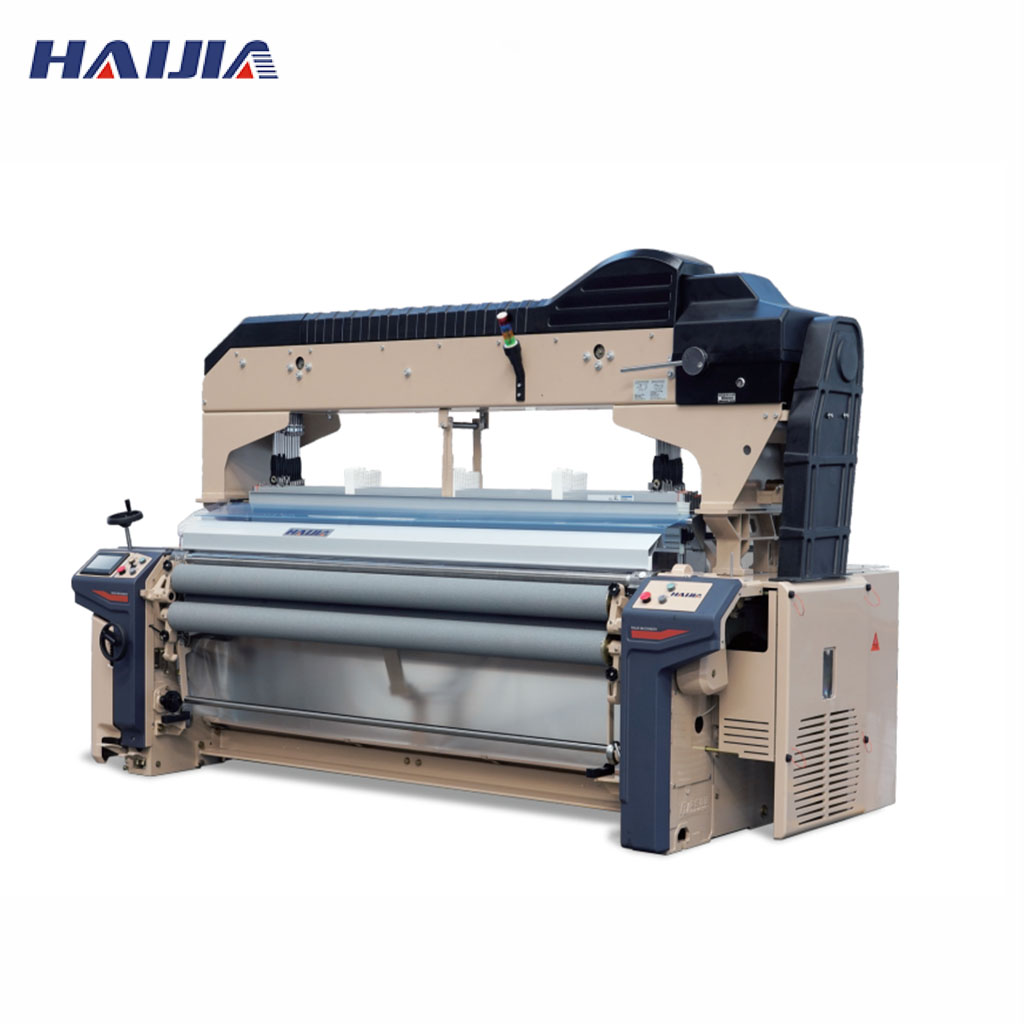
The core structure of a water jet loom plays a major role in pricing. Machine width directly affects how much fabric can be produced in one run, while speed determines output efficiency. A wider loom or a higher RPM system requires stronger components and more precise engineering, which increases manufacturing cost.
In real production, buyers often balance these specifications based on their factory goals. A small workshop may choose a narrower machine to reduce investment, while a large-scale manufacturer prefers wider and faster machines to maximize output.
Here are the key technical factors that influence price:
Reed width range
Wider machines allow broader fabric production. They are suitable for home textiles or industrial fabrics, but require stronger frames and higher investment.
Operating speed (RPM)
Higher speed increases production efficiency. However, it also requires better balancing systems and vibration control, which adds to cost.
Frame structure and stability
A rigid structure ensures long-term stability and reduces maintenance. High-quality casting and processing technology are essential for consistent performance.
Control systems
Advanced control systems improve weaving precision. They help maintain fabric quality and reduce defects, especially in high-speed operations.
A manufacturer like Haijia, which focuses on structural stability and high-speed performance, typically integrates these features into different machine models. This allows buyers to select configurations that match both their budget and production targets.
The weft insertion system is one of the most critical components of a water jet loom. It directly affects fabric quality, weaving speed, and machine efficiency. Machines with more advanced systems naturally come at a higher price.
To better understand this, consider the differences in configuration:
| Configuration Type | Key Features | Impact on Price & Performance |
|---|---|---|
| Single nozzle | Basic weft insertion, lower speed | Lower cost, suitable for simple fabrics |
| Multi-nozzle system | Faster insertion, better fabric consistency | Higher cost, improved productivity |
| Advanced pump system | Stable water pressure, efficient operation | Higher cost, reduced defects |
In practice, multi-nozzle systems are often used for higher-end production. They allow smoother yarn insertion and reduce weaving defects. Efficient pump systems also ensure stable water flow, which is essential for maintaining consistent fabric quality.
These upgrades increase the initial price, but they also improve output and reduce waste. For many factories, this trade-off is worth it.
Automation level is another major factor that affects the price of a water jet loom. Machines range from basic manual setups to fully automatic systems with integrated control technologies. The more automated the machine, the higher the upfront cost.
However, automation brings long-term benefits that many buyers consider essential:
Reduced labor dependency
Automated systems handle tasks such as tension control and lubrication. This lowers the need for manual intervention.
Improved production consistency
Electronic control systems maintain stable weaving conditions. This reduces errors and improves fabric quality.
Real-time monitoring and adjustment
Advanced machines can track performance and detect issues early. This helps avoid downtime and production loss.
The type of fabric being produced has a direct impact on the required machine configuration, and therefore the final price. A water jet loom is mainly used for synthetic and blended fabrics, but different materials still demand different performance levels.
For example, lightweight polyester fabrics often require high-speed weaving to achieve large output volumes. On the other hand, denser or more complex fabrics may need stronger machine structures and more precise control systems.
Here are common production considerations:
Fabric density and yarn type
Fine yarns require stable tension and precise insertion. This often leads to higher specification machines.
Production volume
High-volume production requires faster machines with better durability. This increases both performance requirements and price.
Fabric application
Applications such as lining, home textiles, or industrial fabrics each have different technical needs. These differences affect machine selection.
Quality requirements
Higher quality standards demand advanced control systems and stable operation. This raises the overall investment.
A supplier like Haijia, with experience in developing solutions for synthetic and blended fiber weaving, typically offers multiple configurations to meet these varied requirements. This is why two machines that look similar may still have very different prices, depending on how they are configured for specific production goals.
When evaluating a water jet loom, power consumption often gets overlooked at first. However, it plays a major role in long-term operating cost. Machines that run at high speed usually consume more energy, but advanced designs can reduce unnecessary power loss. So, it is not only about how much energy a machine uses, but how efficiently it converts that energy into production output.
Factories often notice differences after several months of operation. A slightly higher upfront investment in an energy-efficient system can significantly lower electricity bills over time. This is especially important in India, where power cost can vary across regions.
Here are the main energy-related factors buyers should consider:
Motor type and efficiency
Modern direct-drive motors reduce energy loss during transmission. They also provide smoother operation and better speed control, which improves weaving consistency.
Speed vs energy balance
High-speed machines increase output, but they also consume more electricity. A well-designed machine keeps a balance between speed and energy use.
Control system optimization
Advanced control systems adjust machine performance in real time. This helps avoid unnecessary energy consumption during idle or low-load conditions.
A water jet loom uses water as a key medium for weft insertion, so water consumption becomes a critical factor in cost evaluation. In daily operation, water usage can be significant, especially in continuous production environments. Without proper management, this can increase both cost and environmental pressure.
Instead of focusing only on consumption, many factories now consider water recycling systems. These systems allow water to be filtered and reused, reducing waste and lowering overall operating expenses. It also helps meet environmental regulations, which are becoming stricter in many regions.
Key considerations include:
Daily water consumption
A machine running continuously can consume several tons of water per day. This depends on machine speed and configuration.
Water treatment system
Filtration and recycling systems require initial investment. However, they reduce long-term water usage and disposal costs.
Sustainability requirements
Many textile producers aim to reduce environmental impact. Water recycling supports both cost savings and sustainable production.
Maintenance is another key factor when evaluating the real cost of a water jet loom. A machine may seem affordable at first, but if it requires frequent repairs or has limited spare parts availability, the total cost can increase quickly over time.
In practical scenarios, stable machine structure and reliable components make a big difference. Machines designed with strong frames and precise manufacturing processes tend to run longer without major issues. This reduces downtime and improves production continuity.
Buyers should pay attention to several aspects:
Spare parts availability
Easy access to parts reduces downtime. It also ensures that repairs can be completed quickly without interrupting production.
Service support
Technical support, including remote diagnostics and on-site service, helps solve problems faster. This is especially important for large production lines.
Machine durability
High-quality materials and precision manufacturing improve lifespan. They reduce the need for frequent maintenance.
Choosing the right water jet loom starts from your fabric, not the machine itself. Many buyers focus on price first, but experienced manufacturers usually begin by analyzing what they plan to produce. It helps avoid overspending on features they do not actually need.
Different fabrics demand different machine setups. Lightweight polyester fabrics often require high-speed operation, while denser fabrics need stronger frame support and stable tension control. If the configuration does not match the production goal, efficiency drops quickly.
Here are key points to evaluate before selecting a configuration:
Fabric type and yarn characteristics
Fine yarn needs precise control and stable insertion. It requires better tension systems and higher machine accuracy.
Production volume and speed expectations
High-output factories benefit from faster machines. Lower-volume operations may prefer stable, mid-speed models.
Machine width selection
Wider machines support larger fabric formats. However, they increase cost and space requirements in the workshop.
Avoiding over-specification
Some buyers choose the highest configuration available. It often leads to unnecessary investment without proportional return.
Once production needs are clear, the next step is comparing different water jet loom models. Many machines may look similar at first glance, but their performance and long-term value can vary significantly.
A structured comparison helps avoid confusion. Instead of focusing only on price, buyers should evaluate how each model performs under real working conditions. This includes speed stability, durability, and adaptability to different fabrics.
When comparing models, consider these factors:
Speed consistency
It is not only about maximum RPM. Stable operation at working speed is more important for consistent fabric quality.
Structural durability
A strong frame reduces vibration and improves machine lifespan. It also lowers maintenance frequency.
Control system features
Advanced systems improve accuracy and reduce manual adjustments. This helps maintain uniform production.
Adaptability
Some machines can handle multiple fabric types. This flexibility adds value over time.
The supplier behind the water jet loom is just as important as the machine itself. A reliable supplier ensures smooth installation, quick troubleshooting, and consistent long-term performance. Without proper support, even a high-quality machine can face operational challenges.
Buyers should look beyond product specifications and evaluate the supplier’s overall capability. Experience in the textile machinery industry often reflects in machine design, quality control, and service systems.
Key aspects to consider include:
Industry experience
Suppliers with long-term experience understand textile production needs better. They can recommend suitable configurations more accurately.
Technical support capability
Fast response to technical issues reduces downtime. Remote diagnostics and on-site service improve efficiency.
Spare parts and service network
Easy access to spare parts ensures smooth operation. Delays in parts supply can disrupt production schedules.
Integration of R&D and manufacturing
Suppliers that control design and production processes often deliver more stable and reliable machines.
Water jet loom price in India varies widely. It depends on configuration, fabric type, and automation level. Buyers should focus on total cost, not just purchase price. Haijia offers reliable water jet loom solutions, combining stable performance, flexible configurations, and strong technical support for efficient textile production.
A: A water jet loom price varies by configuration, usually from basic to high-end setups.
A: Water jet loom cost depends on width, speed, and automation level.
A: Match the water jet loom to fabric type and production needs.
A: A high-speed water jet loom improves output and long-term efficiency.
A: Water jet loom costs include energy, water use, and maintenance.