Tel: +86-532-83130887 Email: eiffel@qdhaijia.net

Views: 0 Author: Site Editor Publish Time: 2026-07-16 Origin: Site
Selecting the right weft insertion technology dictates a textile facility’s material capabilities, energy overhead, and long-term profitability. The choice between pneumatic and hydro-traction systems is a foundational infrastructure decision. Selecting the wrong machinery leads to bottlenecked production, severe utility overhead, or the inability to pivot to new fabric markets due to strict material incompatibility. Facility managers must evaluate these machines based on physical shedding limits and fiber properties. Misalignment here causes severe production failures. Running hydrophilic yarns through a hydro-traction system destroys the fabric. Conversely, using pneumatic insertion for simple synthetics often wastes massive amounts of compressed air energy. We evaluate these two dominant weaving technologies across mechanical principles, weave structure suitability, and production scaling capabilities to help you optimize your mill floor.
Material Constraints Define the Baseline: Water jet looms are strictly limited to hydrophobic (synthetic) fibers like polyester and nylon, whereas air jet looms offer broad versatility across natural fibers, synthetics, and complex blends.
Energy vs. Resource Trade-offs: Air jet looms require substantial electrical power for pneumatic compression, while water jet looms incur lower electricity costs but demand rigorous water purification and effluent treatment infrastructure.
Weft Insertion Physics: Water jet insertion provides higher frictional traction force with lower diffusivity, making it highly efficient for specific synthetics, whereas air jet insertion requires precise nozzle management to maintain tension across wider sheds.
Weft Selection & Versatility: Air jet looms support multi-color weft insertion (up to 8 colors) and complex yarn variations, whereas water jet looms are typically restricted to 1–4 colors due to water management constraints.
Production Agility: Air jet looms generally support faster style changeovers and require fewer attendants, yielding higher overall installed efficiency (typically 70–84%) in multi-style weaving environments.
Table of Contents
Production managers must first understand how the physical transfer of the weft yarn impacts tension, speed, and fabric integrity. The fundamental difference lies in the propulsion medium. One uses compressed atmospheric air, while the other relies on highly pressurized water streams. Understanding these mechanics helps prevent costly downtime and quality defects on the weaving floor.
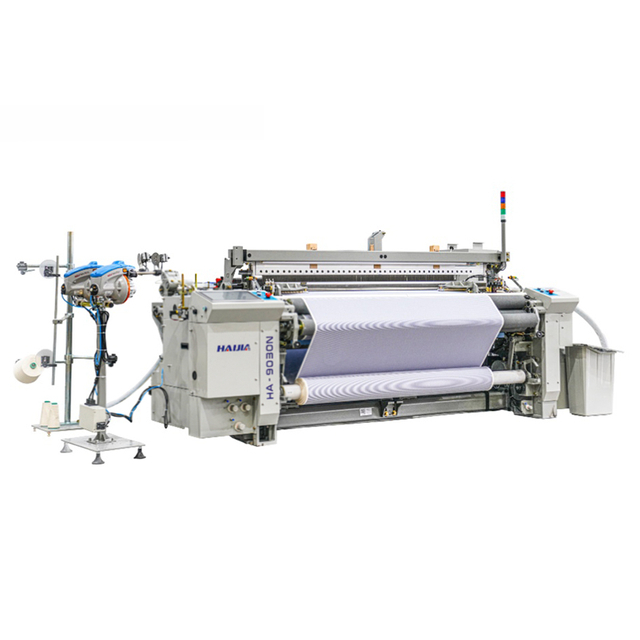
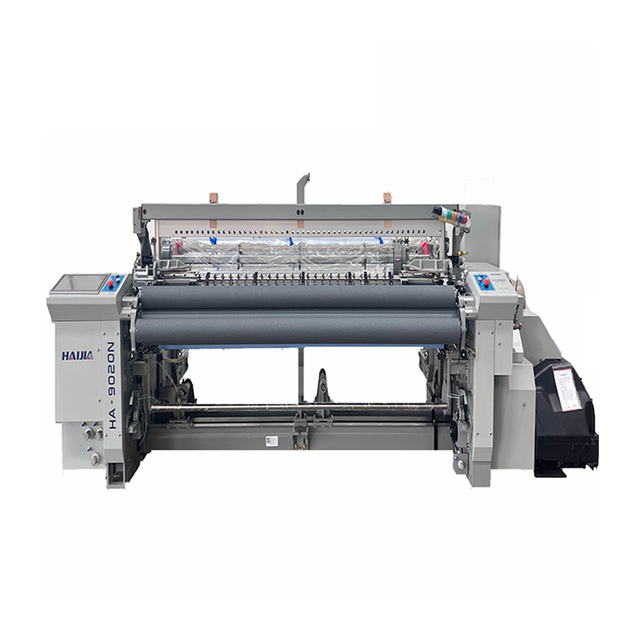
Pneumatic weft insertion relies on a highly synchronized system of nozzles. The main nozzle initially accelerates the yarn into the shed. Relay nozzles, often called sub-nozzles, fire in sequence to carry the yarn across the reed width. A specialized profile reed acts as a channel to guide the air and the yarn, preventing the air stream from dissipating too rapidly. You need precise timing to make this work efficiently.
Air diffusivity presents a unique mechanical challenge. Because air expands rapidly, maintaining yarn tension across wide loom widths requires precise electronic pneumatic controls. Modern systems adjust valve timing in milliseconds to ensure the yarn remains taut. This prevents loops and mispicks. The entire operation demands a continuous, high-pressure, clean, and dry air supply. Moisture or oil in the air lines will clog the relay nozzles and cause immediate machine stops. An air jet loom requires rigorous maintenance of these pneumatic pathways.
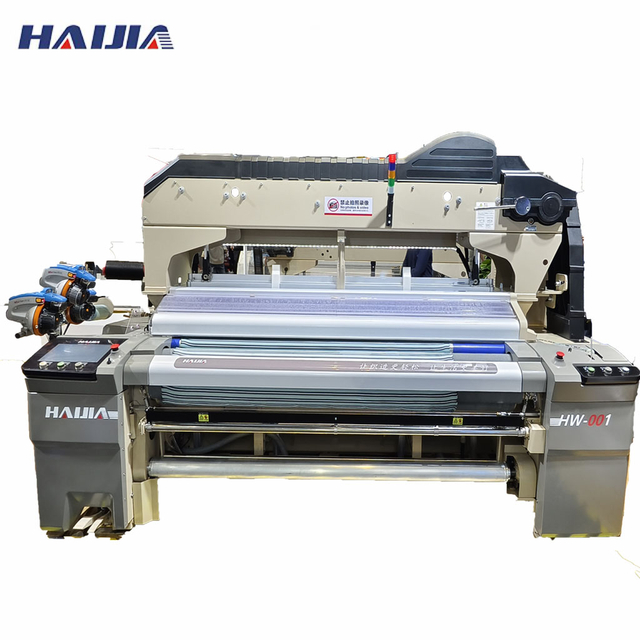
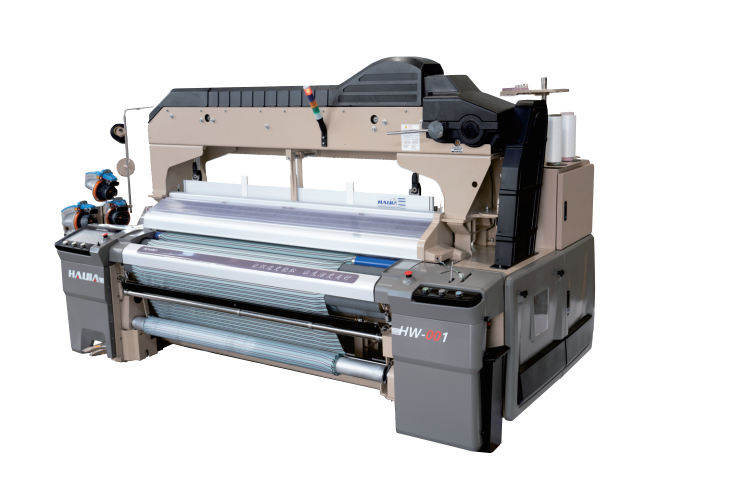
Hydro-traction utilizes a highly pressurized jet of water emitted from a single pump nozzle. This water jet carries the weft yarn through the open warp shed. The physics here differ significantly from pneumatic systems. Water possesses high mass and cohesion, meaning it does not dissipate like air. This cohesive water stream travels across the loom width without the need for relay nozzles.
The frictional traction force of water on synthetic yarns is exceptionally high. This superior traction results in highly stable insertion with minimal diffusivity. The mechanical simplicity of the water jet nozzle setup is a major advantage. It operates efficiently with a single pump mechanism. However, the system relies entirely on the yarn's ability to repel water, making it highly specialized for specific synthetic filaments. A water jet loom excels in this specific application.
Weft yarn selection capabilities highlight a stark contrast between the two technologies. Pneumatic systems offer superior versatility for complex fabric patterns. Air jet systems utilize programmable multi-nozzle configurations to handle up to eight different colors or yarn types in a single pattern. You can mix spun, filament, and textured yarns seamlessly.
In contrast, hydro-traction systems face severe mechanical constraints regarding weft selection. Managing multiple high-pressure water pumps and precise nozzle spray angles in a confined space is difficult. Therefore, these machines are typically restricted to one to four weft colors. This limitation restricts them primarily to solid colors or simple striped patterns.
Mapping specific loom features to fabric outcomes dictates what materials can actually be woven on the floor. Choosing between these systems comes down to fiber chemistry and weave complexity. You must match the machine to the yarn properties.
Pneumatic insertion is mandatory for hydrophilic materials. Cotton, wool, viscose, and linen absorb moisture rapidly. If you attempt to weave these on a hydro-traction machine, the fibers will swell, snap, and rot. Air jets handle varying yarn counts and uneven spun yarns effectively. The adjustable air pressure compensates for inconsistencies in natural fibers without compromising the final weave structure.
Blended yarns also require pneumatic handling. Even if a blend contains a high percentage of synthetic fibers, the presence of natural fibers makes hydro-traction unviable. The moisture retention in the natural component will cause immediate quality issues and long-term degradation of the fabric roll.
Hydro-traction machines dominate the production of 100% hydrophobic filament yarns. Polyester, nylon, acetate, and microfibers weave flawlessly under high-pressure water streams. The water actually helps lubricate the synthetic warp yarns, reducing friction and static electricity buildup during high-speed operation.
Attempting to run natural fibers through this process results in severe failure, including mildew, structural degradation, and severe weight distortion. The hydro-traction system is purpose-built for synthetics, maximizing speed and efficiency where moisture absorption is zero.
Different weave structures require different mechanical handling. Plain weaves like taffeta, poplin, and georgette run at extremely high speeds on both machines. However, hydro-traction offers superior efficiency for simple synthetic filament taffetas due to the sheer speed and stability of the water stream.
Twill and satin weaves, such as denim, gabardine, and sateen, require high beat-up force and precise electronic warp tension controls. Pneumatic machines handle these complex, high-density weave structures exceptionally well. They integrate seamlessly with high-speed electronic dobby and jacquard shedding motions for maximum pattern versatility.
Pairing hydro-traction machines with complex shedding motions presents physical limitations. The constant water mist and high operational speeds restrict jacquard applications. Water mist interferes with complex electronic harnesses. Therefore, hydro-traction jacquard setups are usually limited to specific synthetic lining materials and decorative fabrics.
Feature | Pneumatic Insertion | Hydro-Traction Insertion |
|---|---|---|
Primary Material | Natural, Blends, Synthetics | 100% Hydrophobic Synthetics |
Weft Colors | Up to 8 colors | 1 to 4 colors |
Traction Medium | Compressed Air | Pressurized Water |
Relay Nozzles | Required | Not Required |
Shedding Compatibility | Cam, Dobby, Jacquard | Crank, Cam, Limited Dobby |
Evaluating the operational footprint involves looking at the physical infrastructure required to keep these machines running. Both systems demand significant facility modifications, but the nature of those modifications differs entirely.
Hydro-traction machines generally feature a simpler installation process at the machine level. However, they require extensive plumbing networks. You need dedicated water supply lines and drainage channels built directly into the concrete floor of the weaving shed.
Pneumatic machines require massive infrastructure investments in the form of high-capacity industrial air compressors, air dryers, and heavy-duty distribution piping. The compressor room often takes up a significant portion of the facility and requires specialized acoustic dampening and ventilation.
The continuous energy draw required for industrial air compressors is substantial. Generating clean, dry, high-pressure air accounts for a massive portion of the operating energy. You must maintain pneumatic lines, filters, and valves meticulously to prevent pressure drops that cause loom stops.
Leaks in the air system directly translate to wasted electricity. Regular audits of the compressor network are mandatory to maintain efficiency. The air dryers also consume power to ensure no moisture reaches the relay nozzles.
Hydro-traction systems incur high utility costs related to water consumption and processing. You must implement strict requirements for water pre-treatment, including softening and filtration, to prevent nozzle scaling and corrosion. Hard water will destroy the micro-nozzles rapidly.
You also face the environmental footprint of wastewater and effluent treatment systems. These systems are required to recycle water and comply with environmental discharge regulations. Furthermore, you must account for the energy costs and mechanical processes, such as vacuum suction and drying ovens, associated with removing moisture from the fabric roll post-weaving.
Assessing how each technology scales in a high-volume manufacturing environment requires looking at raw output metrics. Loom speed and Weft Insertion Rates (WIR) dictate daily yardage. Both machines operate at exceptionally high RPMs compared to older rapier or projectile machines.
Hydro-traction machines often achieve slightly higher maximum RPMs on simple, narrow-width plain weaves. The cohesive nature of the water jet allows for rapid, continuous firing without the lag of air pressure buildup. This makes them highly efficient for bulk production of standard synthetic fabrics.
Pneumatic machines maintain higher overall installed efficiency in multi-style environments. They require fewer attendants and allow for much faster style changeovers. When weaving wide-width fabrics, pneumatic systems maintain consistent tension better than hydro-traction systems, resulting in fewer machine stops and higher quality fabric rolls.
Scalability depends heavily on facility infrastructure. Expanding a pneumatic weaving shed requires upgrading central air compressors. Expanding a hydro-traction shed requires scaling water filtration and effluent treatment plants. Production managers must align their machine choices with their facility's existing utility strengths.
Selecting the right weaving technology is a strategic decision that directly affects production efficiency, fabric quality, operating costs, and future business growth. By evaluating fiber compatibility, weave structure requirements, utility infrastructure, and long-term production objectives, textile manufacturers can choose the most suitable weaving solution to maximize productivity and maintain a competitive advantage.
Working with an experienced textile machinery manufacturer is equally important for achieving reliable production performance and long-term operational success. Haijia specializes in advanced air jet looms, water jet looms, and customized weaving solutions. With innovative engineering, strict quality control, and comprehensive technical support, we help textile mills around the world improve weaving efficiency, reduce operating costs, and produce high-quality fabrics across a wide range of applications.
Audit your current and projected fabric portfolio to determine the exact ratio of hydrophilic to hydrophobic yarns required for production.
Evaluate your facility's existing infrastructure, specifically assessing the capacity of your central air compressors versus your water filtration and effluent treatment systems.
Standardize your weft insertion technology based on your most profitable fabric lines to minimize style changeover downtime.
Install electronic tension monitoring systems on your existing machines to track mispicks and identify nozzle inefficiencies immediately.
A: No. Cotton is hydrophilic and absorbs water rapidly. Weaving cotton with a water stream causes the yarn to swell, lose tensile strength, and break. It also leads to severe mildew and fabric rot.
A: Compressed air diffuses and loses pressure quickly over a distance. Relay nozzles fire sequentially across the reed width to maintain the air stream's velocity and keep the weft yarn taut.
A: Water jet looms are generally faster and more efficient for simple, narrow-width synthetic fabrics like polyester taffeta due to the high frictional traction of the water stream.
A: Modern air jet looms can handle up to eight different weft colors or yarn types in a single pattern, utilizing programmable multi-nozzle electronic systems.
A: Yes. The water must be strictly softened and filtered. Hard water or particulates will cause scaling, clog the micro-nozzles, and corrode the internal pump mechanisms.
A: Yes. Air jet looms are highly versatile and can weave synthetic fibers effectively, though they may consume more energy than water jet looms for simple synthetic weaves.