Tel: +86-532-83130887 Email: eiffel@qdhaijia.net

Views: 0 Author: Site Editor Publish Time: 2026-04-20 Origin: Site
Why are textile factories upgrading to Air Jet Loom systems now? Demand keeps rising, and production must stay efficient. This article explains key trends and market changes. You will learn how Air Jet Loom technology improves speed, quality, and smart manufacturing.
An Air Jet Loom is a high-speed weaving machine that uses compressed air to insert the weft yarn across the warp. Unlike traditional looms, it does not rely on mechanical carriers like shuttles. It uses controlled air streams, which makes the weaving process faster and more stable. In modern textile production, it plays a key role because it helps mills increase output while keeping fabric quality consistent.
To understand how it works, it helps to break the process into simple steps:
Compressed air pushes the weft yarn through the shed (the space between warp yarns).
Main and relay nozzles guide the yarn across the width of the fabric.
Sensors monitor yarn movement and stop the machine if errors happen.
The beat-up mechanism presses the yarn into place to form the fabric structure.
This system allows the Air Jet Loom to operate at very high speeds while maintaining precise control. It also reduces mechanical friction, which means fewer breakdowns and more stable long-term operation. Machines from Haijia, for example, emphasize optimized nozzle design and stable structure, which helps improve both efficiency and fabric quality in real production environments.
Below is a simplified overview of key components and their roles:
| Component | Function Description | Why It Matters in 2026 |
|---|---|---|
| Main Nozzle | Initiates weft insertion using compressed air | Directly affects speed and air consumption |
| Relay Nozzles | Maintain airflow and guide yarn across the loom | Improves stability for wider fabrics |
| Electronic Control | Monitors yarn movement and machine performance | Supports automation and error detection |
| Beat-up Mechanism | Pushes weft yarn into fabric structure | Ensures fabric density and quality consistency |
Air Jet Loom technology has become widely adopted because it solves several practical problems in textile manufacturing. It improves speed, reduces labor dependency, and supports a wider range of fabric production. In 2026, these advantages are even more important as factories face higher efficiency demands and tighter production timelines.
Here are the main reasons why manufacturers prefer Air Jet Looms:
High-speed production capability
Air Jet Looms can run at much higher speeds than traditional looms. This helps factories increase output without expanding floor space. It also supports large-scale production for global textile demand.
Strong fabric adaptability
They can handle cotton, viscose, and many synthetic yarns. This flexibility allows mills to switch between product types more easily. It is especially useful for home textiles and apparel fabrics.
Stable and consistent weaving quality
Reduced vibration and fewer mechanical parts improve fabric uniformity. This is critical for high-end textile applications where defects are costly.
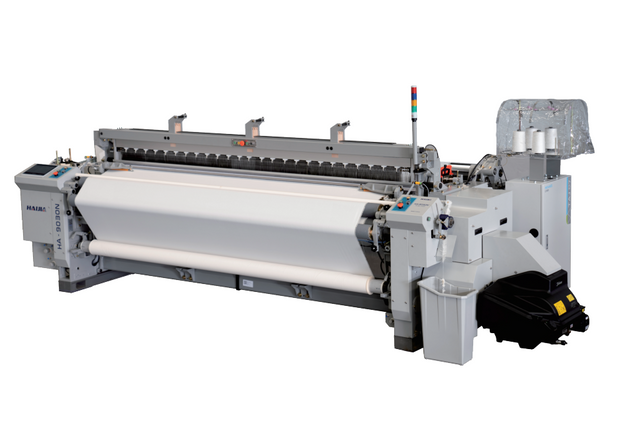
The Air Jet Loom market in 2026 sits at a critical transition point. Textile manufacturers are moving from traditional equipment toward faster, more automated weaving systems. It reflects a broader shift in the textile industry, where efficiency, quality consistency, and digital control matter more than ever. Many mills are replacing older looms to meet higher production standards and tighter delivery timelines.
Several factors shape the current market baseline:
Post-recovery textile demand
Global demand for apparel, home textiles, and industrial fabrics has stabilized after recent disruptions. Manufacturers now focus on scaling production efficiently, not just recovering output levels. It pushes demand for reliable and high-speed weaving machines.
Automation becomes a core requirement
Manual intervention continues to decrease in modern factories. Air Jet Loom systems now integrate sensors, monitoring systems, and automated controls. It helps reduce errors and improves production stability across long runs.
Shift toward intelligent manufacturing
Many factories are adopting digital management systems. Air Jet Loom machines fit well into these environments because they support data monitoring and remote diagnostics. Haijia, for example, integrates IoT-based monitoring, which allows better control over machine performance and maintenance cycles.
The growth of the Air Jet Loom market is not driven by a single factor. Instead, it comes from a mix of production needs, cost pressures, and evolving textile applications. Buyers today look for machines that can improve both output and consistency, not just speed.
Key drivers shaping the market include:
Rising demand for high-quality fabrics
Consumers expect better texture, durability, and appearance. Textile producers must meet stricter quality standards. Air Jet Loom technology supports this by delivering stable weaving performance and fewer defects during production.
Shift toward high-speed and automated production
Production cycles are getting shorter. Manufacturers need machines that can run continuously with minimal downtime. Air Jet Loom systems provide high-speed operation while maintaining consistent output, which helps factories meet large-volume orders efficiently.
Expansion of textile industries in developing regions
Emerging markets continue to invest in textile manufacturing capacity. These regions often skip older technologies and move directly to advanced weaving machines. This creates strong demand for Air Jet Loom solutions that balance cost and performance.
To better understand how these drivers influence purchasing decisions:
| Growth Driver | What It Means for Buyers |
|---|---|
| Quality Requirements | Need for consistent fabric output |
| Production Efficiency | Faster output with fewer interruptions |
| Cost Optimization | Lower long-term operating cost |
| Market Expansion | New factories entering production |
In practical terms, these drivers explain why more manufacturers are upgrading to Air Jet Loom systems rather than maintaining older equipment.
The Air Jet Loom market shows clear regional patterns in 2026. Demand is not evenly distributed. It is concentrated in areas with strong textile production and growing industrial investment.
Asia-Pacific remains the dominant market
This region leads in both production and consumption of textiles. Countries with large manufacturing bases continue to invest in modern weaving equipment. It drives consistent demand for Air Jet Loom machines, especially in high-volume production sectors.
Emerging textile hubs are growing quickly
Regions in Southeast Asia, South Asia, and parts of the Middle East are expanding their textile industries. These markets are building new factories and often choose advanced machinery from the start. It creates opportunities for suppliers offering efficient and reliable loom solutions.
Global demand is becoming more balanced
While Asia-Pacific leads, other regions still play important roles. Europe and the Americas focus more on specialized and high-value textiles. This leads to demand for precision-focused Air Jet Loom systems rather than purely high-speed production machines.
The Air Jet Loom industry in 2026 is deeply connected to digital transformation. Textile factories no longer rely only on mechanical performance. They want machines that can communicate, analyze data, and support better decisions. This is where Industry 4.0 becomes important. It allows weaving machines to become part of a connected production system instead of working independently.
Several digital features are now expected in modern Air Jet Loom systems:
IoT-enabled monitoring systems
Machines can send real-time data about speed, yarn status, and operating conditions. It helps operators track performance without being physically present. It also reduces the need for manual inspection during long production cycles.
Predictive maintenance and diagnostics
Sensors detect early signs of wear or abnormal behavior. They allow maintenance teams to act before failures happen. This reduces downtime and avoids costly production interruptions.
Data-driven optimization
Production data can be analyzed to improve efficiency. It helps factories adjust parameters like air pressure, speed, and tension. Over time, this leads to better fabric quality and lower waste.
Energy use is a major concern in the Air Jet Loom market. Compressed air systems consume significant power, so manufacturers focus on reducing consumption while keeping high performance. In 2026, sustainability is not only about environmental goals. It also directly affects production cost and long-term competitiveness.
Here are key areas where energy efficiency is improving:
Reduced air consumption technologies
Optimized nozzle design improves airflow efficiency. It allows the machine to use less compressed air while maintaining stable weft insertion. This directly lowers operating costs over time.
Energy-saving motors and drive systems
Direct drive motors are becoming more common. They reduce energy loss compared to traditional systems. They also improve response speed and simplify maintenance.
Environmental considerations in production
Textile producers face pressure to reduce emissions and resource usage. Energy-efficient Air Jet Loom machines help meet these requirements. It also improves brand image for manufacturers working with global clients.
Below is a comparison of traditional vs modern energy approaches:
| Aspect | Conventional Loom Systems | Modern Air Jet Loom Systems |
|---|---|---|
| Air Consumption | Higher, less optimized | Reduced through nozzle optimization |
| Motor Efficiency | Standard motors | Energy-saving direct drive systems |
| Energy Monitoring | Limited | Integrated monitoring systems |
| Sustainability Focus | Low | High, aligned with industry standards |
In real factory settings, these improvements mean lower cost per meter of fabric. It also helps companies stay competitive in markets where energy pricing continues to rise.
Another important trend in the Air Jet Loom industry is the growing need for flexibility. Textile markets change quickly. Customers demand different fabric types, patterns, and finishes. Manufacturers must respond faster than before. It makes versatility a key requirement when choosing weaving equipment.
Modern Air Jet Loom machines are designed to handle this challenge:
Support for multiple yarn types
They can process cotton, viscose, and synthetic yarns. This allows factories to switch between product lines without major equipment changes. It improves production flexibility.
Adaptation to different fabric structures
Machines can adjust parameters for light, medium, or dense fabrics. It supports both basic textiles and more complex designs. This is especially useful for fashion and home textile sectors.
Flexible production line integration
Factories often run mixed orders. Air Jet Loom systems can be integrated into flexible production setups. It helps reduce idle time between product changes.
Control systems are becoming more advanced in the Air Jet Loom market. It is not only about speed anymore. Precision and stability are equally important. Modern systems combine sensors, software, and automation to improve weaving accuracy and reduce human error.
Key improvements in control technology include:
Improved weaving accuracy
Electronic control systems manage yarn tension, insertion timing, and beat-up force. It ensures consistent fabric density across long production runs.
Automatic error detection
Systems detect yarn breakage or irregular movement instantly. The machine can stop or adjust automatically. It prevents defects and reduces material waste.
Enhanced stability and reduced vibration
Optimized machine structure and control algorithms reduce vibration during high-speed operation. It improves both machine lifespan and fabric quality.
When evaluating an Air Jet Loom in 2026, performance is usually the first thing buyers look at. It directly affects production output, fabric quality, and long-term reliability. However, performance is not just about speed. It includes how well the machine runs under real factory conditions over time.
Here are the most important performance aspects to review:
Weaving speed and efficiency
High speed matters, but it must stay stable during long runs. A machine may reach high peak speeds, but real value comes from consistent operation. It should maintain output without frequent stops or adjustments. This helps factories meet delivery schedules without sacrificing quality.
Fabric quality consistency
Consistent fabric structure is critical, especially for large orders. It depends on accurate weft insertion, stable tension control, and precise beat-up movement. If quality varies, it increases rejection rates and production cost.
Machine stability and durability
Strong frame structure and low vibration improve long-term performance. It reduces wear on components and supports continuous operation. Machines like those from Haijia focus on reinforced structures, which helps maintain stability at high speeds.
Below is a structured comparison of key performance indicators:
Operating cost is one of the most critical factors when choosing an Air Jet Loom. Even if the machine price is reasonable, long-term costs can vary significantly depending on energy use, air consumption, and maintenance needs.
Key cost-related factors include:
Air consumption levels
Air Jet Loom machines rely heavily on compressed air. Efficient nozzle design helps reduce consumption. Lower air usage means lower energy cost for compressors, which can make a big difference over time.
Power requirements and efficiency
Motor efficiency affects electricity usage. Modern systems often use direct drive motors, which reduce energy loss. It also improves machine response and simplifies maintenance.
Maintenance and spare parts
Regular maintenance is unavoidable, but design quality determines how often it is needed. Machines with fewer moving parts usually require less frequent servicing. Spare part availability also affects downtime and repair cost.
A cost-focused comparison helps clarify the impact:
| Cost Factor | Low-Efficiency System | Optimized Air Jet Loom System |
|---|---|---|
| Air Consumption | High and inconsistent | Reduced and controlled |
| Power Usage | Standard motors | Energy-efficient drive systems |
| Maintenance Frequency | Frequent repairs | Lower maintenance requirements |
| Spare Parts Cost | Higher due to wear | Lower with durable components |
In real operations, these differences directly affect cost per meter of fabric. Buyers should always look beyond initial purchase price and evaluate total lifecycle cost.
Technical support plays a major role in the long-term value of an Air Jet Loom. Even a high-performance machine needs reliable service to maintain efficiency. In 2026, buyers expect more than basic repair support. They look for fast response, digital tools, and continuous assistance.
Important service aspects include:
Remote monitoring and diagnostics
Modern systems allow remote access to machine data. It helps detect problems early and reduces the need for on-site inspection. Haijia integrates IoT-based monitoring, which supports faster troubleshooting and better maintenance planning.
Response time and service network
When issues happen, quick response is essential. A strong service network ensures minimal downtime. It is especially important for factories running continuous production.
Training and technical assistance
Operators need proper training to use advanced features effectively. Good suppliers provide guidance on installation, operation, and maintenance. It helps improve machine performance and reduce errors.
The Air Jet Loom market in 2026 shows stable growth and clear technology trends. Manufacturers now focus on speed, efficiency, and smart production systems. Air Jet Loom machines help improve output while keeping fabric quality consistent. Energy-saving design and digital control are becoming standard features.Haijia provides reliable Air Jet Loom solutions with stable performance and intelligent monitoring. Its products support efficient weaving and help textile producers adapt to changing market demands.
A: An Air Jet Loom weaves fabric using compressed air for high-speed production.
A: Air Jet Loom supports fast output, stable quality, and smart manufacturing needs.
A: Air Jet Loom lowers downtime and improves efficiency, reducing overall production cost.
A: Air Jet Loom works for cotton, viscose, and synthetic fabrics.
A: Check Air Jet Loom speed, energy use, and service support.