Tel: +86-532-83130887 Email: eiffel@qdhaijia.net

Views: 0 Author: Site Editor Publish Time: 2026-04-20 Origin: Site
Can a water jet loom create velvet fabrics effectively? Many textile producers are exploring this idea, as velvet requires precise structure and stable weaving conditions. In this article, you will learn how a water jet loom supports velvet production and how to improve fabric quality.
Velvet is a pile fabric known for its soft surface and rich texture. A dense layer of short fibers creates a smooth and luxurious feel. Unlike flat woven fabrics, velvet requires a more complex structure. Stable weaving conditions become critical when producing consistent results.
The most common method uses a double-cloth weaving structure. Two fabric layers are woven together at the same time. Extra yarns are inserted between these layers. These yarns later form the pile after cutting. This process demands accurate control over tension and alignment during weaving.
Pile Yarn Formation: Extra yarns are inserted between two base fabrics. These yarns later become the raised surface after cutting. A stable loom setup ensures even pile distribution across the fabric.
Double-Cloth Structure: Two layers are woven simultaneously to support pile yarns. This structure increases complexity but allows precise control of velvet density and thickness.
Loop Cutting Process: Cutting the loops transforms the woven structure into velvet. A uniform cutting process ensures consistent softness and surface appearance.
Velvet fabrics also depend heavily on finishing processes. Brushing and shearing improve surface smoothness. Heat setting helps maintain shape stability. A water jet loom plays a key role in forming a stable base fabric before finishing begins.
Not every velvet fabric works well with a water jet loom. The yarn type plays a major role. Water jet weaving relies on water flow to insert weft yarns. Smooth synthetic filament yarns perform much better in this environment.
Common velvet fabrics suitable for water jet loom production include:
Polyester velvet used in upholstery and home textiles
Synthetic filament velvet for curtains and decorative fabrics
Blended velvet fabrics combining polyester with elastic fibers
Each of these fabric types shares a key advantage. The yarn surface remains smooth and stable during high-speed weaving. That improves overall production efficiency.
Polyester Filament Yarn Advantage: Polyester filament yarn provides low friction during weaving. Water flow can carry the yarn smoothly through the shed. Stable movement helps maintain fabric consistency.
Synthetic Blend Flexibility: Blended yarns allow adjustment of elasticity and texture. Proper ratio selection ensures compatibility with water jet weaving conditions.
Low Water Absorption Property: Synthetic yarns do not absorb water easily. This characteristic prevents instability during weaving and supports high-speed operation.
In comparison, natural fibers such as cotton absorb water quickly. That increases resistance during weft insertion. As a result, production stability decreases and defect risk rises.
| Yarn Type | Compatibility with Water Jet Loom | Performance Characteristics |
|---|---|---|
| Polyester Filament | High | Smooth surface, low friction, stable under water flow |
| Synthetic Blends | Medium to High | Adjustable performance depending on blend ratio |
| Cotton / Staple Yarn | Low | High water absorption, unstable movement during weaving |
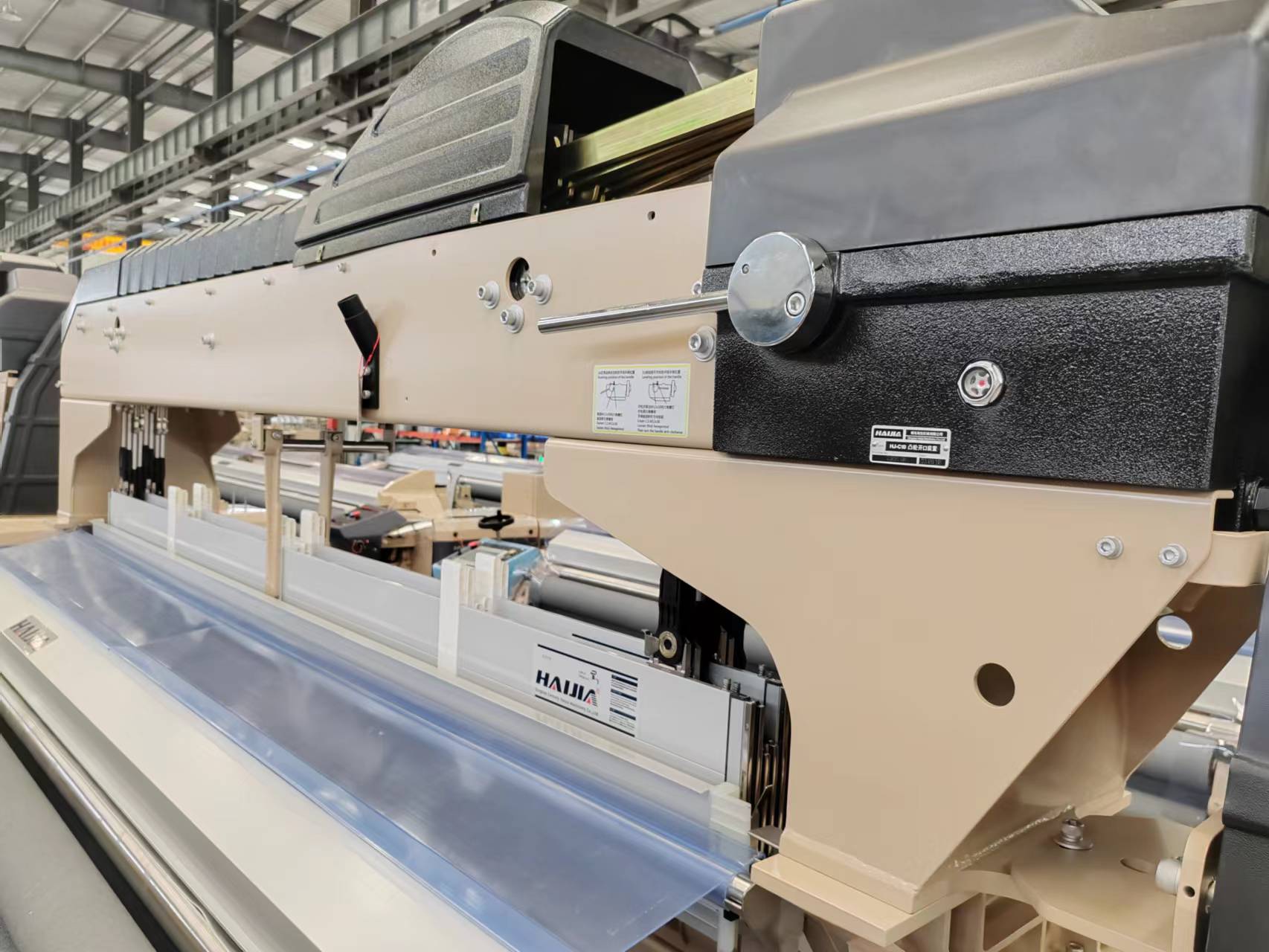
Choosing the right yarn is the first critical step. A water jet loom relies on water flow for weft insertion, so yarn behavior in water directly affects fabric quality. Synthetic filament yarns are usually the best choice. They move smoothly, resist water absorption, and maintain stable tension during high-speed weaving.
Synthetic Filament Yarn Selection: Polyester filament yarn is widely used in velvet-style fabrics. Smooth surfaces reduce friction during weft insertion. Stable yarn movement helps maintain consistent fabric structure across long production runs.
Yarn Surface Smoothness Requirement: Smooth yarn surfaces allow water jets to carry the weft efficiently. Rough or hairy yarns increase resistance and may cause insertion failure or uneven density in the final fabric.
Yarn Count and Strength Balance: Fine yarn counts help create a dense velvet structure. Strong yarn strength prevents breakage during high-speed operation. Proper balance ensures both softness and durability.
After yarn selection, fabric design defines how the velvet surface will form. Velvet requires a structure capable of holding pile yarns before cutting. The most common approach uses a double-layer or double-cloth construction.
Double-Layer Fabric Design: Two fabric layers are woven simultaneously. Pile yarns are inserted between them. This structure supports later loop cutting and pile formation.
Warp and Weft Density Planning: High density improves the richness of velvet. Warp tension must remain stable to avoid distortion. Weft density must match the desired pile thickness.
Pile Yarn Insertion Role: Pile yarns determine the height and softness of the velvet surface. Accurate insertion ensures uniform pile distribution after cutting.
Instead of focusing only on structure, production teams also consider how design affects machine performance. A poorly designed structure may cause instability during weaving.
Machine setup directly influences weaving stability. A water jet loom must be carefully configured to handle velvet fabric requirements. Each parameter affects yarn movement and fabric consistency.
Nozzle and Pump Configuration: Proper nozzle design ensures accurate water flow direction. Pump pressure must remain stable to maintain consistent weft insertion speed. Incorrect settings can cause uneven fabric density.
Warp Feeding and Tension Control: Controlled warp tension prevents yarn breakage and distortion. Stable feeding ensures uniform structure across the fabric width.
Shedding System Adjustment: Cam or dobby systems control yarn separation. Proper setup allows smooth weft insertion and supports complex velvet structures.
Operators also need to adjust loom speed and density settings. High speed improves efficiency, but excessive speed may reduce fabric stability.
Speed Optimization Setting: Moderate speed ensures balance between productivity and quality. Excessive speed may lead to defects in pile structure.
Weft Density Adjustment: Correct density ensures proper pile thickness. Fine adjustments help achieve consistent results across production batches.
Once the machine is set, the weaving stage begins. The water jet loom produces the base fabric structure at high speed. However, the velvet effect does not appear immediately after weaving.
High-Speed Weaving Process: Water jet looms operate at high RPM. Efficient weft insertion allows fast production. Stable operation ensures consistent fabric structure.
Loop Cutting for Pile Formation: After weaving, loops formed by pile yarns are cut. This step transforms the base fabric into velvet. Precision cutting ensures uniform pile height.
Surface Finishing Processes: Brushing improves softness and alignment of fibers. Shearing evens the surface. Dyeing adds color depth. Heat setting stabilizes the final structure.
A water jet loom is widely recognized for its high-speed weaving capability. This advantage becomes especially important in velvet-style fabric production, where consistency and output volume both matter. Compared to traditional weaving methods, water jet technology allows faster weft insertion, which directly improves production efficiency.
High-Speed Weft Insertion Capability: Water flow carries the weft yarn quickly across the shed. This process reduces insertion time and increases overall loom speed. Faster cycles help maintain consistent output in large production runs.
Continuous Production Stability: Stable machine structure supports long working hours without frequent interruptions. Reliable operation ensures fewer stoppages during velvet base fabric weaving.
Scalability for Mass Production: Large-scale textile manufacturers benefit from high throughput. A water jet loom can handle bulk orders for synthetic velvet fabrics without sacrificing consistency.
Cost control plays a major role in textile production decisions. A water jet loom offers several advantages in terms of energy use and resource management, especially when producing synthetic velvet fabrics.
Lower Energy Consumption Structure: Water jet looms often use optimized motor systems. Efficient energy usage reduces electricity costs over time. This becomes more significant in continuous production environments.
Water Recycling System Integration: Modern systems allow water reuse through filtration and circulation. Recycling reduces water waste and lowers operational costs. It also supports more sustainable production practices.
Reduced Maintenance Requirements: Fewer mechanical friction points mean lower wear and tear. Reduced maintenance frequency helps control long-term operating expenses.
Consistent fabric quality is essential when producing velvet. A water jet loom provides stable weaving conditions, especially for synthetic filament yarns used in velvet-style fabrics.
Consistent Weft Insertion Control: Water flow ensures uniform weft insertion across the fabric width. Stable insertion reduces defects such as uneven density or gaps.
Uniform Fabric Structure Formation: Controlled warp tension and stable machine motion support even fabric construction. This helps maintain consistent pile formation after finishing.
Reduced Yarn Breakage Risk: Smooth yarn movement under water flow reduces friction. Lower friction decreases yarn stress and minimizes breakage during high-speed weaving.
Instead of relying only on speed, manufacturers focus on maintaining balance between speed and quality. Proper machine setup ensures that velvet fabrics remain consistent across different batches.
Warp Tension Stability: Controlled feeding prevents distortion in the fabric structure. Even tension helps maintain uniform density.
Weft Density Precision: Accurate density control ensures consistent pile height after finishing processes.
Manufacturers like Haijia integrate quality control and intelligent manufacturing systems. These features support stable performance and help maintain consistent velvet fabric quality during production.
One of the practical advantages of a water jet loom is its flexibility. The same machine can handle multiple fabric types, which increases production versatility.
Multi-Fabric Production Capability: A water jet loom can switch between velvet-style fabrics and other synthetic textiles. This flexibility allows manufacturers to respond to changing market demand.
Wide Application Range: Suitable for home textiles, lining fabrics, upholstery materials, and decorative fabrics. This expands the potential product portfolio.
Adjustable Machine Configuration: Different reed widths, weft selections, and density settings allow customization. Operators can adapt the machine to different fabric structures without major changes.
| Fabric Type | Compatibility with Water Jet Loom | Typical Application |
|---|---|---|
| Velvet-Style Fabrics | High (synthetic-based) | Upholstery, curtains, home textiles |
| Lining Fabrics | High | Garment interiors |
| Decorative Textiles | High | Interior decoration |
This flexibility makes the water jet loom a practical choice for manufacturers who want to diversify production while maintaining efficiency.
Velvet fabric production needs proper yarn, structure, and finishing steps. A water jet loom works best for synthetic velvet fabrics. It offers fast speed, stable weaving, and lower cost.Haijia provides reliable water jet loom solutions, helping manufacturers improve efficiency and fabric quality.
A: A water jet loom is used to weave synthetic fabrics efficiently.
A: Yes, a water jet loom can produce synthetic velvet-style fabrics.
A: A water jet loom offers high speed and stable weaving performance.
A: Polyester filament yarn works best in a water jet loom.
A: Adjust tension and settings on the water jet loom carefully.