Tel: +86-532-83130887 Email: eiffel@qdhaijia.net

Views: 0 Author: Site Editor Publish Time: 2026-05-14 Origin: Site
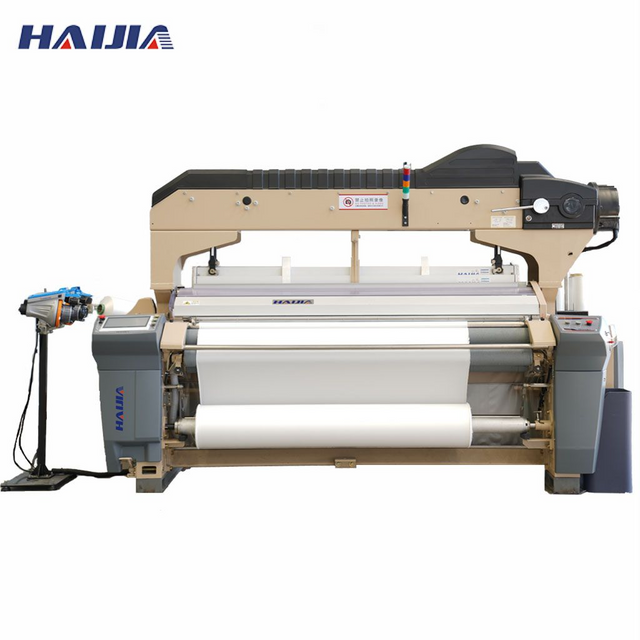
Producing hydrophobic synthetics like nylon demands strict tension control, high-volume output, and efficient static management. You face immense pressure to maintain fabric quality while maximizing operational uptime. While a Water Jet Loom remains the industry standard for nylon, the market is heavily saturated. The real difference between a high-yield machine and a maintenance liability lies in sub-system engineering. Nozzle dynamics, shedding mechanisms, and software integration determine your eventual success.
We provide a vendor-neutral, engineering-focused framework to evaluate these machines. You will learn how to shortlist and procure the right equipment based on long-term operational efficiency rather than just initial capital expenditure. This guide delivers actionable insights into core specifications, integration risks, and precise factory audits.
Speed vs. Stability: Evaluate practical Picks Per Minute (PPM) and error-correction capabilities rather than theoretical maximum RPMs.
TCO Drivers: Direct-drive motors and closed-loop water recycling systems are non-negotiable for mitigating long-term energy and utility costs.
Material Realities: Water jet technology inherently neutralizes the static electricity generated by nylon, but requires robust anti-corrosion engineering (e.g., silicone sealants, stainless components) to ensure a 15–20 year machine lifespan.
Vendor Vetting: Prioritize manufacturers offering verifiable OEM parts tracking and localized predictive maintenance support over pure price competition.
You must validate your investment in water jet technology over air-jet or rapier alternatives. Nylon behaves uniquely during high-speed production. It requires specialized handling to prevent surface blemishes and yarn breakage. A Water Jet Loom addresses these physical realities directly.
Water jet traction offers superior frictional drag compared to air-jet mechanisms. Water has a higher mass and density than air. When a high-pressure pump shoots water through a nozzle, it grips the nylon weft tightly. This targeted kinetic energy pulls the yarn across the warp shed flawlessly. It proves exceptionally efficient for hydrophobic synthetic yarns ranging from 20D to 1800D. Because nylon repels water, the fabric does not become saturated. You get tight, uniform weaves without structural degradation.
Nylon processing generates massive amounts of static electricity. Static causes yarn to tangle, stick to machine components, and create costly fabric defects. Water acts as a natural grounding agent. As the water jet carries the weft, it neutralizes this static electricity instantly. You eliminate the need for expensive auxiliary anti-static equipment. Your production floor remains safer, and your fabric quality remains consistent.
Air-jet looms require massive, energy-intensive air compressors to maintain pressure. These compressors drain electricity and drive up your utility bills. Conversely, water pumps consume significantly less power. They deliver the necessary propulsive force at a fraction of the energy cost. When you scale production to hundreds of machines, this energy-to-output ratio drastically improves your factory's profitability.
You must shift your focus from basic brochure features to actual performance outcomes. Spec sheets often obscure operational realities. You need to read these documents critically to avoid buying an underperforming machine.
Vendors frequently boast about theoretical speeds like "2000 RPM." You should look past these lab-condition claims. Focus instead on sustained weaving speeds, known as Picks Per Minute (PPM). A reliable machine typically sustains 800 to 1500 PPM on the factory floor. Variable Frequency Drives (VFDs) govern this operational stability. VFDs allow you to adjust motor speeds dynamically. They match the weaving speed to the specific yarn denier and complexity of the pattern.
The nozzle dictates your weft insertion accuracy. You must evaluate the jet system configuration based on your target fabric.
Single vs. Multi-Nozzle: Single-nozzle systems excel at high-speed, monochromatic nylon taffeta production. They are easier to maintain. Multi-nozzle systems handle complex, multi-color synthetic weaves. They require more calibration but offer higher design flexibility.
CFD-Optimized Designs: Leading manufacturers design nozzle geometries using Computational Fluid Dynamics (CFD). CFD optimization ensures steady water flow. It minimizes weft breakage across varying water pressures.
Feature | Single-Nozzle Configuration | Multi-Nozzle Configuration |
|---|---|---|
Target Application | Monochromatic fabrics, simple nylon taffeta | Multi-color patterns, complex synthetic weaves |
Operating Speed | Extremely high (Up to 1500 PPM practical) | Moderate to high (Depends on pattern complexity) |
Maintenance Level | Low. Easy to clear blockages. | High. Requires precise pressure calibration. |
Operator Skill Required | Standard training | Advanced upskilling needed |
Consistent warp tension prevents nylon surface blemishes. You should demand robust beating axes. "U-shaped" beating axes provide balanced force distribution across the reed. This prevents vibration during the high-impact beat-up phase. Furthermore, electronic shedding systems outperform mechanical cams. They adjust tension in milliseconds. This precision protects delicate nylon filaments from snapping.
Modern textile manufacturing requires strict adherence to sustainability mandates. Hidden operational costs will destroy your margins if you ignore efficiency standards. You must reframe environmental compliance as a core business advantage.
Traditional belt-driven systems suffer from significant mechanical power loss. Friction and belt slippage waste electricity. You must demand direct-drive motors for your looms. Direct-drive technology mounts the motor directly to the main shaft. It transfers kinetic energy with near-perfect efficiency. You reduce power consumption dramatically and cut down on mechanical wear.
Water recycling systems are no longer an optional environmental checkbox. They are crucial operational cost-savers. In heavily regulated manufacturing zones, closed-loop water management guarantees your compliance. These systems filter and reuse the water expelled during the weaving process. They separate the sizing agents and synthetic fibers from the effluent. This drastically lowers your municipal water intake and wastewater discharge penalties.
Water jet environments possess extremely high humidity. Constant exposure to moisture causes severe degradation to internal electronics and moving parts. You must prioritize machines built with premium anti-corrosion engineering. Look for industrial silicone-based lubricants. Manufacturers must seal control panels and sensors with high-grade silicone sealants. Stainless steel components are mandatory for parts touching the water stream.
Best Practices for Extending Machine Longevity:
Audit the factory floor humidity levels continuously.
Apply marine-grade silicone sealants to exposed sensor wiring.
Schedule routine flushes of the closed-loop filtration system to prevent biological buildup.
Purchasing the equipment is only the first step. Integration failures often paralyze production lines. You must anticipate what goes wrong after the machinery arrives on your floor.
Connecting modern equipment to old software presents a major challenge. You likely rely on an older Manufacturing Execution System (MES). Modern, IoT-enabled looms generate massive amounts of real-time data. Legacy systems often cannot parse this data. You face data silos and inaccurate production tracking. You must ensure the loom's control software features open APIs. It needs backward compatibility with your existing MES infrastructure.
Relying on scheduled preventive maintenance is no longer enough. You need systems that anticipate failures before they occur. Evaluate control panels that offer advanced remote diagnostics. Real-time tension monitoring detects tiny deviations in yarn stress. Auto-stop fault detection halts the machine instantly if a thread breaks. This minimizes fabric defects and reduces catastrophic machine downtime.
Gray-market spare parts plague the textile machinery industry. Cheap, counterfeit components look identical to genuine parts but fail under high-stress weaving. A shattered nozzle can halt production for days. Warn your procurement team against unverified suppliers. We recommend vendors who utilize supply chain transparency. Look for scannable OEM part verification. QR codes or RFID tags on spare parts guarantee authenticity and prevent mid-production disasters.
Your procurement team needs a systematic approach to finalize their decision. You cannot rely on sales brochures or showroom demonstrations. Actionable testing protocols separate reliable integration partners from basic equipment suppliers.
Move beyond the showroom environment. You must mandate live-run testing. Bring your specific nylon yarn denier to the vendor's testing facility. Observe the machine operating at full capacity. Measure physical vibration levels on the factory floor. Monitor the ambient noise levels. Inspect the woven fabric physically for weft density consistency. If the machine vibrates excessively at high PPM, it will degrade rapidly in your factory.
Assess the vendor’s commitment to operator training. Transitioning your workforce from semi-auto systems to fully automated electronic jacquard looms requires specific upskilling. Your operators must learn to calibrate digital tension sensors and troubleshoot IoT dashboards. A rigorous Service Level Agreement (SLA) must include comprehensive, on-site training. If the vendor abandons your team after installation, your productivity will crash.
Create a balanced scorecard to evaluate your top vendors. You need a structured matrix to weigh competing factors. Rate each vendor on Capital Expense, localized spare-part availability, and projected Overall Equipment Effectiveness (OEE) improvements.
Evaluation Criteria | Weight (%) | Key Indicators to Score |
|---|---|---|
Capital Expense & Installation | 20% | Initial purchase price, shipping, setup fees. |
OEE Improvements | 40% | Expected PPM, auto-stop speed, defect reduction rate. |
Spare-Part Availability | 25% | Proximity of regional warehouses, guaranteed delivery times. |
SLA & Training Support | 15% | On-site training hours, 24/7 remote diagnostic support. |
A successful water jet loom investment aligns the mechanical handling of nylon with your factory's digital infrastructure and sustainability goals. You cannot treat this procurement as a simple hardware upgrade. It dictates your production capacity, energy consumption, and product quality for the next two decades.
You must prioritize vendors who act as integration partners. Choose manufacturers offering robust after-sales infrastructure, verifiable spare parts, and open software architecture. Ensure you conduct rigorous live-run audits using your specific nylon yarn. Finally, invest heavily in operator upskilling to unlock the full potential of electronic shedding and predictive maintenance features.
A: The expected lifespan is typically 15–20 years. You achieve this longevity through rigorous predictive maintenance. Furthermore, the machine must utilize high-grade anti-corrosion materials, such as marine-grade stainless steel and premium silicone sealants, to withstand the constant high-humidity operating environment.
A: No. Water jet technology cannot process hydrophilic (water-absorbing) fibers like cotton. Cotton absorbs the water jet, becoming heavy and weak, which causes the yarn to snap. The technology serves a specialized role exclusively for hydrophobic synthetics like nylon, polyester, and fiberglass.
A: Multi-nozzle systems allow for complex patterning and multi-color weft insertion. However, they generally require lower operating speeds compared to single-nozzle setups. They also demand highly skilled operators to manage the complex water pressure calibrations and electronic switching mechanisms required during production.
A: RPM (Revolutions Per Minute) measures the mechanical rotational speed of the main shaft in perfect lab conditions. PPM (Picks Per Minute) measures the actual weft insertions per minute on the factory floor. PPM accounts for tension adjustments and minor stops, making it the true metric for production yield.