Tel: +86-532-83130887 Email: eiffel@qdhaijia.net

Views: 0 Author: Site Editor Publish Time: 2026-05-14 Origin: Site
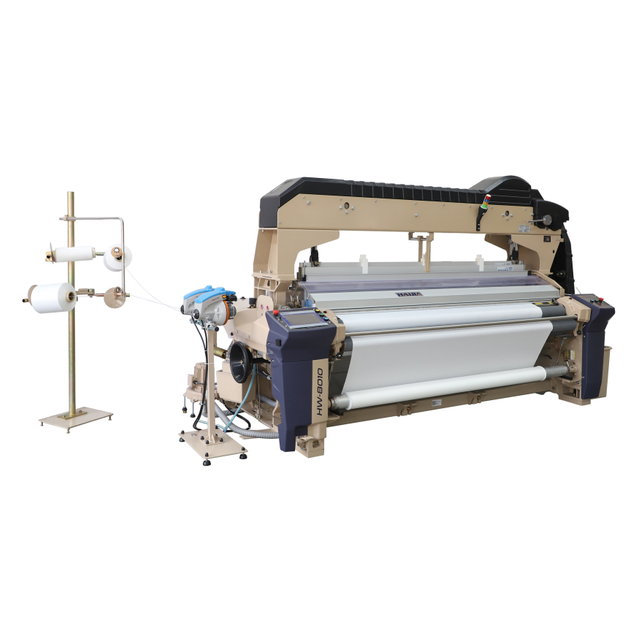
Upgrading or establishing a synthetic textile production line carries incredibly high stakes. For polyester filament manufacturers, selecting the right equipment directly dictates margin viability and market competitiveness. A Water Jet Loom offers unmatched speed and lower energy requirements compared to pneumatic alternatives. However, successful procurement requires you to balance precise mechanical specifications against your facility's unique infrastructure. You must carefully plan for water management, space allocation, and sizing chemistry compatibility to prevent costly downtime.
We built this guide to establish an objective, engineering-focused framework for evaluating weaving configurations. You will learn how to align machine specifications with operational realities to optimize your polyester fabric manufacturing. This structured approach ensures sustainable, high-speed production runs. It helps you navigate complex equipment matrices confidently.
Core Utility: Water jet looms are strictly for hydrophobic synthetics (like polyester and nylon), neutralizing static electricity during high-speed weaving (up to 1200+ RPM).
Configuration Matrix: Equipment selection hinges on matching nozzle count (single/double/multi) and shedding mechanisms (cam/dobby/jacquard) to target fabric complexity.
Hidden Operational Variables: Successful deployment requires upfront planning for water filtration loops, post-weave drying rollers, and specific sizing chemistry (e.g., acrylate esters vs. polyester resins).
TCO Focus: Procurement should weigh CapEx against long-term OpEx reductions achieved through direct-drive motors and structural vibration damping.
You must rigorously check material compatibility before finalizing any equipment decisions. A fluid-based insertion system strictly requires hydrophobic continuous filament yarns. The high-pressure water sequence completely destroys hydrophilic natural fibers. Cotton and wool absorb the jet stream instantly. They swell, snap under tension, and quickly jam your shedding mechanisms. You must confirm your production line handles synthetics exclusively.
Polyester filament performs exceptionally well inside these fluid-based systems. Modern machines adapt easily to a vast range of polyester yarns. You can process delicate 20 Denier threads for lightweight apparel. You can also weave robust 1800 Denier industrial yarns for heavy-duty applications. We strongly recommend mapping your equipment to your exact yarn portfolio.
Partially Oriented Yarn (POY): Operates smoothly under stable warp tension, producing consistent apparel fabrics.
Fully Drawn Yarn (FDY): Achieves maximum operational speeds due to exceptionally high tensile strength.
Twisted Yarns: Require precise pump pressure adjustments to prevent unwanted unravelling during insertion.
Spandex-Covered Yarns: Demand electronic tension control to maintain stretch properties across the fabric.
The fluid physics driving this insertion method offers a brilliant hidden advantage. High-pressure water physically pushes the weft across the shed. Simultaneously, this liquid stream actively neutralizes static electricity. Synthetic friction generates massive static loads at speeds exceeding 1000 RPM. This static causes severe yarn entanglement on pneumatic machines. The continuous water flow acts as a natural grounding agent. It eliminates any need for expensive external anti-static bars.
Facility prerequisites often dictate overall feasibility. Buyers frequently overlook the demanding surrounding infrastructure. You must allocate specific floor space for post-weaving thermal drying rollers. These heated rollers consume dedicated electrical energy to remove residual fabric moisture. Furthermore, you need a robust closed-loop water treatment facility. This plant handles daily effluent and recycles water safely. These prerequisites remain strictly non-negotiable for modern environmental compliance.
Equipment selection hinges directly on matching your nozzle count and shedding mechanisms to your target fabric complexity. You must align these mechanical choices with your intended product catalog.
Single nozzle systems offer incredible reliability for standard fabrics. We recommend them heavily for lightweight polyester materials like basic apparel linings or taffeta. They feature the lowest maintenance burden in the textile industry. You achieve maximum production speeds easily.
Double nozzle configurations introduce alternating or simultaneous weft insertion. You need this specific setup for mixed denier yarns. It handles heavier dual-texture polyesters beautifully. This choice perfectly balances operational speed against fabric complexity.
Multi-nozzle machines target the high-value textile market. Use them for intricate filament blends or multi-color designs. They operate at slightly lower speeds but deliver premium manufacturing capabilities.
Cam shedding represents the gold standard for uniform, high-speed production. It handles plain or twill weaves flawlessly. You get maximum mechanical efficiency when your weaving patterns rarely change. Most cam setups comfortably manage up to eight heald frames.
Dobby shedding actively controls a higher number of heald frames. You absolutely need dobby systems for complex textures. They excel at producing heavier home textiles and advanced technical polyester fabrics. Modern electronic dobby mechanisms handle up to twenty-four frames.
Jacquard systems control individual warp yarns directly. This mechanism proves essential for large-scale, custom-patterned fabrics. They power the high-end customized textile segment. Jacquard heads manipulate thousands of hooks simultaneously to weave intricate tapestries.
Review the configuration matrix below to align your production goals:
Configuration Match | Optimal Fabric Type | Speed Potential | Complexity Limit |
|---|---|---|---|
Single Nozzle + Cam | Apparel Linings, Taffeta, Pongee | Ultra-High (1000+ RPM) | Low (Plain/Twill) |
Double Nozzle + Dobby | Oxford, Dual-Texture Home Textiles | High (800-1000 RPM) | Medium (Geometric Patterns) |
Multi-Nozzle + Jacquard | Premium Custom Tapestries, Curtains | Moderate (600-800 RPM) | High (Custom Imagery) |
We highly advise procurement teams to rigorously evaluate specific mechanical dimensions. Surface-level specifications often hide long-term durability flaws. Follow these core evaluation parameters during your shortlisting phase to secure reliable machinery.
Analyze Weft Beating Stability: High-speed continuous weaving requires flawless weft insertion. Look for machines utilizing "U-type" short-pitch weft beating axes. This specific design distributes the beating force uniformly across the entire reed. You must maintain precise fabric density at speeds exceeding 1000 RPM. Uniform force distribution actively prevents uneven textures or loose picks.
Verify Frame and Structural Integrity: Continuous industrial weaving generates extreme kinetic vibration. You must shortlist machines featuring heavy-duty, one-piece wallboard designs. Reinforced metal crossbeams absorb mechanical shocks effectively. These structural enhancements prevent long-term degradation. They ensure your precise calibration settings remain stable over years of constant operation.
Inspect Pump and Nozzle Precision: The fluid injection system dictates your overall weaving accuracy. Evaluate the micro-engineering of the entire water pump setup. You must demand stainless steel or specialized ceramic nozzles. These premium materials resist severe corrosion from chemically treated water. They maintain pinpoint kinetic energy transfer directly to the yarn.
Specify Energy Efficiency and Drive Systems: Traditional belt-driven motors lose significant kinetic energy through belt slippage. You should specify the inclusion of Direct Drive Motors or advanced Variable Frequency Drives (VFDs). These modern drive systems improve start-up torque instantly. They prevent visible start-mark defects on the fabric. They also drastically reduce overall facility electrical consumption.
Textile chemistry often represents the most critical operational failure point. Warp sizing presents a fascinating operational paradox for facility managers. Your sizing chemistry must strictly resist violent cold water impact during the actual weaving process. It cannot become sticky, and it must avoid blocking the shedding sequence. However, this exact same chemistry must dissolve rapidly later. You need it to wash away completely in mild alkaline hot water during the post-weave desizing phase.
Procurement teams must align their sizing agents closely alongside downstream finishing capabilities. You generally choose between two primary chemical formulations.
Acrylate esters represent highly versatile formulations. They usually contain about 20% active ingredients. They handle high alkalinity environments perfectly. Manufacturers frequently include built-in anti-foaming agents and necessary biocides. We recommend this option for highly varied production lines weaving diverse synthetic blends.
Polyester resins deliver powerful 100% active solutions. They provide extreme physical adhesion explicitly designed for high-twist polyester (PES). However, they mandate strictly low-alkalinity desizing environments. You must match this resin precisely to your specific finishing house parameters to prevent permanent fabric staining.
The kinetic pushing force of the fluid jet relies entirely on flawless nozzle throughput. You must assess the machine’s built-in filtration systems closely. Micro-particulates quickly cause devastating nozzle blockages. A blocked nozzle immediately ruins fabric selvedges and halts production abruptly.
We strongly recommend discussing closed-loop water recycling systems during procurement. A high-speed Water Jet Loom consumes immense volumes of purified water hourly. Recycling systems prevent nozzle blockages while simultaneously meeting rigorous environmental compliance standards. They effectively filter out lint, chemical sizing residue, and stray filament fibers using multi-stage settling tanks and ultrafiltration membranes.
Evaluating vendors requires looking far beyond initial machine specifications. You must verify the standardization of consumable parts immediately. Inspect the availability of replacement filters, pump plungers, and heald wires. Proprietary parts inevitably create severe operational bottlenecks. Standardized component ecosystems guarantee continuous production without trapping you into single-source supplier contracts.
Diagnostic capabilities determine your long-term facility uptime. Prioritize control systems equipped natively with automatic weft insertion monitoring. Electronic warp tension control represents another mandatory modern feature. These smart systems instantly correct minor faults before they ruin an entire fabric roll. Remote diagnostic features allow vendor technicians to troubleshoot software issues globally. They minimize your machine downtime significantly.
We highly recommend requesting a physical sample run before finalizing any bulk procurement. Send the vendor your exact polyester yarn specifications. Include your specific denier metrics, twist profiles, and sizing chemistry data. Use this live test to verify warp tension consistency. It perfectly confirms the actual operational RPM capability. Never trust theoretical maximum speeds without validating them against your specific yarn chemistry in a real-world weaving scenario.
Selecting the right equipment involves far more than a simple hardware purchase. It requires the seamless integration of high-speed mechanical engineering, advanced fluid dynamics, and precise textile chemistry. Your facility must prepare its infrastructure to handle the unique demands of fluid-based weft insertion properly.
We advise procurement teams to lock in their target fabric specifications first. Define your exact denier, weave pattern, and fabric width before engaging vendors. Build your chemical sizing and closed-loop water infrastructure plan second. Finally, finalize your nozzle architecture and shedding configuration. This structured approach guarantees a resilient, high-speed polyester manufacturing line.
A: For 100% hydrophobic synthetics like polyester, a water jet loom typically offers higher speeds and lower energy costs. Water kinetic energy is much cheaper to generate than compressed air. However, air-jet looms are required if the facility plans to weave hydrophilic fibers like cotton or wishes to avoid post-weaving thermal drying processes.
A: Modern machines are highly versatile. They typically handle continuous filament yarns ranging from ultra-fine 20 Denier up to heavy-duty 1800 Denier. Your exact operational range depends heavily on the specific water pump pressure settings and your chosen nozzle setup.
A: Friction from high-speed synthetic yarn processing generates heavy static, causing frequent yarn breakage. The continuous flow of the water jet acts as a natural grounding and neutralizing agent. It significantly reduces static build-up without the need for any external anti-static equipment.