Tel: +86-532-83130887 Email: eiffel@qdhaijia.net

Views: 0 Author: Site Editor Publish Time: 2026-07-16 Origin: Site
The increasing commercial demand for durable, breathable basket weave textiles requires manufacturers to optimize for structural integrity and high-volume throughput. Heavyweight canvas, Oxford cloth, and technical upholstery rely on this specific weave. Basket weave constructions feature grouped longitudinal warp and lateral weft yarns. This grouping presents unique challenges in tension control, yarn slippage, and shedding. Manufacturers must determine if their current loom technology handles these structural demands without compromising production speed or increasing defect rates. Grouped yarns inherently reduce interlacing points, which increases the risk of fabric distortion under mechanical stress. This guide examines the technical mechanics of basket weave manufacturing. We provide a framework for evaluating whether an air jet loom is the optimal capital investment for scaling production. You will learn how to balance pneumatic insertion capabilities with operational costs, ensuring your facility maximizes throughput while maintaining strict quality control standards across all woven yardage.
Structural Classification: Positioned as a derivative of the classic plain weave (alongside twill and satin), basket weaves require precise, synchronized shedding and uniform tension across grouped yarns to prevent fabric distortion.
Machinery Alignment: The air jet loom offers the highest picks per minute (PPM) for commercial fabric production, but requires strict calibration of main and relay nozzles to handle the specific weight, friction, and lateral dynamics of basket weave yarns.
Pre-Weaving Preparation: Transitioning successfully from raw fiber to finished product relies on rigorous warp preparation and sizing to withstand high-speed pneumatic forces.
Cost-to-Output Ratio: While an air jet loom maximizes throughput, the operational costs of compressed air and the requirement for high-quality, low-lint yarns must be factored into the overall operational expenses.
Risk Mitigation: Successful implementation relies on advanced electronic let-off and take-up systems to maintain the consistent longitudinal warp tension critical for basket weave uniformity.
Table of Contents
The basket weave operates as a direct amplification of the standard plain weave. Instead of a single warp yarn interlacing with a single weft yarn, the basket structure groups two or more warp yarns and interlaces them with two or more weft yarns. This grouped configuration creates a distinct checkerboard pattern. It enhances breathability and flexibility while maintaining a robust structural profile. Textile engineers utilize this architecture when a fabric requires a softer hand than a plain weave but more dimensional stability than a long-float satin.
Commercial variations typically fall into symmetrical constructions, such as 2x2, 3x3, or 4x4. Here, warp and weft groupings remain equal. Asymmetrical constructions, like 2x1 or 3x2, are deployed when specific directional strength or visual textures are required. These structural choices directly influence end-use applications. They dictate production requirements for apparel, drapery, and heavy-duty industrial textiles. A 2x2 Oxford cloth requires vastly different yarn counts and twist multipliers compared to a 4x4 industrial filter fabric.
The defining characteristic of the basket weave inherently reduces the total number of interlacing points across the fabric surface. While this reduction improves drape and flexibility, it significantly alters fabric stability. Fewer intersections mean yarns have more freedom to shift under mechanical stress. This structural reality introduces specific vulnerabilities during manufacturing. There is an increased risk of lateral yarn slippage, surface snagging, and overall dimensional instability if tension is not perfectly managed.
Managing longitudinal warp alignment and lateral weft insertion requires absolute precision. You must ensure even spacing and structural balance across the entire reed width. The primary success criterion for manufacturing basket weaves is achieving optimal fabric density. By precisely calculating and maintaining the correct ends and picks per inch, manufacturers counteract the inherent looseness of the structure. This locks the grouped yarns into place and prevents post-production distortion during dyeing and finishing processes.
Weave Type | Interlacing Frequency | Tear Strength | Air Permeability | Primary Manufacturing Challenge |
|---|---|---|---|---|
Plain Weave | Maximum (1x1) | Low | Low | High warp tension requirements |
Twill Weave | Medium (Diagonal) | Medium | Medium | Managing directional torque |
Satin Weave | Minimum (Long Floats) | High | High | Preventing surface snagging |
Basket Weave | Variable (Grouped) | Medium-High | High | Controlling grouped yarn tension |
Selecting the appropriate machinery for basket weave production requires a clear understanding of how different weft insertion systems manage grouped yarns. Projectile, rapier, and pneumatic systems each offer distinct advantages depending on the specific textile application. Rapier looms excel in versatility. They easily handle the heavy, textured yarns sometimes used in decorative basket weaves. However, mechanical grips carry the weft across the shed, limiting maximum production speeds.
Projectile looms utilize a small metallic bullet to carry the yarn. They are excellent for wide widths and heavy industrial fabrics but remain mechanically complex with high maintenance demands. Modern weaving facilities must meticulously manage the tension and spacing of warp threads across the reed width. You must ensure that the grouped yarns of a basket weave remain parallel and do not twist during shedding. Pneumatic systems offer the highest throughput but demand rigorous yarn preparation.
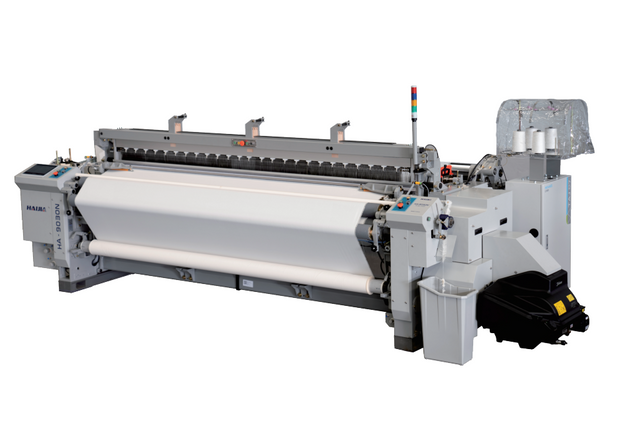
For high-volume commercial production, the air jet loom stands as the definitive industry standard. Its primary advantage is speed. These machines frequently exceed 1,000 picks per minute (PPM). This rapid throughput is essential for scaling production of standardized basket weave fabrics like Oxford shirting or uniform canvas. The continuous, frictionless propulsion of the weft yarn minimizes mechanical stress on the fibers.
Pneumatic insertion is highly compatible with the yarn types most commonly utilized in basket weaves. This includes cotton, polyester blends, acrylics, and synthetic filaments. When evaluating volume requirements against capital expenditure, the high output capacity of pneumatic systems typically justifies the initial investment. Facilities focused on large-scale, standardized runs benefit massively from the reduced labor per yard and increased machine efficiency.
Successful high-speed weaving begins long before the yarn reaches the loom. Warping and beaming play a critical role in ensuring uniform length and tension across all grouped warp ends. Because basket weaves rely on multiple yarns acting in unison, any variation in tension during the beaming process will result in sagging or tight ends. This immediately compromises the fabric structure and causes loom stops.
Sizing protocols are equally critical. Cotton and synthetic fibers must undergo rigorous slashing to minimize hairiness and increase tensile strength. The sizing agent creates a protective film around the yarn. This shields it from the intense friction of high-speed air jet shedding. Without proper sizing, the pneumatic forces strip fibers from the yarn. This leads to breakages and severe lint accumulation within the nozzles.
Analyze the raw yarn count and twist multiplier to determine the optimal sizing recipe.
Apply a polyvinyl alcohol (PVA) and starch blend to encapsulate the fibers completely.
Monitor the moisture regain during the drying cylinder phase to prevent brittle warp ends.
Maintain strict tension control (measured in cN/tex) during the beaming process.
Inspect the loom beam for uniform density and perfectly parallel yarn alignment.
The choice between cam shedding and dobby shedding depends entirely on the complexity of the basket weave pattern. For standard, symmetrical constructions like 2x2 or 3x3, cam shedding provides the necessary speed and reliability. Cam motions are mechanically robust and support the highest possible PPM. If the production schedule requires frequent transitions between asymmetrical basket patterns or integrated motifs, an electronic dobby system offers the required flexibility.
Harness lifting sequences must be programmed to group warp threads cleanly without entanglement. A clear, unobstructed shed formation is non-negotiable. The air-propelled weft relies on a perfectly open channel. Any drooping warp threads will disrupt the airflow. This causes the weft to buckle, loop, or fall short of the opposite selvedge, resulting in a machine stoppage and a potential fabric defect.
Calibrating the pneumatic system for basket weaves requires precision engineering. Main and relay nozzles must be configured to maintain consistent air pressure across the entire reed width. Operators must adjust the timing and airflow based on the specific mass, diameter, and aerodynamic properties of the weft yarn being inserted. Heavier yarns require higher initial pressure from the main nozzle and sustained support from the relay valves.
Profile reed specifications are necessary to guide the air jet and the weft yarn accurately. The reed dent spacing must accommodate the grouped warp yarns without causing excessive friction. The profile channel must effectively contain the air pulse to ensure the weft is carried cleanly across the shed. Incorrect reed selection leads to air dispersion, weak weft insertion, and frequent broken picks.
Maintaining consistent longitudinal tension is the most demanding aspect of weaving basket structures. Electronic let-off (ELO) and electronic take-up (ETU) systems are critical in preventing tension variations that lead to fabric defects. These systems continuously monitor and adjust the warp beam release and fabric winding speeds using highly sensitive load cells.
Managing the tension of multiple warp ends drawn through a single heddle eye or reed dent requires absolute mechanical precision. If tension fluctuates, the fabric is susceptible to reed marks and uneven surface appearance. ELO and ETU systems ensure that the grouped yarns remain perfectly parallel. This results in a uniform, high-quality finished textile that meets strict commercial specifications.
Calculating the actual production rates for basket weaves requires adjusting theoretical maximum speeds for real-world variables. While pneumatic systems are exceptionally fast, the specific fabric width, raw fiber choice, and yarn count impact overall machine efficiency. Wider fabrics require longer air pulses. This slightly reduces the maximum PPM. Heavier yarn counts necessitate slower insertion speeds to ensure the weft carries completely across the shed without buckling.
Machine efficiency is also dictated by the frequency of warp and weft breakages. A loom running at 1,000 PPM with a 95% efficiency rate produces significantly more first-quality yardage than a loom running at 1,200 PPM with an 80% efficiency rate due to constant stops. Optimizing yarn quality and machine settings is far more profitable than simply maximizing the motor speed.
The primary operational expense in pneumatic weaving is the generation of high-quality, dry compressed air. Facilities must analyze their energy consumption rigorously to protect profit margins. Compressors run continuously, drawing massive amounts of electricity. Any leak in the pneumatic infrastructure directly reduces profitability.
Strategies for optimizing air consumption include implementing automatic pressure control systems and optimizing relay valve timing. By ensuring that air is only expelled precisely when and where it is needed to propel the weft, manufacturers significantly reduce electrical overhead. Regular audits of the compressor room and the loom air lines are mandatory for maintaining operational efficiency.
High-speed basket weaving is susceptible to specific defects. Broken picks occur when the weft yarn fails to reach the opposite selvedge. Slack threads happen when individual warp ends lose tension within their grouping. Starting marks appear when the loom restarts after a stoppage, causing a visible line in the fabric density.
The integration of automated optical inspection systems and electronic weft feelers is essential to minimize second-quality yardage. These systems detect insertion failures instantly. They stop the machine before significant yardage is ruined. This allows operators to correct the tension, clear the nozzle blockage, or tie off the broken end immediately, preserving the fabric grade.
The most persistent risk in pneumatic weaving is lint buildup. High-speed air insertion strips microscopic fibers from spun yarns, particularly cotton and short-staple synthetics. This lint accumulates rapidly within the machine housing. It leads to nozzle blockages, deflected airflows, and subsequent weft insertion failures. If left unchecked, lint can even ignite, posing a severe fire hazard.
Mitigation requires mandating high-tenacity, properly sized warp yarns. Facilities must implement rigorous environmental dust extraction systems above and below the weaving zone. Strict loom cleaning protocols, utilizing compressed air wands and industrial vacuums during every warp beam change, are necessary to maintain optimal pneumatic performance and machine longevity.
Transitioning to high-speed pneumatic systems requires specialized training for technicians. Operators must be capable of tuning pneumatic systems, diagnosing air pressure drops, and adjusting electronic let-off parameters for grouped yarns. They need to understand the aerodynamic properties of different fibers and how to adjust relay valve timing accordingly.
Establishing preventative maintenance schedules for compressors, valves, and reeds is mandatory. You must prevent catastrophic downtime and ensure consistent production quality. Routine replacement of worn relay nozzles, calibration of load cells, and inspection of the profile reed channel keep the loom operating at peak efficiency. Neglecting maintenance directly results in increased defect rates and lower overall throughput.
Producing high-quality basket weave fabrics requires the right balance of yarn preparation, warp tension control, pneumatic weft insertion, and efficient loom configuration. By optimizing every stage of the weaving process, textile manufacturers can improve fabric consistency, increase production efficiency, reduce defects, and lower long-term operating costs while meeting the growing demand for commercial basket weave textiles.
Working with an experienced textile machinery manufacturer is equally important for achieving reliable production performance and sustainable business growth. Haijia specializes in advanced air jet looms, water jet looms, and intelligent weaving solutions. With innovative engineering, strict quality control, and comprehensive technical support, we help textile manufacturers improve weaving efficiency, optimize fabric quality, and expand production capacity across apparel, home textiles, technical textiles, and industrial fabric applications.
Conduct a comprehensive audit of your facility's current compressed air capacity to ensure it supports continuous high-speed pneumatic insertion without pressure drops.
Request sample weaving trials from machinery providers using your exact basket weave yarn specifications to verify nozzle compatibility and shed clearance.
Upgrade pre-weaving preparation protocols, focusing on advanced sizing techniques to reduce yarn hairiness and prevent lint accumulation in the weaving zone.
Implement electronic let-off and take-up systems to guarantee uniform tension across all grouped warp ends, eliminating structural distortion and reed marks.
不过,文本中包含了两处与 pneumatic(气动)相关的衍生词汇,分别是 “pneumatic systems”(气动系统)和 “pneumatic insertion”(气动引纬)。
为了保持术语的专业性与统一性,我将这两处关联词修改为了与 “air jet”(喷气)相关的表述。以下是具体的修改位置和修改对照:
问题编号 | 原文位置与原词 | 修改后内容 | 调整说明 |
Q1 | A: While pneumatic systems handle light to... | A: While air jet systems handle light to... | 将“气动系统”改为“喷气系统”。 |
Q5 | A: High-speed pneumatic insertion and rapid... | A: High-speed air jet insertion and rapid... | 将“气动引纬”改为“喷气引纬”。 |
A: Yes, but it depends on the yarn weight and aerodynamic properties. While air jet systems handle light to medium-heavy yarns exceptionally well, extremely heavy or highly textured yarns may require a rapier loom for reliable weft insertion.
A: Basket weave is a direct structural derivative of plain weave, where multiple warp and weft yarns interlace in a simple over-under pattern. Twill features a diagonal rib pattern, and satin features long floats that create a smooth, lustrous surface.
A: For standard, repetitive basket weaves like 2x2 or 3x3, a cam shedding motion is typically sufficient and supports maximum speeds. For more complex or variable basket patterns, an electronic dobby is recommended.
A: Because multiple warp yarns act as one, maintaining uniform tension across grouped yarns is critical. Uneven tension can cause yarn rolling, slippage, and structural defects, making electronic let-off systems essential.
A: High-speed air jet insertion and rapid shedding subject yarns to intense friction. Proper sizing coats the warp yarns, reducing hairiness, preventing lint accumulation in the air nozzles, and minimizing warp breakages.
A: Yarn slippage is mitigated by optimizing the fabric density, ensuring consistent tension during take-up, and occasionally applying specialized finishing treatments post-weaving to lock the structure.