Tel: +86-532-83130887 Email: eiffel@qdhaijia.net

Views: 0 Author: Site Editor Publish Time: 2026-07-16 Origin: Site
High-volume plain weave production requires precise, high-speed weft insertion technologies to maintain profitability and fabric quality in modern textile mills. Mill operators and textile engineers face a critical capital allocation decision when upgrading weaving infrastructure: balancing production speed, utility consumption (air vs. water), and yarn compatibility without inflating operational costs. You must evaluate the mechanical limits of your facility before committing to a specific insertion medium. This guide provides a technical evaluation of how plain weave is produced on an air jet loom compared to a water jet loom, detailing the mechanical differences, material constraints, and utility demands to inform procurement decisions. Understanding the physical behavior of fluid-jet systems ensures you match the right machinery to your specific fabric production goals.
Insertion Medium Dictates Material: An air jet loom offers superior versatility for spun yarns, cotton, and blends, whereas water jet looms are strictly limited to hydrophobic synthetic fibers (e.g., polyester, nylon).
Utility Infrastructure Costs: Air jet weaving requires significant investment in heavy-duty air compressors and pneumatic infrastructure, while water jet weaving demands robust water purification and effluent treatment systems.
Production Velocity: Both technologies achieve exceptionally high Weft Insertion Rates (WIR) suitable for plain weaves, but the air jet loom generally provides a broader operational envelope for varying fabric widths and densities.
Environmental & Compliance Factors: Regional environmental regulations regarding wastewater discharge heavily influence the viability of water jet loom installations compared to the energy-intensive nature of compressed air systems.
Table of Contents
Establishing baseline metrics for plain weave efficiency requires tracking picks per minute (PPM), machine downtime, and defect rates. High-speed weaving demands minimal interruptions on the mill floor. Broken picks and starting marks directly degrade fabric grading and reduce your overall yield. You must maintain uniform warp tension across the entire width of the beam to prevent end breakages. Precise shed timing accommodates rapid weft insertion without causing yarn abrasion. Operators monitor these metrics continuously to ensure the loom operates within its optimal mechanical limits. When you push a machine past its rated speed, you immediately see an increase in warp stops and weft faults.
To maintain high efficiency, mill technicians focus on several operational parameters. You need to calibrate the let-off tension to match the specific yarn count. The take-up roller must pull the fabric at a consistent rate to maintain the correct pick density. Any slippage here results in thick or thin places in the woven cloth. You also have to monitor the ambient humidity in the weave room. Natural fibers require specific moisture levels to retain their tensile strength during the aggressive shedding process.
Modern fluid-jet systems integrate with various shedding mechanisms depending on the fabric complexity. Crank and cam shedding motions provide the fastest operation for simple plain weaves. These mechanical systems are robust and require minimal maintenance compared to electronic alternatives. Dobby and electronic jacquard systems offer pattern flexibility but operate at slightly lower speeds due to the mechanical overhead of lifting individual heald frames. Shed geometry plays a critical role in fluid-jet insertion. The shed opening angle and height are optimized to minimize friction.
A clean, clear shed prevents the air or water stream from colliding with warp ends. This precise geometry reduces turbulence and maintains the kinetic energy of the insertion medium. If the shed is too small, the weft yarn drags against the warp, causing insertion failures. If the shed is too large, you put excessive strain on the warp yarns, leading to breakages. Finding the exact geometric balance is a daily task for loom tuners.
Shuttleless fluid-jet environments synchronize shedding, picking, and beating-up with microsecond precision. The main shaft encoder dictates the exact timing for the fluid blast. Electronic let-off motions continuously feed warp yarn at a constant tension. Simultaneously, electronic take-up motions pull the woven fabric at a precise rate to determine the pick density. This synchronized control maintains the structural integrity of a 1/1 plain weave. Any deviation in tension or timing results in visible fabric defects.
The beating-up motion in these looms utilizes a specialized sley drive. The reed must strike the fell of the cloth with enough force to pack the weft yarn tightly, but not so hard that it damages the warp. In an air jet loom, the profiled reed serves a dual purpose: it guides the air stream and performs the beat-up. This requires a highly rigid reed structure to withstand the constant impact at speeds exceeding 1000 RPM.
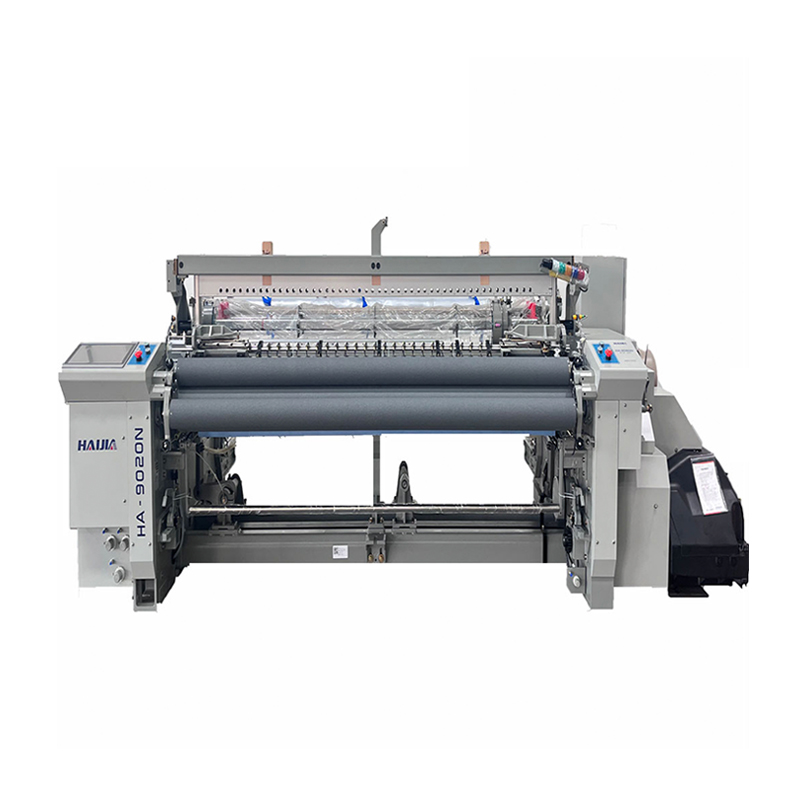
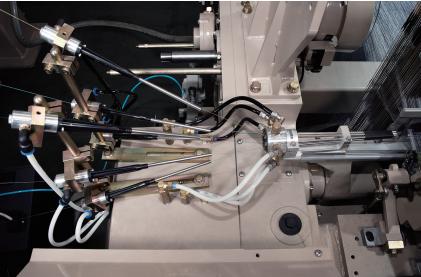
An air jet loom utilizes a high-pressure blast of air expelled through the main nozzle to initiate yarn flight. The system relies on the sequential activation of relay air nozzles across the width of the machine. A profiled reed creates a guided channel that prevents air dispersion. This channel concentrates the airflow, carrying the weft yarn smoothly across the shed. The loom manages the aerodynamic drag of different yarn counts by adjusting nozzle pressure and firing duration. You can fine-tune these settings to match the specific surface characteristics of the yarn.
The pneumatic system requires precise calibration. If the main nozzle pressure is too high, it can blow apart the fibers of a spun yarn. If the relay nozzle timing is late, the weft yarn will stall in the middle of the shed. Technicians use stroboscopes to visually inspect the yarn flight during operation. This allows them to adjust the valve timings down to the millisecond, ensuring the yarn arrives at the receiving side exactly when the shed begins to close.
This technology excels in processing hydrophilic fibers like cotton and viscose. It also handles complex core-spun yarns with ease. Operators frequently use weaving methods for polyester-cotton core-spun yarn fabrics. You utilize a polyester filament as a core and cotton fiber as a wrap to optimize tensile strength and dyeability. The air jet loom proves highly suitable for producing high-quality apparel fabrics, medical gauze, sheeting, and dense industrial textiles. Its ability to handle diverse fiber types makes it a versatile asset for any textile mill.
100% Cotton Sheeting: Requires careful sizing to minimize lint shedding which can clog relay nozzles.
Viscose Rayon Apparel: Demands lower air pressure settings to prevent damage to the delicate filaments.
Polyester-Cotton Blends: Offers the best balance of strength and insertion stability at maximum machine speeds.
Denim Twills: Utilizes heavy, coarse yarns that require higher main nozzle pressure to initiate flight.
These machines achieve exceptional Weft Insertion Rates. WIR often exceeds 2,000 meters per minute on modern platforms. Yarn hairiness directly impacts air consumption and insertion stability. Highly hairy yarns require higher air pressure to overcome drag, which increases utility demands. Proper yarn preparation and sizing mitigate these issues. You can maintain peak speeds by ensuring consistent yarn quality and optimizing the pneumatic settings for each specific fabric style.
Air consumption is the primary operating metric you must track. Every cubic meter of compressed air costs money. Modern machines feature automatic air-saving valves that cut off the flow the instant the yarn arrives. However, poor yarn quality forces operators to increase pressure, negating these savings. Maintaining a strict quality control program in your spinning and sizing departments is the only way to keep pneumatic weaving profitable.
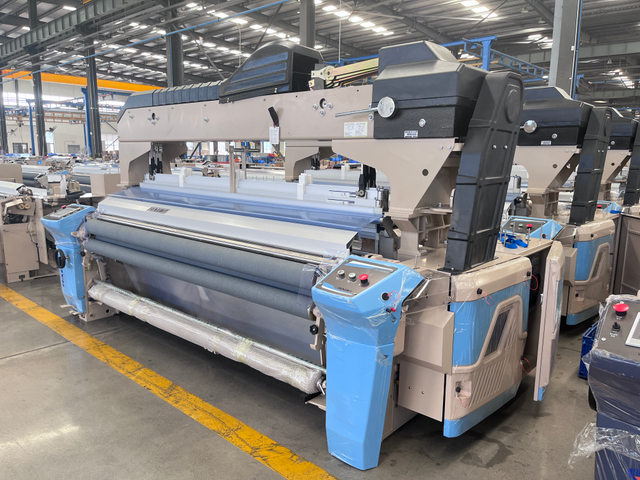
Water jet insertion relies on a high-pressure water pump, plunger systems, and precision nozzle configurations. The physics of water surface tension and stream cohesion play a vital role. The water jet grips smooth, continuous filament yarns. It carries them across the loom shed without the need for auxiliary guide systems like relay nozzles. The concentrated mass of the water stream provides excellent kinetic energy transfer. This allows for highly efficient and stable weft insertion over standard fabric widths.
The pump mechanism is entirely mechanical, driven directly by the main motor. You adjust the water volume and pressure by changing the stroke length of the plunger. A specialized nozzle shapes the water into a tight, cohesive stream. If the nozzle becomes worn or scaled with minerals, the stream breaks apart prematurely, causing the weft yarn to drop before reaching the other side. Regular inspection and replacement of these nozzles are mandatory maintenance tasks.
Water jet looms are exclusively compatible with hydrophobic synthetic yarns. Polyester and nylon are the primary materials processed on these machines. You cannot weave natural, moisture-absorbing fibers on a water jet platform. Attempting to process cotton or viscose results in severe physical degradation. The fibers absorb water, gain massive weight, and break under tension. Furthermore, the constant moisture exposure introduces significant mold risks for natural fibers. You must restrict water jet operations entirely to synthetic filaments.
Even within synthetics, you must be careful with the sizing chemicals used on the warp. The sizing must be water-resistant enough to survive the weaving process, but easily removable during the finishing stage. If the sizing washes off during weaving, it contaminates the machine's water catch basin and clogs the drainage system. This requires specific acrylic-based sizing agents designed exclusively for water jet applications.
These looms provide high-efficiency production of standard synthetic plain weaves and twill structures. They dominate key end-use markets such as outerwear, umbrella fabrics, lining fabrics, and geotextiles. Performance metrics highlight raw operational speeds (PPM) that rival or exceed other shuttleless technologies. However, water jet systems face strict fabric width constraints. The cohesion of the water stream degrades over long distances, limiting the maximum viable width of the woven fabric compared to pneumatic systems.
Taffeta Linings: Woven at extremely high speeds using fine denier polyester.
Oxford Cloth for Bags: Utilizes heavier nylon yarns requiring higher pump pressure.
Geotextile Base Layers: Often woven at the maximum width capacity of the machine.
Umbrella Canopies: Requires high-density weaving to ensure water resistance in the final product.
We evaluate maximum operational speeds (RPM/PPM) and effective fabric widths to compare these technologies. Both looms achieve remarkable speeds for plain weave production. However, the stability of weft flight at peak speeds differs. Air turbulence requires careful management through relay nozzles over long reed widths. Water stream cohesion naturally degrades over distance, restricting water jet looms to narrower fabric applications. For ultra-wide sheeting, pneumatic insertion remains the superior choice.
When weaving standard 190cm widths, both machines perform similarly in terms of raw picks per minute. The divergence happens when you move to 280cm or 340cm widths. The water stream simply cannot maintain enough kinetic energy to carry the yarn that far without breaking apart. Pneumatic systems solve this by adding more relay nozzles, allowing them to weave fabrics up to 400cm wide without losing insertion speed.
Generating, drying, and transporting compressed air creates a significant energy penalty. An air jet loom demands robust electrical infrastructure to power heavy-duty compressors. Conversely, water jet pumps consume considerably less electricity. However, they require substantial water sourcing and continuous pumping. You must evaluate the local availability and cost of electricity versus industrial water supply. The utility footprint of each technology dictates its long-term viability in your specific geographic region.
Compressor rooms require massive amounts of power. A typical installation might use centrifugal compressors drawing hundreds of kilowatts. You also have to factor in the energy used by the refrigerated air dryers. Water jet facilities use smaller motors for the pumps, but they incur costs in water treatment. You have to pump the water in, filter it, use it, and then treat the effluent before discharging it. Both systems have hidden utility costs that you must calculate carefully.
Each technology presents specific plain weave defects. Air-jet systems occasionally produce weft loops if nozzle timing is slightly off. Water-jet systems can suffer from wet-pick faults if the water pressure fluctuates. The insertion medium also impacts the final fabric hand and finishing requirements. The post-weaving drying phase is a critical differentiator. Water jet woven fabrics require vacuum de-watering and extensive drying systems before batching. Pneumatic systems output fabric in an immediate dry state, bypassing this entire finishing step.
Feature | Air Jet Loom | Water Jet Loom |
|---|---|---|
Insertion Medium | Compressed Air | High-Pressure Water |
Compatible Yarns | Cotton, Spun, Blends, Synthetics | Hydrophobic Synthetics (Polyester, Nylon) |
Fabric Width Capability | Very Wide (up to 390cm+) | Narrow to Medium (up to 230cm) |
Post-Weaving State | Dry | Wet (Requires Drying) |
Primary Utility Need | High Electricity (Compressors) | High Water Volume & Treatment |
Pneumatic weaving requires dedicated space for centralized compressor rooms. These rooms must feature proper ventilation and acoustic insulation to manage heat and noise. You also need extensive piping networks to deliver clean, dry air to the weave room. The piping must be sized correctly to prevent pressure drops over long distances. Stainless steel or aluminum piping is preferred to prevent rust from contaminating the air supply.
Water jet facilities require entirely different structural investments. You must allocate space for water filtration plants and effluent treatment systems. The weave room floors require specialized drainage channels to handle continuous water runoff from the machines. The flooring material must be highly water-resistant and sloped correctly to prevent standing water, which creates slip hazards and promotes bacterial growth.
Maintenance routines differ drastically between the two systems. Pneumatic valve lifecycles dictate the maintenance schedule for air-based systems. You must regularly inspect and replace solenoid valves and clean relay nozzles to prevent pressure drops. Lint accumulation is a major issue. Technicians must blow down the machines daily to keep the optical sensors and nozzles clear of cotton dust.
Water jet maintenance focuses on fluid dynamics. You must combat water pump wear, plunger degradation, and nozzle scaling. Corrosion remains a constant threat. Strict water quality control is necessary to prevent mineral buildup from destroying precision mechanical components. You have to monitor the pH and hardness of the incoming water daily. If the water is too hard, calcium deposits will ruin the pump seals within weeks.
Pressure drops and moisture in air lines cause frequent loom stoppages. Even minor fluctuations in air pressure disrupt weft insertion and create fabric defects. You mitigate this risk by sizing compressors correctly for your peak demand. We recommend installing redundant air dryers to eliminate moisture from the pneumatic lines. Implement strict leak-detection protocols. Regular ultrasonic leak audits ensure your compressor energy translates directly into weaving performance rather than bleeding into the atmosphere.
Moisture in the air lines is catastrophic. It causes the solenoid valves to stick and rusts the internal components of the main nozzle. You must install high-capacity water separators and refrigerated dryers right after the compressor. Additionally, point-of-use filters at each machine provide a final layer of protection against moisture and compressor oil blow-by.
Water jet weaving introduces significant environmental and operational risks. Regulatory fines for wastewater discharge containing sizing agents can cripple a facility. Machine damage from hard water scaling leads to catastrophic pump failures. You mitigate these risks by investing in closed-loop water recycling systems. Install reverse osmosis (RO) units to maintain pristine water quality. Implement strict pH monitoring to neutralize effluent before discharge. Proactive water management ensures compliance and protects your machinery.
The effluent from these machines contains synthetic microfibers and dissolved sizing chemicals. You cannot simply dump this into the municipal sewer. A proper effluent treatment plant (ETP) requires coagulation, flocculation, and settling tanks to remove the suspended solids. The biological oxygen demand (BOD) and chemical oxygen demand (COD) must be reduced to legal limits before the water leaves your property.
Choosing the right weaving technology depends on your fabric portfolio, production capacity, utility infrastructure, and long-term operating objectives. By carefully evaluating yarn compatibility, weaving speed, energy consumption, environmental requirements, and maintenance costs, textile manufacturers can select the most suitable solution to improve productivity, maintain consistent fabric quality, and maximize long-term return on investment.
Working with an experienced textile machinery manufacturer is equally important for achieving reliable production performance and sustainable business growth. Haijia specializes in advanced air jet looms, water jet looms, and customized weaving solutions. With innovative engineering, strict quality control, and comprehensive technical support, we help textile manufacturers optimize weaving efficiency, improve fabric quality, and expand production capacity across apparel fabrics, home textiles, industrial textiles, and technical textile applications.
Conduct a comprehensive facility utility audit to determine your capacity for compressed air generation versus industrial water treatment.
Request OEM machine trials using your specific mill yarns to validate insertion stability and defect rates.
Map out your target fabric portfolio to ensure the chosen insertion technology aligns with your long-term material requirements.
Evaluate local environmental regulations regarding wastewater discharge before committing to fluid-based weaving platforms.
A: The primary difference is the insertion medium. An air jet loom uses compressed air to propel the weft yarn, while a water jet loom uses high-pressure water. This dictates yarn compatibility; air jets handle diverse spun and natural yarns, whereas water jets are restricted to hydrophobic synthetic filaments.
A: No. Hydrophilic fibers like cotton absorb water rapidly. This increases their weight, causes severe loss of tensile strength, and leads to immediate yarn breakage during insertion. Constant moisture also introduces mold risks to natural fibers.
A: An air jet loom generally consumes more electrical energy. Generating, drying, and transporting compressed air requires heavy-duty industrial compressors. Water jet looms use mechanical pumps that draw significantly less electricity, though they require substantial water resources.
A: They excel at producing plain weaves, twills, and complex fabrics made from cotton, spun synthetics, and blends. Common applications include high-quality apparel, medical textiles, denim, and home furnishing fabrics.
A: Water jet looms efficiently produce lightweight, high-density plain weaves and basic twills using continuous hydrophobic synthetic filaments. The concentrated water stream provides excellent kinetic energy to carry smooth yarns rapidly across the shed.
A: Water jet weaving generates significant wastewater often contaminated with sizing agents and synthetic microfibers. Facilities must invest in industrial effluent treatment plants to meet strict regional environmental regulations before discharging this water.