Tel: +86-532-83130887 Email: eiffel@qdhaijia.net

Views: 0 Author: Site Editor Publish Time: 2026-08-19 Origin: Site
Weaving technology directly impacts a textile manufacturing facility's profitability. Capital expenditure in loom infrastructure dictates long-term production capabilities. Mismatching the various types of looms with production goals creates severe operational bottlenecks. You might face excessive energy demands from running massive industrial air compressors. You could experience limited fabric versatility when market demands shift. Sub-optimal weaving speeds also severely hurt daily output volumes. Facility managers must align machinery with specific fiber requirements and factory infrastructure. Understanding the mechanical differences between insertion methods ensures optimal operational efficiency. We analyze the exact production ceilings, material constraints, and facility prerequisites for each major weaving technology. Selecting the right equipment prevents costly downtime and maximizes yield. This technical foundation helps plant operators scale operations effectively while maintaining strict quality control across different fabric weights and weaves.
Versatility vs. Speed: Rapier looms offer the widest fabric range (from filament to heavy denim) at 180–550 RPM, while Air Jet looms prioritize maximum speed for standardized fabrics.
Material Constraints: Water Jet looms provide highly efficient production exclusively for synthetic/hydrophobic textiles (polyester, nylon) and cannot process natural fibers like cotton or wool.
Infrastructure Impact: High-speed shuttleless systems require specific facility upgrades, such as compressed air networks for Air Jet looms or water treatment systems for Water Jet looms.
Operational Costs: Procurement decisions must balance initial CapEx with ongoing energy consumption per pick, maintenance requirements, and spare parts availability.
Table of Contents
Modern weaving relies on a core taxonomy based on weft insertion principles. We categorize these machines into manual, shuttle-based, and shuttleless systems. The primary motions of weaving remain shedding, picking, and beating-up across all platforms. The picking motion defines the machine category and dictates the mechanical limits of the entire production line. The textile industry shifted away from mechanical shuttle insertion decades ago to overcome severe speed limitations. Fluid systems using air or water replaced them for high-speed production of standard fabrics. Projectile and rapier mechanisms emerged to handle heavy, wide, and complex fabrics that fluid systems cannot process.
This technological shift fundamentally dictates production ceilings. Shuttleless systems eliminate the heavy wooden shuttle, which previously required massive kinetic energy to move across the sley. This massive reduction in moving weight allows significantly higher operating speeds and reduces mechanical wear across the entire machine frame. The transition from mechanical picking to fluid or tape insertion redefined factory output capabilities. Modern facilities now select machinery based on the exact physics of the weft transfer, matching the insertion method directly to the yarn's tensile strength and aerodynamic properties.
You must audit current production volume requirements against desired fabric versatility before making any equipment changes. Short-run, highly variable production favors versatile machinery that can handle multiple yarn counts without extensive downtime. Continuous, high-volume standardized output requires high-speed systems optimized for a single fabric type. Evaluate your product mix carefully before upgrading equipment. If you change yarn types frequently, flexibility matters most. You need machines that handle different yarn counts without extensive recalibration of nozzles or tapes.
Follow these specific steps to audit your production needs:
Analyze historical order volumes to determine your average run lengths and frequency of style changes.
Categorize current and projected yarn types by fiber composition, tensile strength, and hairiness.
Evaluate existing floor space, ceiling height, and structural load capacities of your facility.
Measure current utility infrastructure limits, specifically your compressed air capacity and electrical supply stability.
Assess your maintenance team's current capability to service advanced mechatronic and pneumatic systems.
If you produce millions of meters of standard cotton sheeting, raw speed wins the procurement debate. Define your primary fiber types before evaluating machinery. Synthetic fibers behave differently than natural fibers under high tension. Hydrophobic materials open up specific fluid-based insertion options that remain impossible for natural fibers. Your success criteria must align strictly with your target market demands. Do not buy high-speed machinery if your order sizes remain small and highly varied.
Evaluate machines across several essential operational dimensions beyond the initial purchase. Calculate energy consumption per pick accurately, factoring in all auxiliary equipment required to run the machine. Assess routine maintenance expenses for consumable parts like rapier tapes, relay nozzles, or torsion bars. Measure setup and changeover times for different fabric patterns, as machine downtime directly impacts your overall equipment effectiveness. High-speed machines often require longer setup times but deliver massive continuous output once running. Slower, versatile machines allow rapid pattern changes for smaller production runs, keeping utilization rates high despite lower operating speeds.
Different systems require prerequisite facility infrastructure that you cannot ignore. Consider flooring load capacity for heavy projectile machinery, which generates significant downward force during the beating-up motion. Evaluate HVAC requirements for strict temperature and humidity control. Natural fibers require specific humidity levels to prevent yarn breakage and reduce static electricity. Pneumatic lines are mandatory for certain high-speed systems, requiring dry, oil-free compressed air. Ensure your facility can support the required auxiliary equipment before installation. Upgrading infrastructure often requires massive capital allocation and extended facility downtime.
Traditional handlooms operate through entirely manual mechanisms without any electrical assistance. The weaver manually throws the shuttle across the open shed, relying on physical coordination and timing. They operate the heddles using foot pedals to change the warp threads and create the weave structure. The weaver then pulls the reed forward manually to beat the weft into the fabric fell. This process requires significant physical labor, intense concentration, and years of developed muscle memory. The production speed relies entirely on human endurance and skill, making output highly variable.
The commercial use case remains extremely narrow today. Facilities use them for high-value, low-volume artisanal textiles where the manual process adds intrinsic value to the product. They work exceptionally well for custom sampling, heritage fabrics, and complex brocades that defy automated production. Luxury brands often utilize handwoven textiles for exclusive collections to highlight traditional craftsmanship. However, this category lacks scalability for mass market demands. High labor costs restrict widespread commercial application. Output remains measured in meters per day, not meters per hour, making it unsuitable for standard apparel or industrial textiles.
Conventional power looms utilize a traditional shuttle-based weft insertion mechanism driven by an electric motor. A mechanical picker stick strikes the shuttle back and forth across the sley, propelling the heavy wooden block through the warp threads. Basic power looms require manual pirn changes when the weft yarn runs out. This requires stopping the machine frequently, resulting in significant downtime and potential fabric defects at the stop marks. Fully automatic looms feature automated bobbin or shuttle changing mechanisms to mitigate this issue. A rotary magazine drops a new pirn into the shuttle automatically while the machine continues running. This automation reduces machine downtime significantly but does not solve the fundamental speed limits of the shuttle.
These systems face severe operational limitations in modern manufacturing environments. They operate at much lower production speeds due to the heavy shuttle mass, which requires time to accelerate and decelerate safely. The flying shuttle generates extremely high noise levels on the factory floor, often exceeding safe occupational limits. The heavy mechanical impact causes frequent wear on picking components, requiring constant replacement of leather buffers and picker sticks. Commercial facilities are phasing these out rapidly. Shuttleless systems offer vastly superior efficiency, safety, and fabric quality. However, conventional looms maintain residual use in developing markets. They still produce low-cost, narrow-width fabrics effectively with minimal initial investment and basic mechanical maintenance requirements.
Rapier systems use single or double rapiers to pull the weft yarn across the shed. These rapiers utilize either rigid rods or flexible metal tapes to navigate the warp threads. Rigid rapiers require more floor space because the solid rods must retract fully outside the machine width, but they offer extreme stability for heavy yarns. Flexible rapiers coil around a drive wheel, saving valuable factory floor space while maintaining precise control. In a double rapier system, the giver rapier carries the yarn to the center of the shed, where it transfers the yarn to the taker rapier. This positive mechanical grip ensures precise weft insertion regardless of yarn texture, thickness, or hairiness.
Standard operating speeds range from 180 to 550 RPM, depending on the fabric width and yarn complexity. They boast the lowest energy consumption per pick among shuttleless options because they do not rely on compressed fluids. This mechanical efficiency reduces operational overhead significantly over the machine's lifespan. The direct transfer mechanism avoids the need for massive air compressors or high-pressure water pumps. The machines maintain excellent tension control throughout the insertion cycle, reducing weft breakages and improving overall fabric quality.
Rapier systems excel in complex pattern generation and heavy fabric construction. They handle heavy denim, upholstery, technical textiles, and complex jacquard designs effortlessly. Facilities requiring frequent yarn type changeovers rely heavily on them to maintain high utilization rates. They accommodate multiple weft colors with absolute ease. You can weave delicate silk, heavy wool, and metallic threads on the same machine frame with minimal mechanical adjustments. This unmatched versatility makes them the backbone of fashion textile manufacturing and specialized technical weaving.
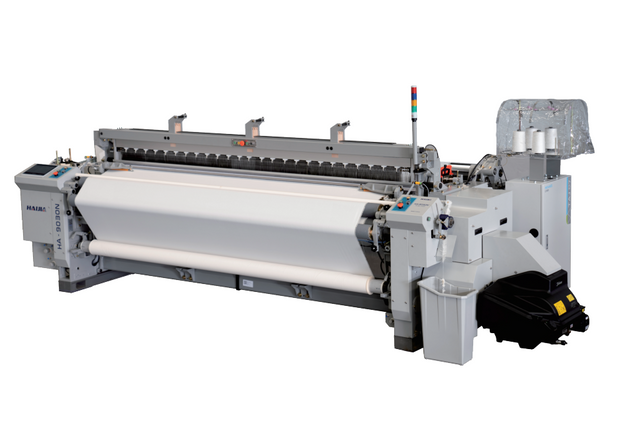
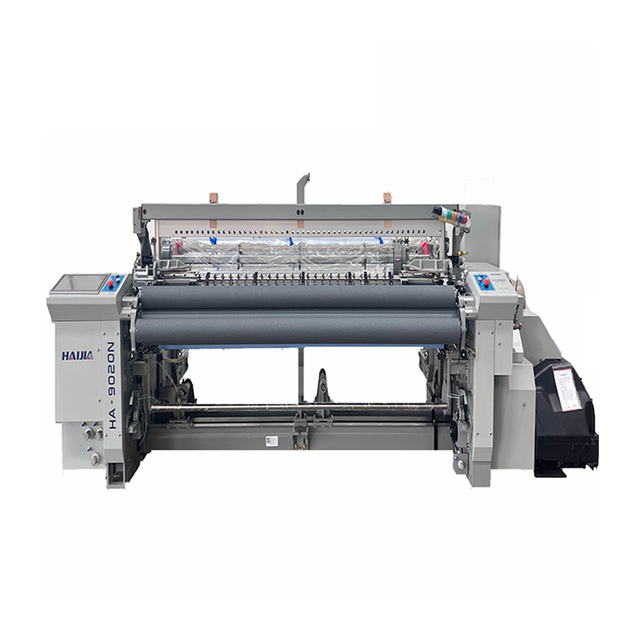
Air jet systems insert the weft utilizing highly pressurized, compressed air to blow the yarn across the shed. A main nozzle provides the initial acceleration, pulling the yarn from the accumulator and launching it into the warp. Relay nozzles fire in a precise sequence to carry the yarn across the entire width of the machine without losing velocity. A specialized profile reed creates an aerodynamic channel that maintains the air flow trajectory precisely. This aerodynamic control prevents the yarn from tangling or dropping during transit. The system requires exact calibration of air pressure, firing timing, and nozzle angles for different yarn weights and characteristics.
These machines achieve exceptionally high RPM capabilities, dominating the market in raw production speed. They frequently exceed 1000 RPM in optimized commercial settings, producing massive volumes of fabric daily. However, continuous air compressor operation creates massive energy demands that impact facility utility loads. This pneumatic requirement increases utility bills significantly, often making electricity the highest variable cost in the plant. Facilities must install heavy-duty industrial rotary screw compressors, refrigerated air dryers, and extensive piping networks. Air leaks in the infrastructure or improper nozzle settings can destroy production efficiency rapidly and inflate operating expenses.
They serve high-volume, standardized natural fiber production perfectly. Cotton weaving facilities depend heavily on this specific technology to meet global demand. They process lightweight to medium-weight fabrics with unmatched speed and consistency. Bed sheeting, shirting fabrics, standard twills, and lightweight denim run flawlessly on these machines. If your facility produces long runs of identical cotton or blended fabric, this system maximizes output and accelerates inventory turnover.
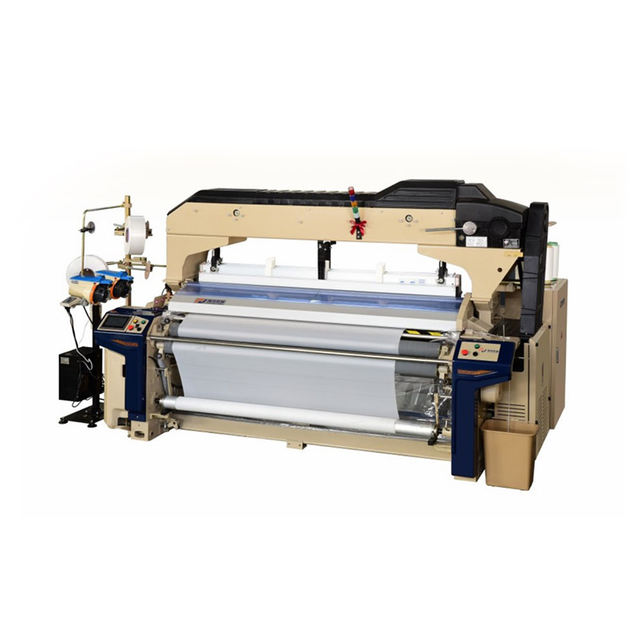
A high-pressure water jet propels the weft yarn across the shed in this highly specialized fluid system. A specialized mechanical plunger pump generates the necessary fluid pressure directly at the machine. A precision nozzle directs the water stream, carrying the yarn smoothly and rapidly through the warp threads. The water provides excellent mass and kinetic energy to carry the yarn over wide widths without the need for relay nozzles. After insertion, mechanical suction systems remove excess moisture from the fabric edges. The fabric then passes over heated drying cylinders to remove residual moisture before winding onto the cloth roll.
This technology faces strict material constraints that dictate its application. It processes only synthetic, hydrophobic materials like polyester, nylon, and acetate. It possesses an absolute inability to process natural fibers under any circumstances. Cotton, wool, and viscose absorb the water immediately upon contact with the jet stream. This rapid absorption makes the yarn too heavy to travel across the shed, causing it to drop mid-flight. It causes immediate yarn breakage, severe machine jamming, and rust development on machine components.
Water jet systems offer incredible high-speed efficiency for synthetic weavers. They incur much lower energy expenses compared to pneumatic systems because pumping water requires significantly less electricity than compressing air. The mechanical water pumps consume a fraction of the electricity required by industrial air compressors. However, the facility must dedicate operations solely to synthetics, limiting market adaptability. Adequate water filtration and recycling systems are mandatory to maintain nozzle performance and environmental compliance. You must treat the effluent water to remove synthetic sizing agents, spin finishes, and oils before discharge or reuse.
These machines use a small, bullet-like metal projectile to carry the weft yarn. A heavy-duty torsion bar mechanism fires this projectile across the machine at high velocity. The projectile grips the weft yarn firmly in a mechanical clamp and carries it through the shed. Guide teeth positioned across the sley ensure the projectile travels in a perfectly straight line without deflecting into the warp threads. Multiple projectiles circulate through a conveyor system beneath the fabric, returning to the firing position. This continuous loop allows for rapid, sequential picking without waiting for a single insertion device to return.
They dominate ultra-wide industrial fabric production where other systems fail. Geotextile manufacturers rely on their precision and power to weave fabrics exceeding five meters in width. They weave heavy-duty canvas, conveyor belt fabrics, and agricultural textiles across wide spans effectively. The positive mechanical grip ensures consistent tension over long distances, preventing weft bowing or skewing. Projectile systems can weave multiple narrow widths simultaneously on one wide machine, utilizing intermediate tucking devices to create clean selvedges. They handle coarse, heavy yarns that fluid systems cannot transport and rapier tapes cannot grip. They represent the ultimate solution for heavy industrial textiles requiring extreme structural integrity.
Contrasting the three primary shuttleless systems clarifies procurement choices for facility upgrades. Air jet systems deliver maximum raw speed for standardized runs, making them ideal for commodity fabrics. Rapier systems provide unmatched fabric adaptability for fashion and complex weaves, allowing facilities to chase high-margin seasonal trends. Projectile systems conquer wide-width capabilities for industrial applications where structural performance is non-negotiable. If you weave standard cotton sheeting, choose pneumatic insertion to maximize daily yield. If you weave fashion apparel with multiple fancy yarns, choose rapier to ensure you can process any designer's request. If you manufacture wide industrial filters or agro-textiles, choose projectile for unmatched width and tension control.
Weaving Technology Performance Matrix
Insertion Type | Optimal Speed (RPM) | Best Fabric Types | Energy Efficiency | Primary Limitation |
|---|---|---|---|---|
Rapier | 180 - 550 | Denim, Jacquard, Heavy Wool | High | Lower maximum speed |
Air Jet | 800 - 1200+ | Cotton, Shirting, Light Blends | Low | High compressed air costs |
Water Jet | 800 - 1200+ | 100% Polyester, Nylon | Medium | Cannot weave natural fibers |
Projectile | 300 - 500 | Geotextiles, Canvas, Wide Industrial | High | High mechanical complexity |
Energy per pick varies drastically across these systems, directly impacting your monthly utility overhead. Rapier machines maintain high mechanical efficiency through direct physical transfer, utilizing highly efficient servo motors. Pneumatic systems require massive air compressor infrastructure running continuously to maintain line pressure. This makes air jets the most energy-intensive option on the market, requiring careful monitoring of air consumption per meter woven. Fluid-based synthetic weavers sit in the middle regarding power draw. They require water pumps and drying cylinders but avoid the extreme electricity costs of compressing atmospheric air.
You must analyze the hidden costs of auxiliary equipment thoroughly during the evaluation phase. Air compressors require frequent maintenance, oil changes, separator replacements, and electrical monitoring. Water filtration units need regular filter replacements, chemical treatments, and sludge removal. Projectile machines require precise lubrication schedules for the metallic projectiles and guide teeth to prevent catastrophic mechanical wear. Calculate these ongoing operational expenses accurately before committing to a specific technology, as auxiliary maintenance often exceeds the maintenance cost of the loom itself.
Calculating long-term ROI requires analyzing machine lifespan, depreciation schedules, and daily output volume. Pneumatic systems demand higher initial CapEx due to the mandatory compressor installations, piping networks, and air treatment facilities. They also incur higher monthly utility bills that eat into gross margins. However, their massive output volume accelerates depreciation recovery rapidly if you maintain high machine efficiency. If you have guaranteed high-volume orders for standard fabrics, the ROI justifies the initial infrastructure expense.
Rapier systems offer slower output but much higher adaptability to market changes. They consume less power and handle premium, high-margin fabrics that command better wholesale prices. This allows for higher profit margins per meter woven, offsetting the lower daily production volume. Balance the initial investment against your specific market demands and sales forecasts. Do not overcapitalize on speed if your market demands variety, short lead times, and frequent style changes. Choose the technology that aligns with your specific sales contracts and facility capabilities.
Transitioning from conventional to computerized systems creates a massive skills gap on the factory floor. Mechanical technicians must learn advanced mechatronics, sensor calibration, and digital signal processing. Operators must understand digital interfaces, electronic let-off systems, and automated pick finding sequences. This transition risks severe downtime if mismanaged during the installation phase. An untrained workforce will damage expensive electronic components quickly through improper handling or incorrect parameter inputs. Improper tension settings will ruin thousands of meters of fabric before quality control catches the error.
Implement vendor-supplied training programs immediately upon purchase, ensuring all shifts receive equal instruction. Hire specialized mechatronics technicians for complex troubleshooting and electronic repairs rather than relying solely on mechanical fitters. Establish strict predictive maintenance schedules for all moving parts based on the manufacturer's operating hours guidelines. Do not wait for components to fail during production, as secondary damage often occurs. Regular sensor calibration prevents fabric defects and unexpected machine stops. Clean the relay nozzles and profile reeds meticulously to maintain aerodynamic efficiency and prevent yarn deflection.
Imported machinery introduces severe spare parts bottlenecks that can cripple production. Keep essential electronic boards, servo motors, and mechanical consumables in local inventory at all times. Relying on overseas shipments halts production for weeks while waiting for customs clearance. Establish relationships with local precision engineering firms for emergency part fabrication when OEM parts are unavailable. Maintain a robust supply of specialized lubricants required by the manufacturer, as using incorrect oils will destroy high-speed bearings rapidly.
Environmental compliance presents another significant operational risk that requires proactive management. Fluid-based systems require strict wastewater management protocols to handle synthetic sizing and spin finishes. You cannot discharge untreated synthetic runoff into municipal sewers without facing severe regulatory fines. Pneumatic and projectile systems generate intense noise and structural vibration that can damage facility foundations. Install proper vibration dampening mounts under the machine feet during installation. Provide operators with mandatory industrial hearing protection and enforce its use. Ensure your facility meets all local occupational safety regulations regarding noise exposure and air quality.
Matching the correct types of looms to your specific material requirements ensures long-term operational success. Execute the following steps to finalize your procurement strategy:
Conduct a comprehensive facility energy audit to determine auxiliary equipment capacity.
Request pilot runs with your specific yarn samples from loom manufacturers.
Calculate operational expenses over a 10-year horizon before finalizing procurement.
Assess local environmental regulations regarding wastewater discharge and noise emissions.
For textile manufacturers looking for reliable weaving solutions, Qingdao Haijia Machinery Co.,Ltd. provides professional textile machinery solutions with a focus on advanced weaving technology and efficient production requirements. With experience in developing weaving equipment for different textile applications, Haijia Machinery helps customers select suitable loom solutions to improve production efficiency, fabric quality, and long-term operational performance.
A: The primary difference lies in the weft insertion method. Shuttle looms use a heavy wooden shuttle carrying a bobbin. Shuttleless looms use air, water, rapiers, or projectiles to carry the yarn. Shuttleless systems offer vastly higher speeds. They reduce noise significantly and improve overall production efficiency by eliminating the heavy moving mass.
A: Water jet looms are the most efficient choice for synthetic fabrics. They use high-pressure water to insert the weft rapidly. This requires hydrophobic materials like polyester or nylon. They offer exceptional speeds and lower energy consumption compared to pneumatic alternatives, making them highly profitable for synthetics.
A: A rapier loom uses physical tapes or rods to pull the yarn across the shed. This provides extreme versatility for heavy or complex fabrics. An air jet loom uses compressed air to blow the yarn across. This offers raw speed for standardized, lightweight to medium-weight fabrics but consumes much more electricity.
A: Natural fibers like cotton and wool are highly hydrophilic. They absorb the water used for weft insertion immediately upon contact. This rapid absorption makes the yarn too heavy to travel across the shed. It leads to severe yarn breakage, loss of tension, and complete machine jamming.
A: Modern shuttleless systems operate at varying speeds based on insertion type. Rapier machines typically run between 180 and 550 RPM. Pneumatic and fluid-based systems scale much higher. They frequently exceed 800 to 1200 RPM, depending on the specific fabric width, yarn quality, and machine generation.
A: Rapier looms generally consume the least energy per pick among shuttleless options. They rely on direct mechanical transfer to move the yarn. This avoids the massive energy requirements of running continuous industrial air compressors needed for pneumatic insertion systems.
A: An automatic loom is a conventional power loom upgraded with automated replenishment. It automatically changes the depleted bobbin or shuttle without stopping the machine. This is distinct from modern shuttleless systems, which draw yarn continuously from large stationary cones and do not use traditional shuttles at all.