Tel: +86-532-83130887 Email: eiffel@qdhaijia.net

Views: 0 Author: Site Editor Publish Time: 2026-08-19 Origin: Site
Material failure, production delays, and compromised product lifespans often stem from a fundamental misunderstanding of fabric architecture during the sourcing phase. Selecting the incorrect fabric orientation or knit structure directly impacts tensile strength, dimensional stability, and pattern alignment. Failing to account for directional yarn properties leads to wasted cutting yield, misaligned prints, and increased product return rates. To make informed material sourcing and product development decisions, technical buyers and designers must evaluate the distinct mechanical properties of warp and weft yarns in both woven and knitted textiles. You need to know exactly how these threads interact under stress on the factory floor. Understanding these structural foundations prevents manufacturing errors and ensures the final product meets rigorous performance standards.
Directional Mechanics: Warp yarns run lengthwise (parallel to the selvage) under high tension, dictating the continuous length of the roll. Weft yarns (picks) run crosswise across the loom frame, providing the fabric's textural fill and governing its fixed width.
Structural Integrity: Warp yarns require higher twist multiples to withstand loom stress, dictating the longitudinal stability and primary tensile strength of the final product.
Manufacturing & Yield: Fabric orientation dictates pattern direction (e.g., up-the-roll vs. railroaded) and heavily influences marker making, cutting efficiency, and overall material yield.
Knitting Distinctions: Warp knits offer superior dimensional stability and run-resistance for technical applications, whereas weft knits provide higher elasticity and cost-effective production for standard apparel.
Table of Contents
Textile engineering relies on a precise grid system. The structural integrity of any woven material depends entirely on how longitudinal and transverse threads interact under mechanical stress. Evaluating these components individually reveals how a fabric will perform during cutting, sewing, and end-user wear. Factory floors do not forgive poor material selection, so understanding the loom setup is mandatory for anyone specifying textiles.
Warp yarns, technically referred to as "ends" in mill terminology, form the primary load-bearing skeleton of a woven textile. These yarns run vertically and continuously along the entire length of the fabric roll, remaining parallel to the finished selvage edge. During the weaving process, thousands of individual ends are wound onto a massive cylindrical warp beam at the back of the loom. They are drawn forward, threaded through the heddles, sleyed through the reed, and held under immense, continuous tension.
Because the loom mechanisms constantly lift and lower these threads to create the "shed" (the opening through which the transverse yarn passes), warp yarns must possess exceptional tensile strength. To prevent breakage and minimize friction-induced abrasion during high-speed weaving, mills engineer warp yarns with a higher twist multiple. Industry standards typically dictate that warp yarns feature 3.5 to 4.5 more turns per inch compared to their transverse counterparts. Before weaving even begins, these yarns often undergo a process called "slashing" or "sizing," where they are coated with starches or polymers to temporarily increase their rigidity and smoothness.
This intense preparation creates a denser, straighter, and significantly stronger yarn profile. When sourcing materials for applications requiring high longitudinal stability, such as heavy-duty denim, industrial canvas, or load-bearing technical gear, evaluating the quality, density, and twist of the warp is the most critical step. If the warp fails, the entire fabric structure collapses.
Weft yarns, commonly known as "picks" or the "woof," provide the horizontal fill that binds the vertical skeleton together. These yarns are drawn horizontally across the loom, interlacing over and under the taut warp threads. The continuous back-and-forth span of the weft dictates the fixed vertical width of the finished fabric roll, which typically ranges from 44 to 60 inches depending on the loom specifications. Modern shuttleless looms, such as rapier, air-jet, or water-jet machines, insert these picks at incredibly high speeds, sometimes exceeding 1,000 insertions per minute.
Unlike the highly tensioned vertical threads, weft yarns are inserted under significantly lower tension. This mechanical reality allows mills to use softer, bulkier, or less twisted yarns in the transverse direction. Weft threads frequently incorporate novelty fibers, slubs, or thicker yarn counts to create specific surface textures. Because they must navigate over and under the rigid vertical threads, weft yarns naturally develop a wavy structure known as "crimp."
The weft primarily determines the fabric's hand-feel, drape, and crosswise mechanical stretch. From a manufacturing standpoint, altering the weft yarn is the most efficient way to change a fabric's aesthetic or tactile properties. Rebuilding an entire warp beam setup takes days and costs thousands of dollars. Swapping out the weft yarn takes minutes. Therefore, most seasonal fabric variations in apparel lines rely on a standard warp foundation paired with diverse weft insertions.
Accurate material evaluation requires the ability to identify yarn direction quickly on the factory floor or in the design studio. Relying solely on supplier spec sheets without physical verification often leads to cutting errors and compromised product quality. Several tactile and visual tests allow sourcing professionals to determine grainline orientation immediately, even when handling small, unmarked swatches.
The most definitive and reliable method for identifying yarn direction is locating the selvage. The selvage is the tightly woven, self-finished edge that prevents the fabric from unraveling on the roll. Warp yarns always run strictly parallel to this edge. Conversely, weft yarns run perpendicular, intersecting the selvage at a 90-degree angle. When reviewing full-width sample yardage, locating the selvage instantly establishes the true vertical grainline of the material. You should always mark this grainline on your patterns before cutting.
When working with small cut swatches where the selvage is missing, analyzing individual threads provides clear directional indicators. By unraveling a few threads from adjacent sides of the swatch and examining them side-by-side, the physical effects of the loom become apparent. The yarns that appear relatively straight and rigid are the warp threads, as they were held under extreme tension during weaving. The yarns that exhibit a distinct, wavy "crimp" are the weft threads, permanently shaped by their journey over and under the taut vertical grid.
Applying manual tension to a woven swatch reveals the inherent mechanical properties of the weave structure. Grasp the fabric with both hands and pull firmly in one direction, then repeat the process in the perpendicular direction. The direction that exhibits minimal give and feels rigid is almost certainly the warp. The transverse direction will exhibit noticeable mechanical stretch. This crosswise give occurs because pulling the fabric straightens out the inherent crimp of the weft yarns, allowing the material to expand slightly before reaching its maximum tensile limit.
To ensure consistency across your sourcing team, implement a standardized physical check for every new fabric swatch received from a mill:
Locate the selvage edge if present and draw a directional arrow on the back of the swatch indicating the warp.
If no selvage is present, perform the manual stretch test on both axes.
Extract three adjacent yarns from the rigid axis and three from the stretchy axis.
Place the extracted yarns on a flat, dark surface to visually confirm which set retains the wavy crimp (weft) and which remains straight (warp).
Document the findings on the fabric header card before sending it to the pattern making department.
Understanding the fundamental differences between warp vs weft is essential for engineering products that withstand end-use stress. Technical buyers must evaluate these dimensions using standardized testing protocols rather than subjective hand-feels. You cannot build a durable product if you do not know the exact load-bearing limits of your raw materials.
Yarn Direction Characteristic Matrix
Technical Attribute | Warp Yarns (Ends) | Weft Yarns (Picks) |
|---|---|---|
Loom Tension | Extremely High | Low to Moderate |
Yarn Twist Multiple | High (3.5 - 4.5 turns/inch higher) | Low (Softer, bulkier) |
Tensile Strength | Primary load-bearing strength | Secondary strength |
Mechanical Stretch | Minimal to none | Noticeable give due to crimp |
Density | Higher ends per inch (EPI) | Lower picks per inch (PPI) |
Matching fabric strength to specific end-use stress points dictates product longevity. Because warp yarns are denser, straighter, and possess a higher twist, the longitudinal direction universally bears higher physical loads. When evaluating materials for backpacks, tactical gear, or heavy outerwear, the vertical grain must align with the primary axis of stress. For example, the shoulder straps of a heavy pack must be cut parallel to the warp. If cut on the cross-grain (weft), the straps will stretch out of shape and eventually snap under the weight.
Suppliers should provide standardized testing data, specifically the ASTM D5034 (Grab Test), which measures the breaking strength and elongation of textile fabrics. A thorough review of this data will consistently show higher breaking force thresholds in the warp direction. Failing to align the strongest axis with the product's load-bearing seams results in premature material failure, seam slippage, and a spike in warranty claims.
Preventing fabric distortion over a product's lifecycle requires a careful balance of yarn twist and tension. While high warp twist reduces surface pilling and increases strength, it also introduces the risk of residual torque. If the twist energy is not properly set during the finishing process at the mill, the fabric will attempt to untwist after its first exposure to water and heat. This phenomenon causes the dreaded "leg twist" in poorly manufactured denim jeans.
Balancing the high-tension vertical threads with flexible, lower-twist transverse threads is necessary to maintain overall dimensional stability. Quality control teams must evaluate how the fabric behaves after standard washing and drying cycles to ensure the structural grid remains square. Mandate AATCC 135 testing to measure dimensional changes before approving any bulk fabric orders.
Achieving the correct silhouette and ensuring user comfort depends heavily on the weft configuration. Woven fabrics naturally possess more mechanical give in the crosswise direction due to yarn crimp. This inherent flexibility improves drape and allows garments to move with the body. If an application requires significant multi-directional stretch, elastane or spandex fibers must be integrated during the spinning process.
Integrating elastane solely into the weft creates 2-way stretch, which is standard for most comfort-fit apparel like stretch denim or chinos. Integrating elastane into both directions creates 4-way stretch, necessary for high-performance activewear and mountaineering pants. However, adding elastane to the highly tensioned warp beam increases manufacturing complexity, raises costs, and introduces severe risks related to long-term stretch recovery degradation. Over time, the elastane in the warp can break down, leading to baggy knees and sagging waistbands.
Fabric architecture directly influences the financial viability of a production run. How a pattern is laid out on the cutting table relative to the yarn direction impacts material consumption, visual aesthetics, and the structural integrity of the final product. A poorly planned marker can waste up to 20% of your total fabric buy.
Yarn direction dictates both visual design and structural engineering. In yarn-dyed fabrics, vertical stripes are engineered directly into the warp color arrangement during the initial loom setup. Horizontal stripes are created by alternating colored yarns in the weft insertion. When dealing with directional prints or distinct textures like corduroy and velvet, sourcing teams must specify the orientation to ensure visual continuity across seams.
Patterns cut "up-the-roll" run parallel to the vertical grain, which is the standard approach for apparel. Patterns cut "railroaded" run parallel to the horizontal grain. Railroading is frequently used in large-scale upholstery to cover long sofas without introducing vertical seams, but it fundamentally alters the stretch and load-bearing dynamics of the finished piece. You must communicate your intended cutting direction to the mill so they can engineer the fabric's strength accordingly.
Cutting Orientation Impact Matrix
Orientation Method | Primary Application | Structural Impact |
|---|---|---|
Up-the-Roll (Standard) | Apparel, Drapery, Technical Gear | Maximizes vertical load-bearing strength. |
Railroaded (Cross-grain) | Upholstery, Wide-span covers | Shifts primary strength to the horizontal axis. |
Bias Cut (45-degree angle) | Dresses, Binding tapes | Maximizes drape and mechanical stretch; lowest stability. |
Grainline alignment dictates the efficiency of marker making. The marker—the layout of pattern pieces on the fabric—must respect the true vertical grain to ensure garments hang correctly on the body. Forcing a pattern match against the natural grid (known as off-grain cutting) to save space drastically reduces cutting efficiency and results in garments that twist uncomfortably around the wearer's body.
Sourcing and production teams must calculate the financial trade-off between achieving perfect aesthetic alignment for plaids or stripes and the resulting increase in material waste percentages. Precise grainline adherence is non-negotiable for high-quality manufacturing, meaning fabric yield calculations must account for strict directional cutting rules. Always run a test marker on your CAD system before finalizing your fabric consumption estimates.
While woven fabrics rely on interlacing distinct vertical and horizontal threads, knitted fabrics are constructed by interlocking loops of yarn. The directional principles remain, but the mechanical outcomes differ significantly. Selecting the correct knitting method is critical for balancing elasticity with structural stability. You cannot substitute a weft knit for a warp knit in a high-compression garment without disastrous results.
Weft knitting is the most common method for producing apparel textiles. In this approach, a single continuous yarn is fed horizontally, creating interlocking loops across the width of the fabric. This process is typically executed on high-speed circular knitting machines or flatbed machines.
Pros: This construction provides exceptionally high multi-directional stretch, a comfortable and fluid drape, and highly cost-effective production rates. It is the ideal manufacturing method for t-shirts, seamless activewear, sweaters, and hosiery.
Trade-offs & Risks: Weft knits suffer from lower dimensional stability compared to woven fabrics or warp knits. Because the entire structure relies on a single continuous yarn horizontally looping back on itself, a single broken thread can cause the fabric to run or ladder extensively, compromising the entire garment. They also tend to curl at the edges when cut, making them harder to sew.
Warp knitting represents a more complex and structurally sound approach to knitwear. Instead of a single yarn traveling horizontally, multiple yarns are fed vertically and simultaneously, with each needle looping its own dedicated thread in a zig-zag pattern along the length of the fabric. Common examples include Tricot and Raschel knits.
Pros: This vertical looping architecture delivers exceptional dimensional stability. Warp knits are inherently run-resistant; a broken loop will not cause a laddering effect. They retain their original shape remarkably well after aggressive stretching or commercial washing, making them the superior choice for high-compression activewear, swimwear, lingerie, and industrial mesh textiles.
Trade-offs & Risks: The machinery setup for warp knitting is significantly more complex and expensive, similar to preparing a warp beam for weaving. These fabrics generally exhibit lower crosswise elasticity compared to weft knits and require higher minimum order quantities (MOQs) due to the extensive setup time.
Securing high-quality textiles requires rigorous oversight of the finishing processes. Even if the initial loom setup is flawless, improper handling during dyeing, setting, and rolling can permanently distort the yarn grid, leading to catastrophic failures during garment assembly. You must hold your mills accountable to strict physical tolerances.
The structural grid of a woven fabric relies on the vertical and horizontal yarns intersecting at a perfect 90-degree angle. Bowing occurs when the transverse yarns curve in the center of the fabric roll, while skewing occurs when the transverse yarns run diagonally rather than straight across. These defects typically arise from uneven tension applied by the stenter frame during the final heat-setting or drying processes.
To mitigate this risk, technical specification packs (tech packs) must explicitly define acceptable skew tolerances. Industry standards generally mandate that skewing must remain under 2% to 3%. Production managers must reject fabric batches that exceed this tolerance. Garments cut from skewed fabric will inevitably twist around the body after the first laundering cycle as the yarns attempt to relax back into their natural perpendicular state. Do not accept discounts on skewed fabric; it will cost you more in returns and brand damage.
Because longitudinal and transverse yarns are subjected to vastly different tension levels during weaving, they react differently when exposed to heat, moisture, and agitation. When the residual loom tension is released during washing, the vertical threads often contract significantly more than the horizontal threads, altering the garment's fit entirely.
To prevent post-production sizing disasters, sourcing teams must mandate pre-shrinkage treatments directly from the textile mill. Processes such as sanforization mechanically compress the fabric to eliminate residual tension before cutting. Furthermore, buyers must require AATCC 135 dimensional change testing prior to bulk production approval. This standardized test measures the exact percentage of shrinkage in both directions, allowing pattern makers to adjust their digital markers to accommodate the specific shrinkage differential of the chosen material.
Audit current fabric specifications to ensure grainline orientations align perfectly with product stress points and load-bearing seams.
Update supplier tech packs to include strict tension tolerances, specifically limiting bowing and skewing to a maximum of 3%.
Mandate directional strength testing by requiring ASTM D5034 Grab Test data for all load-bearing textiles before approving bulk production.
Calculate cutting yields based on precise grainline orientations to establish accurate material consumption costs prior to placing bulk orders.
Implement a standardized physical selvage and stretch test on the factory floor for every incoming fabric batch to verify yarn orientation.
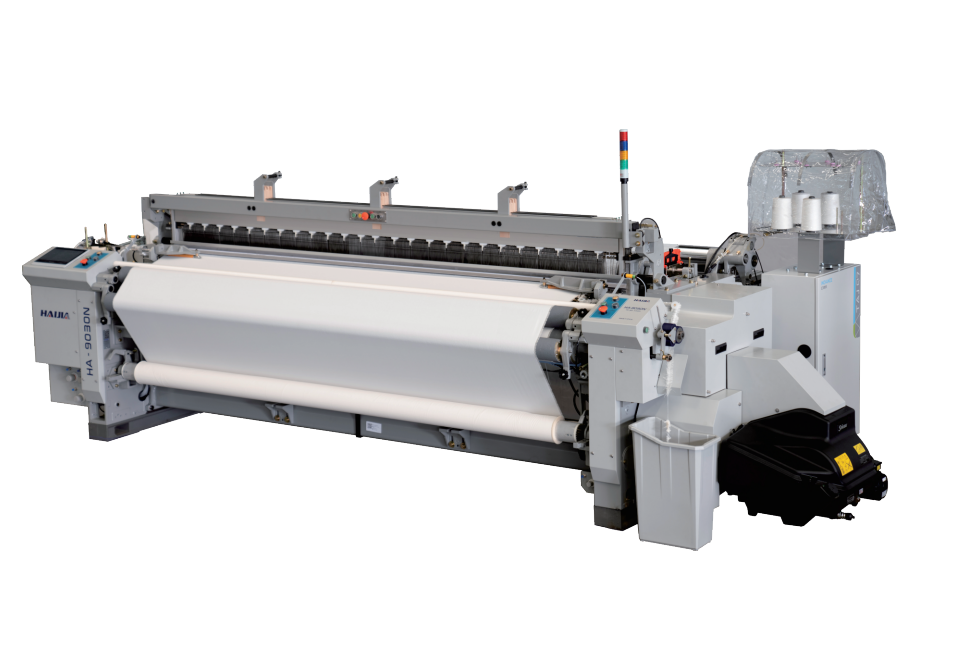
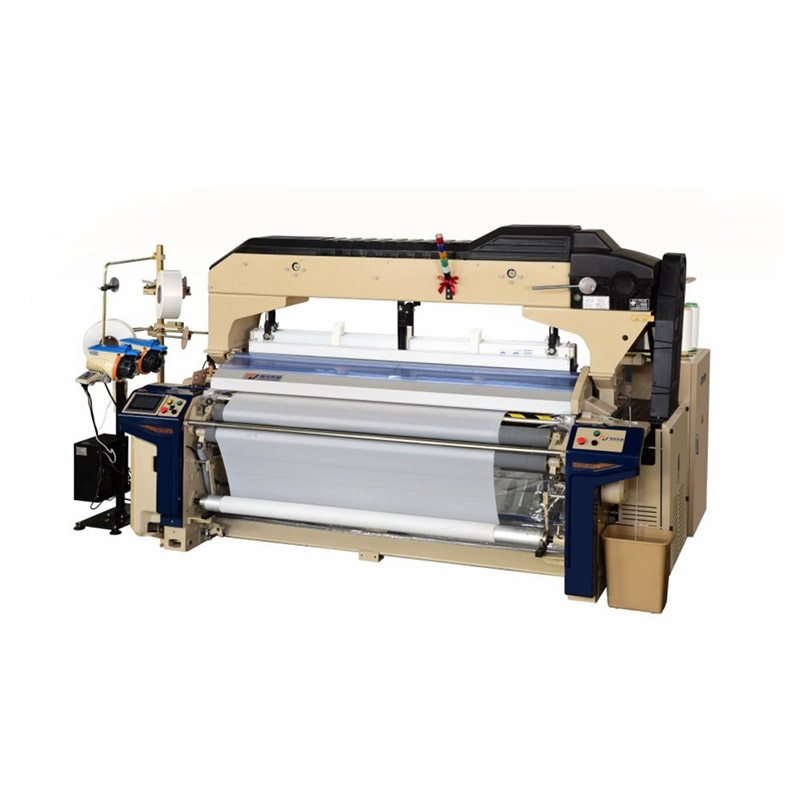
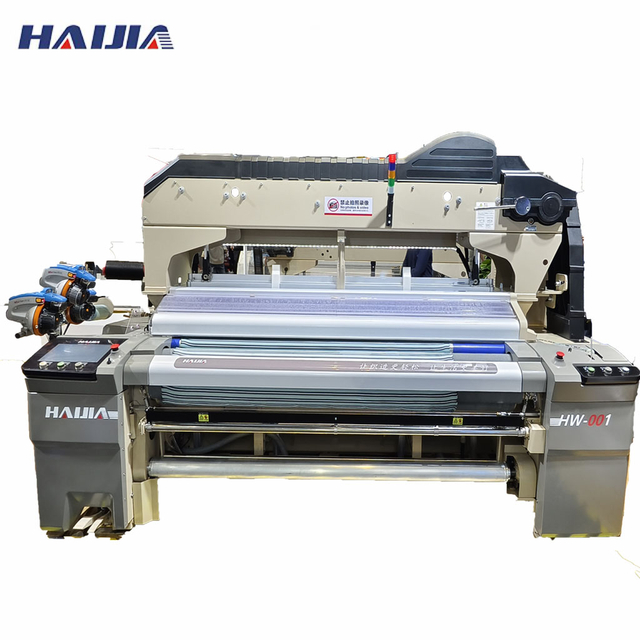
For textile manufacturers, consistent fabric quality also depends on stable and efficient weaving equipment that can maintain precise yarn control throughout production. Qingdao Haijia Machinery Co.,Ltd. brings decades of experience in shuttleless loom development and manufacturing, with a focus on water jet and air jet looms and integrated capabilities covering R&D, production, marketing, and after-sales service.
A: The most reliable method is locating the selvage edge; warp yarns always run parallel to the selvage, while weft yarns run perpendicular. If the selvage is missing, pull individual threads from the swatch. Warp yarns will appear straight and rigid due to loom tension, whereas weft yarns will exhibit a wavy crimp from weaving over and under the vertical threads.
A: The warp direction is universally stronger. These vertical yarns are held under extreme tension on the loom and require a higher twist multiple to prevent breakage during weaving. This higher density and twist provide the primary longitudinal stability and load-bearing capacity of the finished textile.
A: Railroading refers to cutting or applying a fabric so that the pattern or design runs horizontally, parallel to the weft, rather than vertically up the roll. This technique is commonly used in upholstery to cover wide pieces of furniture, like sofas, without introducing vertical seams.
A: Warp yarns endure immense mechanical stress, constant tension, and friction from the loom's heddles and reed during high-speed weaving. A higher twist multiple binds the fibers tightly together, increasing the yarn's tensile strength and preventing it from snapping during production.
A: Vertical stripes are engineered into the warp direction by arranging colored yarns on the loom's beam before weaving begins. Horizontal stripes are created in the weft direction by alternating the colors of the transverse yarns as they are inserted across the width of the fabric.
A: Yes. Woven fabrics naturally have slight mechanical stretch in the weft direction due to yarn crimp. For significant stretch, elastane is integrated. Adding elastane to the weft creates 2-way stretch, while adding it to both the warp and weft creates 4-way stretch for high-performance applications.