Tel: +86-532-83130887 Email: eiffel@qdhaijia.net

Views: 0 Author: Site Editor Publish Time: 2026-08-19 Origin: Site
Textile manufacturing profitability directly correlates with the operational efficiency of core production equipment. Misaligning weaving technology with production demands creates severe risks on the factory floor. Incorrect machine selection leads to high defect rates, excessive energy consumption, and operational bottlenecks that stall entire supply chains. The fundamental baseline of any weaving machine is straightforward. It executes the precise, high-speed interlacing of two distinct sets of yarns. The longitudinal warp and the transverse weft intersect at right angles to form a stable woven fabric structure. This guide serves as a technical evaluation framework. Production managers will understand loom mechanics, compare modern technologies, and make data-backed purchasing decisions. We focus on mechanical realities, facility requirements, and material compatibility to ensure your next equipment upgrade aligns perfectly with your production targets.
Mechanism Dependency: Fabric quality and production speed are dictated by the precision of a weaving machine's primary, secondary, and tertiary motions.
Technology Trade-offs: Shuttleless technologies (Rapier, Air-Jet, Water-Jet, Projectile) offer distinct advantages in speed (PPM) versus versatility, requiring careful alignment with target fabric types.
Implementation Realities: Upgrading weaving infrastructure requires rigorous facility auditing for footprint, vibration control, and operator upskilling.
Table of Contents
The weaver's beam serves as the foundational material source for the entire operation. It holds thousands of longitudinal warp yarns under continuous, controlled tension. Maintaining consistent tension across the entire width of the warp sheet prevents structural fabric defects. Modern facilities use highly precise electronic let-off systems instead of outdated mechanical friction setups. Electronic systems utilize load cells and servomotors to monitor and adjust warp tension in real-time. This continuous adjustment compensates for the decreasing diameter of the warp beam as the machine consumes yarn. Absolute tension consistency prevents warp breakages and eliminates starting marks. On the floor, operators calibrate these load cells weekly to ensure the servomotors respond accurately to minute tension drops.
Heddle wires and harness frames control the vertical movement of individual warp yarns. Each warp yarn passes through the eye of a specific heddle. When the shedding mechanism lifts or lowers specific harnesses, it separates the warp sheet into two distinct layers. This separation creates the shed, the temporary tunnel for the weft yarn to pass through. Cam shedding systems utilize mechanical profiles to handle basic, repetitive weave structures at very high speeds. Dobby shedding systems offer moderate complexity, controlling up to 28 harnesses for intricate geometric patterns. Jacquard shedding systems bypass harnesses entirely. They control individual warp threads via electronic modules. This setup allows for massive, non-repeating designs, though it operates at lower maximum speeds due to the mechanical lifting limits of the individual cords.
Weft insertion dictates the overall production speed and technological classification of the loom. Traditional wooden shuttles carrying wound bobbins have evolved into modern shuttleless weft carriers. Shuttleless systems pull yarn directly from large stationary cones located outside the active weaving zone. This eliminates the heavy mass of the shuttle, allowing for exponentially faster insertion rates. Insertion methods include solid projectiles, flexible rapiers, compressed air jets, and high-pressure water jets. The chosen insertion method directly impacts machine speed, operational noise levels, and the physical ability to handle different yarn counts. Mechanics must align these insertion systems with exact precision to prevent yarn shearing during high-speed transfers.
The reed resembles a heavy-duty metal comb spanning the entire width of the loom. It performs three critical functions during the weaving cycle. First, it maintains precise lateral spacing between individual warp yarns. Second, it provides a physical guide track for the weft insertion medium as it crosses the open shed. Third, it executes the beating-up motion. After the weft yarn is inserted, the reed swings forward to batten or push the new yarn into the fell of the cloth. Reed density directly dictates the final fabric construction and thread count. The beating-up force requires massive mechanical stability. It significantly influences overall machine vibration, dictating the structural foundation requirements of the facility floor.
The cloth roller pulls the newly woven fabric away from the active weaving zone. Electronic take-up systems synchronize this pulling action with the let-off motion and the main machine shaft. This exact synchronization maintains precise pick density, measured in picks per inch (PPI) or picks per centimeter (PPCM). Modern electronic take-up mechanisms allow operators to change pick density through software interfaces rather than swapping mechanical gears manually. Consistent take-up tension prevents fabric wrinkling and ensures uniform roll build-up for downstream finishing processes. Operators apply specialized high-friction grip tape to these rollers to prevent heavy industrial fabrics from slipping during the winding phase.
Weaving relies on the flawless execution of three sequential core mechanics. Shedding opens the warp sheet to create the insertion path. Picking propels the transverse weft yarn across this open shed. Beating-up drives the newly inserted weft into the existing fabric structure. Timing tolerances between these motions are measured in milliseconds and exact degrees of main shaft rotation. The shed must be fully open before the picking medium enters. The picking medium must exit the shed completely before the reed begins its forward beating-up stroke. Precision in these primary motions prevents catastrophic yarn collisions and structural fabric defects. Technicians use digital timing diagrams to synchronize these movements down to a single degree of shaft rotation.
Secondary motions manage the continuous flow of material through the machine. Let-off releases new warp yarn into the weaving zone. Take-up winds the finished fabric onto a storage roll. These two motions must operate in perfect harmony to maintain the exact position of the cloth fell. If the let-off feeds too much yarn, warp tension drops, causing poor shed formation and insertion failures. If the take-up pulls too fast, warp tension spikes, leading to widespread yarn breakages across the warp sheet. Electronic synchronization between these secondary motions ensures uniform fabric weight and structural integrity from the start to the end of the roll.
Tertiary motions function as critical safety and quality control systems. Warp stop motions utilize electrical drop wires to detect broken longitudinal threads instantly. When a thread breaks, the drop wire falls, closing an electrical circuit and halting the machine. Weft stop motions use optical or piezoelectric sensors to identify broken or short transverse picks during insertion. Protector motions prevent the reed from striking a trapped weft carrier if the picking motion fails to complete its path. These automated features minimize machine downtime, prevent the production of defective yardage, and protect the delicate reed from severe mechanical damage.
Sensor Types and Response Times in Tertiary Motions
Motion Type | Sensor Technology | Detection Target | Average Response Time |
|---|---|---|---|
Warp Stop | Electrical Drop Wires | Broken longitudinal threads | 10-15 milliseconds |
Weft Stop | Optical / Piezoelectric | Short or broken transverse picks | 5-8 milliseconds |
Protector | Mechanical / Inductive | Trapped weft carriers in the shed | 12-20 milliseconds |
When primary and secondary motions fall out of synchronization, specific fabric defects emerge on the loom. Operators must identify these visual cues to adjust mechanical timings immediately.
Starting Marks: These horizontal bands appear when the loom restarts after a stoppage. They indicate a failure in the electronic let-off and take-up synchronization, causing improper warp tension at the cloth fell.
Broken Picks: A partial weft yarn in the fabric structure points to excessive insertion tension or a late closing of the warp shed, which traps the yarn before it crosses completely.
Warp Floats: When a warp yarn fails to interlace with the weft, it creates a float. This defect usually stems from a broken heddle wire or a malfunctioning harness frame that fails to lift the yarn into the upper shed layer.
Reed Marks: Uneven spacing between warp yarns often results from damaged or bent reed dents. Mechanics must inspect the reed closely and replace it if the metal wires show signs of severe abrasion.
Legacy shuttle technology utilizes a heavy wooden or composite shuttle carrying a small bobbin of weft yarn. This shuttle is physically knocked back and forth across the shed. Shuttle looms are largely obsolete in modern high-volume manufacturing environments. They suffer from extremely low production speeds, high ambient noise levels, and severe limitations on fabric width. However, they retain specific niche applications. Heritage textiles, selvedge denim, and specialized tubular fabrics still rely on shuttle technology where closed, continuous selvedges are a strict requirement for the final product.
Rapier machines use mechanical arms or flexible tapes equipped with specialized gripping heads to pull the weft yarn across the shed. Flexible rapiers coil under the machine to save floor space, while rigid rapiers require a larger operational footprint. Rapier technology offers unparalleled versatility. It easily handles complex, multi-color weft sequences and extremely heavy or textured yarns. This superior material flexibility balances against moderate production speeds. Rapier machines excel in producing high-end fashion fabrics, worsted wools, and complex upholstery materials where yarn diversity outweighs raw output speed. Mechanics frequently swap rapier heads to accommodate different yarn thicknesses during style changeovers.
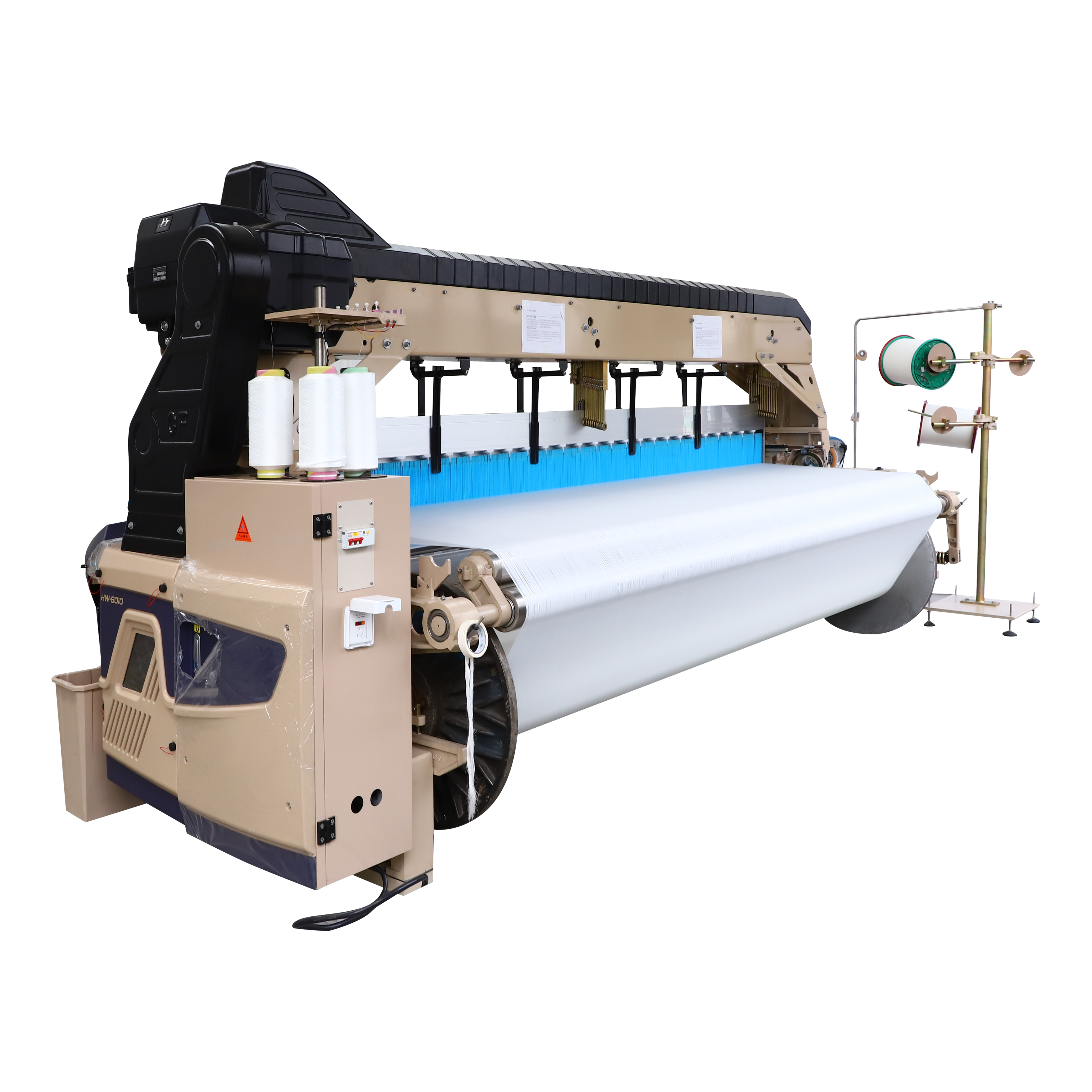
Pneumatic weft insertion defines the air-jet category. A main nozzle blasts the weft yarn into the shed, while a series of relay nozzles maintain the air velocity across the entire width. Air-jet looms deliver exceptional picks-per-minute (PPM) capabilities, making them the fastest single-phase weaving technology available. They perfectly suit standard, high-volume fabrics like cotton sheeting, denim, and lightweight synthetics. However, operators must manage strict requirements for yarn quality. Weak or highly hairy yarns cannot withstand the intense pneumatic forces. Facilities must also support the massive energy demands of industrial compressed air systems, typically requiring a constant supply of 6 to 8 bar of clean, dry air.
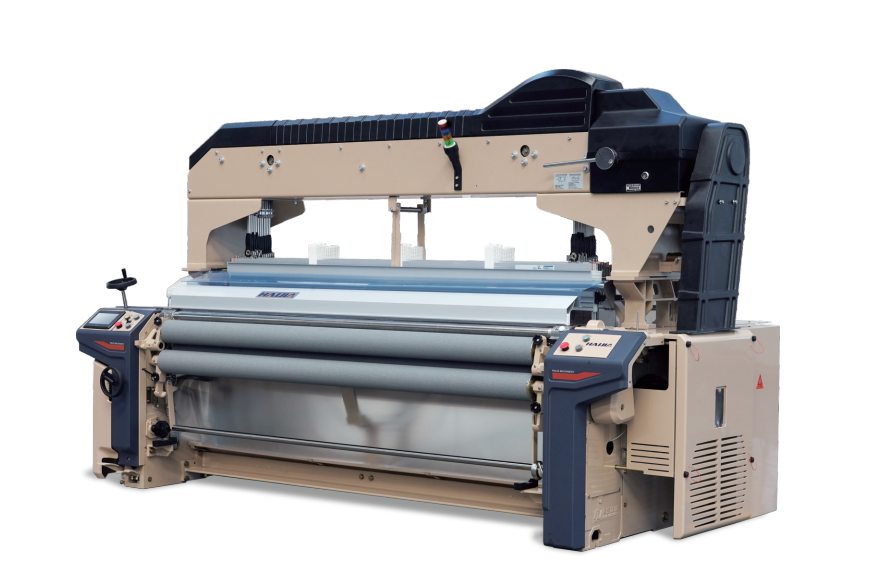
Hydraulic weft insertion provides a highly efficient, low-energy alternative to air-jet systems. A high-pressure pump shoots a precise jet of water that carries the weft yarn across the shed. This technology operates at extremely high speeds but works exclusively with hydrophobic synthetic fibers like polyester, nylon, and acetate. Natural fibers absorb the water, become heavy, and break under tension. Facilities utilizing water-jet technology must account for post-weaving drying processes and manage strict water filtration systems to prevent nozzle blockages and fabric staining. The water pressure must be calibrated precisely to match the denier of the synthetic yarn being inserted.
Projectile machines utilize small, bullet-like metal grippers. A torsion bar mechanism fires the projectile across the shed, dragging the weft yarn behind it. Multiple projectiles circulate through the machine on a continuous conveyor system. These machines excel at ultra-wide fabric production, capable of weaving widths exceeding five meters. They dominate the production of heavy-duty materials, technical textiles, and industrial canvases. Projectile technology requires rigorous maintenance due to high mechanical complexity and the intense physical forces exerted on the picking mechanisms. Technicians must regularly inspect the torsion bars and projectile return tracks for metal fatigue.
The apparel sector demands a balance of high volume and rapid style changeovers. High-volume production of standard cottons, denims, and shirting fabrics relies heavily on the high-speed capabilities of air-jet machines. When fashion trends dictate complex patterns, multiple weft colors, or delicate worsted wools, facilities pivot to rapier weaving machines. The versatility of the rapier head allows for seamless transitions between different yarn counts and fiber types without extensive mechanical re-tuning. This flexibility keeps production lines moving even when seasonal fabric weights change drastically.
Home textiles require specialized equipment capable of handling heavy yarns and wide widths. The production of upholstery, drapery, and intricate tapestries demands robust tension control systems. Advanced jacquard shedding systems are mandatory for managing the complex interlacing necessary for large-scale, non-repeating decorative patterns. Heavy-duty rapier machines typically pair with these jacquard heads to manage the dense, multi-layered weave structures required for premium home furnishings. The mechanical frames of these looms are heavily reinforced to handle the extreme warp tension generated by dense upholstery fabrics.
Technical textiles prioritize physical performance over aesthetics. Heavy-duty applications include geotextiles, automotive airbags, conveyor belting, and fiberglass composites. These materials necessitate specialized equipment capable of exerting massive beating-up forces and maintaining extreme warp tension. Projectile looms and heavily reinforced rapier systems handle the dense yarn counts and rigid synthetic filaments required. Precision take-up mechanisms ensure the exact fabric geometry necessary to meet strict industrial safety and performance certifications.
Setting up a loom for heavy-duty technical textiles requires a strict sequence of adjustments:
Calibrate the electronic let-off load cells to handle maximum warp tension without triggering false stops.
Install reinforced heddle frames designed to withstand the abrasive nature of industrial synthetic filaments.
Adjust the beating-up stroke to deliver maximum force, ensuring dense pick insertion for rigid fabrics.
Configure the take-up roller with high-friction coverings to prevent heavy fabrics from slipping during winding.
Test the protector motions manually to verify they can stop the heavy mechanical components instantly in case of a mispick.
Matching machine types to material inputs is the most critical step in procurement. A mismatch leads to continuous yarn breakages and unacceptable defect rates. Production managers must analyze their primary yarn types, required fabric weights, and necessary pattern complexities before evaluating specific machine models. Selecting the right weaving machine ensures that the physical properties of the yarn align with the mechanical forces of the insertion system.
Machine Type vs. Fabric Compatibility Matrix
Machine Technology | Optimal Fabric Types | Yarn Compatibility | Pattern Flexibility |
|---|---|---|---|
Rapier | Upholstery, Worsted Wool, Fashion Apparel | Highly versatile; handles weak, heavy, and textured yarns | Excellent (Up to 12 weft colors) |
Air-Jet | Denim, Cotton Sheeting, Lightweight Synthetics | Requires strong, uniform yarns; struggles with hairy fibers | Moderate (Up to 6 weft colors) |
Water-Jet | Taffeta, Lining Fabrics, Synthetic Outerwear | Strictly hydrophobic synthetics (Polyester, Nylon) | Low (Typically 2-4 weft colors) |
Projectile | Geotextiles, Industrial Canvas, Ultra-wide Fabrics | Heavy-duty synthetics, coarse natural fibers | Moderate (Up to 4 weft colors) |
Maximizing output often conflicts directly with managing utility demands. Air-jet systems achieve maximum picks per minute but require substantial, energy-intensive compressor infrastructure. Rapier systems operate at slower speeds but consume significantly less power per inserted pick. Production managers must evaluate the energy efficiency of different insertion systems against their required daily yardage. High-speed operation also accelerates mechanical wear, requiring more frequent component replacement. Facilities must audit their existing electrical grids to ensure they can handle the peak loads generated during machine startup sequences.
Modern textile manufacturing requires seamless integration with enterprise resource planning and manufacturing execution systems. Facilities must evaluate machines featuring automated defect detection cameras and predictive maintenance sensors. Real-time production dashboards allow operators to monitor machine efficiency, track yarn breakages, and optimize operational parameters instantly. This data-driven approach minimizes unplanned downtime and maximizes overall equipment effectiveness. Networked looms can automatically alert maintenance teams when vibration sensors detect abnormal bearing wear.
Physical installation constraints dictate machine selection. Facilities must evaluate available floor space, including the necessary clearance for warp beam loading and fabric roll removal. Heavy looms, particularly projectile and high-speed air-jet models, require heavily reinforced concrete foundations for adequate vibration dampening. Certain yarns and high-speed insertion systems demand strict climate control. Facilities must maintain specific ambient humidity and temperature levels to prevent static buildup and yarn degradation. HVAC systems must be sized to handle the heat output of multiple high-speed servomotors operating simultaneously.
Transitioning from legacy mechanical looms to highly automated, software-driven shuttleless machines presents a steep learning curve. Modern looms require operators to interface with complex touchscreens, interpret sensor data, and adjust digital tension parameters. Facilities must invest heavily in operator upskilling to maximize equipment efficiency. Poorly trained operators will struggle to troubleshoot electronic stop motions, leading to prolonged machine downtime and reduced production yields. Training programs should include hands-on sessions for calibrating load cells and cleaning optical sensors.
Proprietary electronic components and specialized mechanical parts introduce significant operational risk. Production managers must evaluate original equipment manufacturer service agreements before purchase. Local technician availability is critical for resolving complex software or servo-motor failures. The supply chain for consumable parts, such as flexible rapier tapes, air-jet relay nozzles, and projectile grippers, must be secure. Delays in sourcing these high-wear components will paralyze the weaving shed.
Preventative maintenance prevents catastrophic mechanical failures and extends the operational lifespan of the equipment. Facilities must implement strict service intervals based on operational hours rather than calendar days.
Daily Inspections: Operators must clean lint accumulation from optical weft sensors and check the main drive belt tension before starting the shift.
Weekly Lubrication: Mechanics apply specialized high-temperature grease to the shedding cam profiles and inspect the rapier drive wheels for abnormal wear patterns.
Monthly Calibrations: Technicians verify the accuracy of the electronic let-off load cells using certified test weights to ensure warp tension readings remain precise.
Quarterly Overhauls: Maintenance teams drain and replace the synthetic oil in the main gearbox, inspect the main shaft bearings for vibration anomalies, and replace worn relay nozzles on air-jet systems.
Annual Audits: Plant engineers conduct a full geometric alignment of the loom frame, ensuring the machine remains perfectly level on its foundation to prevent structural stress.
Conduct a comprehensive facility audit to assess available floor space, foundation strength, and existing climate control capabilities.
Request detailed technical specifications and precise energy consumption data from shortlisted loom manufacturers.
Arrange for physical sample runs at the manufacturer's testing facility using your specific yarn types to verify insertion reliability.
Evaluate the local availability of factory-trained technicians and secure a reliable supply chain for consumable spare parts.
For textile manufacturers looking for reliable weaving solutions, Qingdao Haijia Machinery Co.,Ltd. specializes in developing and manufacturing advanced weaving equipment for modern textile production. With professional experience in loom technology and customized textile solutions, the company helps customers improve production efficiency, optimize fabric quality, and select suitable weaving machines based on different material and application requirements.
A: Weaving is the mechanical process of interlacing two distinct sets of yarns at right angles to form a stable fabric structure. The longitudinal yarns are called the warp, and the transverse yarns are called the weft or filling. This interlacing creates a cohesive, flexible material used for apparel, home goods, and industrial applications.
A: A shuttle loom uses a heavy wooden carrier containing a wound bobbin to carry the weft across the warp. A shuttleless loom pulls weft yarn from a large stationary cone using rapiers, air jets, water jets, or projectiles. Shuttleless machines operate at significantly higher speeds, produce less noise, and can weave much wider fabrics.
A: Air-jet machines are generally the fastest single-phase weaving technology available for industrial production. They achieve extremely high picks per minute by using compressed air to propel the weft yarn. However, their maximum speed depends heavily on yarn strength, uniformity, and the overall width of the fabric being produced.
A: The shedding mechanism dictates pattern complexity. Cam shedding handles simple, repetitive weaves like plain weave or basic twills. Dobby shedding controls more harnesses for complex geometric patterns. Jacquard shedding controls individual warp yarns, allowing for massive, non-repeating designs like intricate tapestries, damasks, and detailed brocades.
A: Machine downtime is primarily caused by yarn breakages in either the warp or weft directions. Other common causes include tension inconsistencies leading to sensor stops, mechanical wear on high-speed insertion components, accumulation of lint in critical sensors, and routine tasks like warp beam replacement or style changeovers.
A: The reed is a comb-like component that performs three vital functions. It maintains precise lateral spacing between the warp yarns. It provides a physical guide track for the weft insertion medium. Finally, it executes the beating-up motion, pushing the newly inserted weft yarn firmly into the fell of the cloth.