Tel: +86-532-83130887 Email: eiffel@qdhaijia.net

Views: 0 Author: Site Editor Publish Time: 2026-08-19 Origin: Site
The structural foundation of a textile dictates its mechanical performance, lifecycle longevity, and manufacturing viability. Specifying the incorrect fabric construction method during product development leads to catastrophic product failures. You might see inadequate stretch in activewear, premature wear in industrial applications, or severe supply chain delays. To make an evidence-based material specification, product developers and sourcing teams must understand the exact mechanical differences between weaving vs knitting. You must evaluate respective performance trade-offs and align them with specific end-use success criteria. Choosing the right structure prevents seam slippage, dimensional distortion, and material fatigue under load. We will break down the exact physical mechanics of interlacing and interlooping. This ensures your next material specification meets field performance demands without over-engineering the fabric.
Structural Mechanics: Weaving relies on the interlacing of two distinct yarn sets (warp and weft) for maximum dimensional stability, whereas knitting utilizes the interlooping of a single yarn system for superior elasticity and drape.
Performance Trade-Offs: Woven fabrics excel in durability, tensile strength, and abrasion resistance; knitted fabrics dominate in flexibility, breathability, and ergonomic contouring.
Manufacturing Economics: Knitting generally offers faster production speeds, 3D form creation, and lower setup costs for complex shapes, while weaving requires higher initial setup times but delivers unmatched cost-efficiency at massive scale for uniform 2D yardage.
Risk Mitigation: Selecting between the two requires balancing the risk of seam slippage and fraying (wovens) against the risks of shrinkage, snagging, and pilling (knits).
Table of Contents
Understanding the microscopic architecture of a fabric is the first step in evaluating its macroscopic performance capabilities. A textile's behavior under mechanical stress relies entirely on how individual yarns interact at their crossover points. The fundamental geometry of these intersections determines whether a fabric will stretch, tear, drape, or block environmental elements. You cannot engineer a successful product without first analyzing the yarn architecture.
Weaving creates a rigid grid structure by interlacing longitudinal yarns (warp) with transverse yarns (weft) at right angles. This stable two-dimensional plane locks the yarns in place, severely restricting their independent movement. The interlacing process requires highly synchronized machinery to lift specific warp yarns, creating a shed through which the weft yarn is inserted. The loom then beats the weft yarn into the fabric fell, locking the grid.
This process demands high tensile strength yarns. The loom subjects warp yarns to extreme tension and friction during the continuous shedding and beating-up motions. This mechanical stress necessitates pre-treatments like warp sizing. Sizing applies a protective chemical coating, typically starch, polyvinyl alcohol (PVA), or acrylics, to the warp yarns to prevent abrasion and breakage during weaving. Once the fabric is woven, this sizing must be washed out during the wet finishing stage to restore the fabric's natural hand feel.
Manufacturers manipulate the interlacing pattern to create different weave structures, altering the fabric's physical properties. The primary structures include:
Plain Weave: Offers maximum interlacing points, resulting in high structural integrity, a uniform surface, and excellent abrasion resistance.
Twill Weave: Creates diagonal lines across the fabric surface, improving drape and significantly increasing tear strength compared to plain weaves by allowing yarns to move slightly under stress.
Satin Weave: Utilizes long yarn floats with fewer interlacing points to reduce surface friction, creating a smooth, lustrous visual aesthetic but lowering abrasion resistance and increasing snagging risk.
Jacquard Weave: Controls individual warp yarns to create complex, large-scale patterns directly integrated into the fabric structure, often used in high-end upholstery.
Dobby Weave: Utilizes a specialized loom attachment to weave small, geometric patterns, adding subtle texture without compromising the fabric's overall stability.
Knitting constructs fabric through a continuous interlooping mechanism. Instead of a rigid grid, knitting forms loops and draws them through previously formed loops using specialized needles, such as latch or spring beard needles. This architecture creates horizontal rows called courses and vertical columns called wales. The resulting structure is inherently flexible, as the loops can distort, elongate, and shift when subjected to tension.
The industry divides knitting into two primary categories based on yarn feed direction and machine architecture:
Weft Knitting: Feeds a single yarn horizontally across the machine. Utilized on circular or flatbed machines, this method produces highly elastic fabrics like jersey, rib, and interlock knits. If a yarn breaks, the entire column can unravel.
Warp Knitting: Feeds multiple yarns vertically, parallel to the wales, with each needle having its own yarn supply. Machines like tricot and raschel produce run-resistant, dimensionally stable fabrics often used in activewear, automotive interiors, and technical meshes.
The structural freedom of knitting is its defining characteristic. The loop structure stores and releases mechanical energy, providing inherent stretch without requiring specialized elastomeric fibers. Manufacturers can generate less structured, three-dimensional forms directly on the knitting machine. This capability allows for fully fashioned garments and engineered technical components, bypassing traditional cutting and sewing operations entirely.
Mapping structural characteristics directly to product outcome requirements ensures material specifications meet field performance demands. The physical geometry of interlacing versus interlooping directly governs how the final textile will behave under stress, moisture, and daily wear. You must evaluate these metrics objectively using standardized testing rather than subjective feel.
The tight, right-angle interlacing of woven fabrics prevents distortion under stress. When subjected to multi-directional forces, the grid structure distributes the load evenly across the rigid warp and weft yarns. This mechanical distribution makes woven fabrics ideal for applications requiring load-bearing capabilities, strict shape retention, and high puncture resistance. A tightly woven canvas or ballistic nylon will not stretch out of shape even when supporting heavy loads or facing severe abrasion.
Knitted structures face distinct limitations regarding stability. The interlooped architecture tends to deform, bag out, or run (ladder) under continuous heavy loads. If a single loop is compromised or broken in a standard weft knit, the entire wale can unravel, destroying the fabric's structural integrity. While warp knits offer better run resistance and higher stability, they still cannot match the absolute dimensional lock of a tightly woven grid. Knits are generally unsuitable for high-load tension applications like strapping or heavy-duty backpacks.
Knitted fabrics dominate applications requiring flexibility. The loop structure allows up to 500% stretch in certain constructions, even without the inclusion of elastane. As tension is applied, the circular loops elongate into ovals, transferring force to adjacent loops. Upon release, the loops recover their original shape. This superior recovery enables ergonomic contouring and dynamic movement, allowing garments to move seamlessly with the human body during athletic exertion.
Woven fabrics present severe limitations regarding elasticity. Standard wovens only offer mechanical stretch on the bias—a 45-degree angle to the warp and weft. Achieving linear stretch in a woven fabric requires the integration of specialized elastomeric yarns like spandex or lycra into the weft or warp. Incorporating these synthetic stretch fibers complicates the dyeing process, alters the fabric's thermal stability, and limits the textile's end-of-life recyclability. Even with elastane, wovens rarely match the dynamic recovery of a well-engineered knit.
The inherent porosity of knits contrasts sharply with the highly customizable density of wovens. Knitted fabrics feature naturally open loops that facilitate rapid airflow and moisture wicking. This open architecture creates microclimates that prevent heat buildup during high-exertion activities, making knits the standard for athletic base layers and performance shirting. The loops create channels that pull sweat away from the skin and disperse it across the fabric surface for rapid evaporation.
Weaving allows for extreme density control. Manufacturers can pack warp and weft yarns tightly together, increasing the ends-per-inch (EPI) and picks-per-inch (PPI) to achieve ultra-tight barrier fabrics. This high-density construction is necessary for windproof shells, down-proof jacket linings, and waterproof substrates. A tightly woven surface provides the necessary smooth, continuous substrate for applying chemical laminations, durable water repellent (DWR) coatings, or polyurethane backings.
Structural Characteristics Matrix
Property / Metric | Woven Construction | Knitted Construction |
|---|---|---|
Structural Mechanism | Interlacing (Warp and Weft) | Interlooping (Courses and Wales) |
Dimensional Stability | Excellent; rigid grid prevents distortion | Low to Moderate; loops deform under stress |
Inherent Elasticity | Minimal (bias stretch only) | High (multi-directional stretch) |
Primary Failure Mode | Seam slippage, edge fraying, tearing | Running (laddering), bagging, pilling |
Porosity and Airflow | Highly customizable (can be windproof) | Naturally high (excellent ventilation) |
Puncture Resistance | High (yarns locked in place) | Low (loops separate easily) |
Evaluating raw material utilization and production efficiency determines the long-term viability of a textile program. The manufacturing processes for weaving vs knitting require vastly different infrastructure, preparation times, and raw material inputs. You must align your supply chain strategy with the mechanical realities of the production floor.
Weaving requires extensive preparation. Setting up a loom involves warping, sizing, and drawing-in thousands of individual yarn ends through the heddles and reed. This setup time can take days and requires significant floor space for the warping creel. The capital expenditure for a modern weaving facility is massive, requiring climate-controlled environments to maintain yarn integrity during the high-tension weaving process.
Industrial knitting machines offer relatively rapid setup and changeover times. A circular knitting machine requires threading a fraction of the yarns needed for a loom, allowing facilities to switch patterns or structures rapidly. When evaluating production speed, the metrics diverge based on the technology. Modern air-jet, water-jet, and rapier weaving looms operate at exceptionally high speeds, inserting hundreds of weft picks per minute. They are highly efficient for continuous, uniform yardage. Circular knitting machines often outpace looms in sheer volumetric output per square foot of factory space, producing tubular fabric at rapid rates.
Weaving demands higher-grade, highly uniform yarns to prevent loom breakage. Weak spots, excessive hairiness, or low tensile strength in warp yarns cause machine stops, ruining production efficiency and creating fabric defects. This strict requirement for high-twist, premium yarns potentially increases raw material sourcing costs. You cannot run low-quality, slubby yarns in the warp without facing severe downtime.
Material yield and waste generation strongly favor advanced knitting techniques. Knitting can be engineered to shape through fully fashioned or 3D knitting processes. By knitting exact component shapes, manufacturers drastically reduce cutting waste. Woven fabrics strictly require 2D cut-and-sew processes. Cutting curved garment patterns from rigid, rectangular woven yardage inherently generates higher offcut waste, which often ends up in landfills. The marker efficiency for woven garments rarely exceeds 85%, meaning 15% of the raw material is immediately discarded.
Woven textiles often carry higher MOQs due to the complex warp preparation process. Mills must produce large volumes of yardage to amortize the lengthy setup time and the cost of warp sizing. A typical woven MOQ might start at 3,000 meters per colorway. Knits can accommodate smaller, more agile production runs. The faster changeover times of knitting machines support rapid prototyping, lean inventory models, and quick-response manufacturing strategies. You can often source knitted yardage with MOQs as low as 500 kilograms.
Aligning the construction method with industry-standard use cases and performance benchmarks eliminates trial-and-error prototyping. Selecting the right structure ensures the final product meets its operational requirements on the first production run.
Wovens dominate heavy-duty industrial sectors. Geotextiles for soil stabilization, architectural tension membranes, heavy-duty filtration meshes, and ballistic composites rely exclusively on woven structures. Materials like Kevlar or ultra-high-molecular-weight polyethylene (UHMWPE) require zero-stretch, high burst strength, and absolute structural rigidity. These metrics are non-negotiable for life-saving protective applications or load-bearing infrastructure.
Knits serve highly specialized technical functions where flexibility and volume are required. Spacer fabrics, which use warp knitting to connect two distinct fabric faces with monofilament yarns, provide impact absorption and ventilation for automotive seating and crash helmets. Medical compression garments utilize precisely engineered weft knits to apply graduated pressure to human limbs. Flexible conductive textiles rely on knit structures to maintain electrical continuity while stretching in wearable technology applications.
Knits dominate base layers, sportswear, and intimates. Their moisture-wicking capabilities, dynamic movement accommodation, and next-to-skin comfort are unmatched. The fabric moves with the athlete's body, preventing chafing and mechanical restriction during high-intensity output. The open loop structure allows sweat to evaporate rapidly, maintaining the wearer's core temperature.
Wovens are specified for outerwear, tactical gear, and protective shells. They provide superior abrasion resistance, weatherproofing, and structural tailoring. A woven shell protects the user from environmental hazards, brush abrasion, and wind chill while maintaining a crisp, tailored silhouette. The rigid grid holds hardware like heavy-duty zippers, grommets, and snaps securely without distorting the surrounding fabric.
Evaluating interior textiles requires balancing aesthetic presentation with mechanical longevity. Woven upholstery offers a tailored, crisp finish and high rub-count durability. It withstands years of friction from seating without losing its shape or bagging out. You will typically specify heavy dobby or jacquard wovens for commercial seating.
Knitted covers provide curved-surface adaptability and ease of installation. They stretch over complex, ergonomic furniture frames seamlessly, reducing manufacturing labor during assembly and eliminating bulky darts and seams. Office task chairs frequently utilize warp-knitted meshes to provide breathable, flexible lumbar support.
Addressing common failure points during prototyping and mass production prevents costly recalls and quality control rejections. Both construction methods carry inherent physical risks that must be engineered out during the specification phase.
Knits suffer from high relaxation shrinkage during laundering. The loops naturally contract and change shape when exposed to heat, moisture, and mechanical agitation. Furthermore, the looser yarn structures and lower twist multiples often used in knits lead to surface abrasion and pilling. Pilling occurs when loose fibers entangle into small balls on the fabric surface, degrading the visual appearance.
Specify pre-shrinking treatments like compaction to mitigate these risks. Compaction physically forces the loops closer together using steam and pressure before the fabric is cut, stabilizing the dimensions. Apply anti-pilling chemical finishes or utilize blended yarns with higher twist multiples to secure loose fibers within the yarn bundle. You can also specify singeing during the finishing process to burn off protruding surface fibers.
Woven fabrics are prone to seam slippage, where yarns pull apart at the seams under stress, causing catastrophic garment failure. Because the yarns are merely interlaced, cut edges will rapidly unravel and fray during manufacturing or consumer use. This is especially problematic in low-density weaves or fabrics utilizing smooth, continuous filament yarns.
Implement overlock stitching, bound seams, or taped seams to secure raw edges permanently. During material sourcing, specify higher pick-and-end counts to create a denser weave. A tighter grid increases the friction between warp and weft yarns, significantly resisting yarn slippage under load. You can also apply light resin backings to upholstery wovens to lock the yarns in place.
Recommend specific testing protocols for validation. Relying on standardized testing ensures objective performance data. You must test wovens and knits using different methodologies due to their distinct mechanical behaviors.
Use ASTM D5034 (Grab Test) to measure the breaking strength and elongation of woven fabrics.
Implement ASTM D3787 (Ball Burst Test) to determine the bursting strength of knitted textiles, as linear tensile testing does not accurately reflect multi-directional loop failure.
Apply ASTM D4970 (Martindale Tester) to evaluate the pilling resistance and surface abrasion of both construction types.
Utilize AATCC TM135 to measure dimensional changes (shrinkage) after home laundering.
Specify ASTM D434 to test for seam slippage in woven fabrics under standard load conditions.
Standardized Testing Protocols Matrix
Performance Metric | Woven Standard | Knit Standard |
|---|---|---|
Tensile / Burst Strength | ASTM D5034 (Grab Test) | ASTM D3787 (Ball Burst) |
Abrasion Resistance | ASTM D4966 (Martindale) | ASTM D4966 (Martindale) |
Pilling Resistance | ASTM D4970 | ASTM D4970 |
Dimensional Stability (Shrinkage) | AATCC TM135 | AATCC TM135 |
Seam Slippage | ASTM D434 | Not Applicable |
Define exact performance tolerances for your product, including required stretch percentages, acceptable shrinkage limits, and target abrasion cycles.
Request technical data sheets (TDS) and physical swatches from your material suppliers to verify yarn counts and construction density.
Initiate prototype testing using ISO or ASTM standards to validate the material specification before committing to mass production.
Audit your cut-and-sew facility's capabilities to handle the specific edge-fraying risks of wovens or the tension-handling requirements of knits.
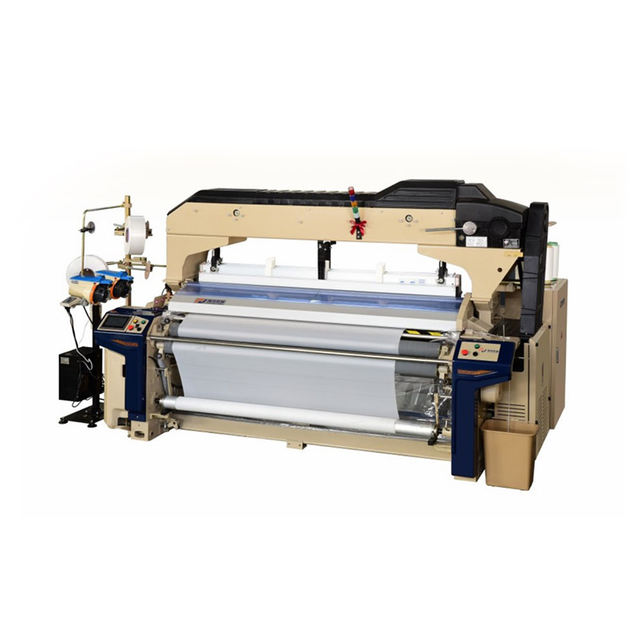
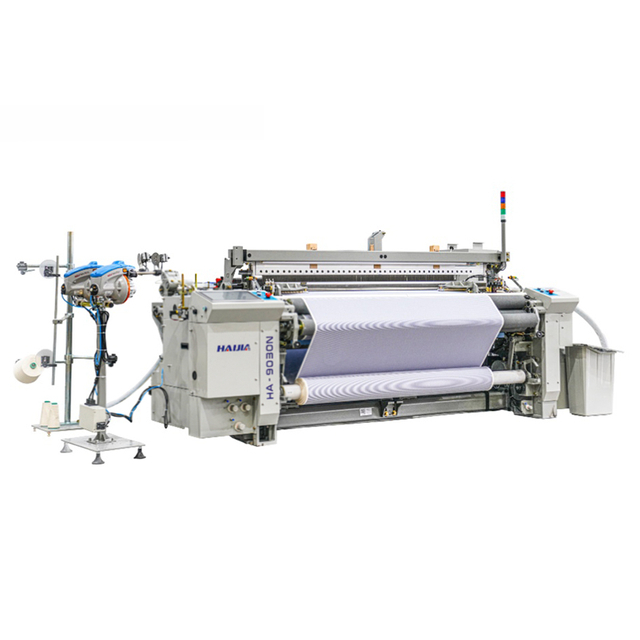
For textile manufacturers looking to translate fabric design requirements into efficient industrial production, Qingdao Haijia Machinery Co.,Ltd. brings decades of experience in shuttleless loom development and manufacturing, with a focus on water jet looms and air jet looms. Combining R&D, intelligent manufacturing, global market experience, and after-sales support, Haijia provides weaving equipment and solutions designed to help textile producers improve production efficiency and adapt to diverse fabric manufacturing requirements.
A: Weaving creates fabric by interlacing two sets of straight yarns (warp and weft) in a rigid grid pattern. Knitting constructs fabric by interlooping a single continuous yarn into interconnected rows and columns. This structural difference makes woven fabrics dimensionally stable and knitted fabrics highly elastic.
A: Woven fabrics are generally more durable. Their tight, interlaced grid structure provides superior tensile strength, puncture resistance, and abrasion resistance. Knits are more prone to snagging, pilling, and unraveling if a single loop breaks under stress.
A: Standard woven fabrics only stretch diagonally on the bias. To achieve linear stretch comparable to knits, wovens must incorporate elastomeric yarns like spandex. Even with elastane, knits typically offer higher maximum stretch percentages and better dynamic recovery.
A: Knits are preferred because their interlooped structure provides inherent multi-directional stretch. This allows for dynamic body movement, ergonomic contouring without restriction, and rapid moisture evaporation through the naturally open loop architecture.
A: Knitting is generally faster for machine setup and rapid production changes. However, modern automated weaving looms produce massive volumes of uniform yardage at highly competitive speeds once the complex and time-consuming warp setup is complete.
A: Yes, woven fabrics typically experience significantly less relaxation shrinkage than knits. The rigid interlacing locks yarns in place, whereas knitted loops naturally contract and change shape when exposed to the heat and mechanical agitation of laundering.