Tel: +86-532-83130887 Email: eiffel@qdhaijia.net

Views: 0 Author: Site Editor Publish Time: 2026-05-14 Origin: Site
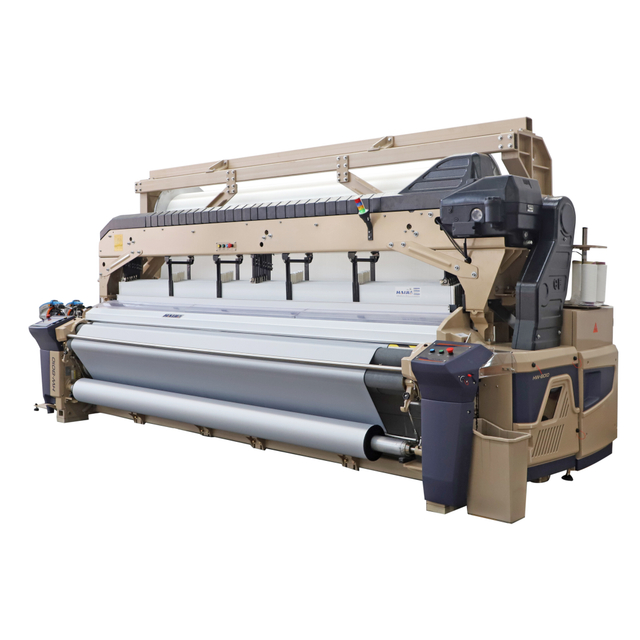
Producing high-density, silk-like, and satin fabrics demands a delicate balance. You must push for aggressive production throughput while maintaining zero-defect surface quality. This balancing act defines modern synthetic weaving. Investing in the wrong machinery often leads to excessive vibration and uneven weft distribution. These flaws are fatal for glossy satin finishes. Furthermore, bloated operational costs emerge from inefficient water and power usage. We aim to provide procurement officers and production managers with an evidence-based, skeptical framework. You will learn how to evaluate and shortlist equipment effectively. We will explore ways to ensure verifiable returns and consistently high-grade output. This guide unpacks mechanical specifications, capacity auditing, and maintenance realities. By the end, you will confidently navigate complex machinery investments.
Speed vs. Quality: Base purchasing decisions on actual effective Picks Per Minute (PPM) at a 90-95% efficiency rating, not theoretical maximum RPMs which often degrade delicate fabric surfaces.
Mechanical Stability: Satin weaving requires absolute frame rigidity; prioritize one-piece wall panel designs and U-type weft beating axes to prevent vibration marks.
OpEx Realities: Long-term profitability hinges on Energy-saving Direct Drive Motors, Variable Frequency Drives (VFD), and integrated water recycling systems.
Maintenance Risks: Poor water quality management causes nozzle calcification, rust, and bacterial staining on light-colored silk-like fabrics.
You must begin your procurement journey by defining exact production parameters. Weaving silk-like synthetics leaves zero room for guesswork. A Water Jet Loom operates under specific material constraints. Understanding these constraints prevents costly implementation failures. Let us break down the essential parameters you need to validate.
Material Compatibility Validation: You must validate your target yarns against the machine's optimal processing range. Typically, this spans 30 to 1000 dtex. Fabric weights can reach up to 600gsm. Fluid-based weaving relies heavily on the hydrophobic nature of synthetic fibers. Polyester and nylon perform exceptionally well. Conversely, hydrophilic natural fibers like cotton absorb moisture. They become too heavy and disrupt the shedding process.
Pattern and Weave Complexity Assessment: Your pattern complexity dictates the required nozzle system.
Single Nozzle Systems: These offer a cost-effective solution. They work best for continuous, high-volume production. Use them for plain, single-color silk-like fabrics.
Double/Multi-Nozzle Systems: These require higher initial capital. They also demand stricter maintenance routines. However, they remain essential for multi-color weft insertion. You need them for complex satin weaves.
Density Requirement Calculations: High-density weaving exerts immense tension across the warp. You must ensure the shedding mechanism handles this stress. Check the rated warp density for your target satin. Proper tension management prevents sudden thread breakage. It also guarantees a uniform surface appearance.
Failing to define these parameters leads to mismatched equipment. You might buy a robust machine incapable of handling delicate low-friction yarns. Always match your exact fabric profile to the machine's operational sweet spot.
Satin fabrics possess a highly reflective surface. This glossy finish highlights even microscopic weaving flaws. Consequently, your mechanical specifications must prioritize absolute precision. You need rigid frames and specialized beating axes. Let us explore the core components required for zero-defect satin production.
You should specifically look for a "U" type short-pitch weft beating axis. This design differs significantly from standard straight axes. A "U" type configuration ensures a perfectly uniform distribution of force. This uniformity is critical. It prevents shadowy stripes on highly reflective satin surfaces. Uneven force creates micro-variations in yarn spacing. These variations ruin the fabric's premium appearance.
Evaluate electronic shedding systems carefully. They offer massive advantages over traditional mechanical setups. Electronic shedding reduces ongoing mechanical wear. More importantly, it provides exact timing adjustments. Flawless interlacing of delicate synthetic yarns requires micro-second precision. Electronic controls give you this capability. They handle low-friction threads gracefully.
High-speed processing generates intense kinetic energy. Dense fabrics amplify this physical stress. Therefore, you must audit the machine's chassis thoroughly. Look for a one-piece wall panel design. Ensure it includes reinforced cross-beams. Standard bolted frames often suffer from micro-vibrations. Even minor vibrations cause visible weaving flaws in satin. A monolithic frame absorbs kinetic energy efficiently.
Component | Standard Setup (Low-Density) | Premium Setup (Satin/High-Density) | Impact on Fabric Quality |
|---|---|---|---|
Weft Beating | Straight axis | "U" type short-pitch axis | Eliminates shadowy stripes and tension marks. |
Shedding | Mechanical cams | Electronic shedding | Ensures precise interlacing for low-friction yarns. |
Chassis Frame | Bolted, multi-piece panels | One-piece reinforced wall panel | Absorbs micro-vibrations, preventing surface flaws. |
Machine speed directly influences your production output. However, manufacturers often highlight vanity metrics. You must learn to differentiate between theoretical speed and actual factory throughput. Speed means nothing if fabric quality degrades. Let us analyze how to audit true weaving capacity accurately.
Many top-tier models boast maximum speeds up to 1200 RPM. This sounds impressive on a spec sheet. Yet, running delicate silk-like fabrics at maximum velocity introduces severe risks. The defect rate usually increases exponentially. Thread tension spikes unpredictably. Nozzle accuracy drops. Ultimately, high RPM often results in compromised satin finishes.
You should completely shift your focus away from RPM. Instead, require suppliers to provide data on effective Picks Per Minute (PPM). PPM measures actual inserted weft threads. You must request this data based on your specific fabric width and density. A machine might spin at 1000 RPM but only achieve 800 effective PPM due to constant stops. PPM represents your true yield.
A reliable production line should maintain a consistent efficiency rating. Industry standards demand 90-95% efficiency. This means the machine runs fault-free for the vast majority of its operational hours. Ask suppliers for concrete case studies. Demand proof showing sustained efficiency at proposed speeds. They should demonstrate this under continuous 24/7 operation scenarios.
Ignore "no-load" maximum speed claims.
Calculate expected yield using PPM, not RPM.
Factor in machine stoppage time for yarn breakage.
Request historical efficiency logs from similar textile plants.
Purchasing textile machinery involves massive capital expenditure (CapEx). However, your operational expenditure (OpEx) ultimately determines long-term profitability. Fluid-based weaving consumes significant resources. You must calculate power consumption, water usage, and maintenance overhead accurately. Environmental compliance also plays a huge role in modern manufacturing.
The primary power draws are the high-pressure water pump and the main drive. Standard motors run at constant maximum output. This wastes enormous amounts of electricity. Prioritize machines equipped with Energy-Saving Direct Drive Motors. Additionally, look for Variable Frequency Drives (VFD). A VFD automatically adjusts the power draw based on actual load. This technology significantly cuts utility bills over a decade of operation.
A typical machine running at 600 RPM consumes a lot of fluid. Expect it to use approximately 2 tons of water daily. Multiply this by a factory floor of fifty machines. The resource cost becomes staggering. You must evaluate the inclusion of closed-loop Water Recycling Systems. Ensure your new looms are fully compatible. Recycling mitigates environmental compliance risks. It sharply reduces operational overhead.
You must contrast the initial cost of the loom against maintenance needs. Consider the replacement cost of high-wear items. Nozzles, pump plungers, and reeds wear out regularly. Cheaper initial machines often carry proprietary replacement parts. These parts usually cost a premium. Read warranty terms carefully. Verify the local availability of critical spare parts before signing contracts.
Resource Type | Average Daily Consumption (600 RPM) | Optimization Technology |
|---|---|---|
Electricity | Depends on motor rating (kW) | Variable Frequency Drives (VFD) |
Water | ~2 Tons | Closed-loop Recycling Systems |
Consumables | Pump seals, filter cartridges | High-grade stainless steel parts |
Deploying new looms introduces immediate operational risks. Even the best hardware fails under poor facility conditions. You must prepare your factory infrastructure. Maintenance realities often surprise first-time buyers. Address these risks early to ensure a smooth transition.
Impure water introduces two severe risks for silk-like fabrics. First, it causes mechanical degradation. Minerals clog nozzles and block fine filters. Acidic water rusts expensive internal components. Second, impure water causes fabric spoilage. Bacteria thrive in untreated water systems. This leads to bacterial growth and permanent water stains. White or light-colored satin ruins easily. You must factor in the cost of a facility-level water purification setup.
Ensure new looms integrate seamlessly into your current factory ecosystem. Check compatibility with existing yarn feeders. Verify your power grid can handle the startup load spikes. Look closely at control panels. Modern looms should connect to IoT shop-floor monitoring software. Prioritize machines featuring self-diagnostic systems. These systems offer early fault warnings. They help maintenance teams prevent catastrophic breakdowns.
Never purchase complex machinery based on specification sheets alone. Demand a rigorous trial run. Use your specific twisted or high-density yarn for this test. Inspect the fabric roll closely. Look for startup marks or tension inconsistencies. Furthermore, use acoustic inspection. Physically listen for abnormal mechanical noise. Frame rattling indicates severe structural weakness. A quiet, smooth-running machine signifies high manufacturing tolerances.
Purchasing machinery for silk-like and satin fabrics requires rigorous due diligence. You must look past flashy top-speed claims. Instead, focus entirely on mechanical stability and precise tension control. Remember to calculate your real-world PPM and factor in water recycling capabilities. Shortlist suppliers who transparently discuss the trade-offs between speed and fabric quality. Prioritize vendors offering localized technical support. Finally, insist on rigorous pre-purchase testing using your proprietary yarns. Following this framework ensures your investment delivers premium, defect-free textiles consistently.
A: No. The mechanism uses fluid to propel the weft. Hydrophilic (water-absorbing) fibers like cotton will absorb the moisture. They become extremely heavy, disrupt the weaving process, and fail to dry efficiently. This technology is strictly reserved for hydrophobic synthetics like polyester and nylon.
A: A standard baseline calculation is: (Plunger Volume to Weight) × (RPM) × 60 minutes ÷ 24 hours ÷ 1000. On average, expect roughly 2 tons of water per day per machine. Because of this high volume, integrated water recycling systems represent a highly recommended facility investment.
A: This usually indicates an unstable machine frame or an uneven weft beating mechanism. High-density fabrics require immense physical stability. Ensure your loom utilizes a one-piece reinforced wall panel. Furthermore, check that it uses a U-type beating axis rather than standard lightweight frames.
A: A premium industrial loom should operate efficiently for 15 to 20 years. However, this lifespan requires strict adherence to maintenance schedules. You must perform daily nozzle and filter cleaning. Strict water quality control is also mandatory to prevent internal rust and premature part failure.