Tel: +86-532-83130887 Email: eiffel@qdhaijia.net

Views: 0 Author: Site Editor Publish Time: 2026-05-14 Origin: Site
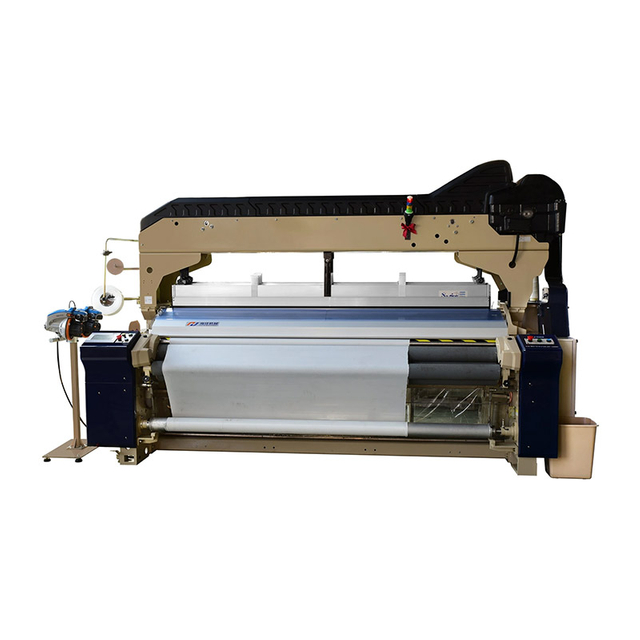
High-speed synthetic fabric production drives the modern textile manufacturing industry. Scaling this output successfully relies on deploying fast, durable, and highly efficient weaving machinery. However, operating these industrial facilities demands massive utility resources. You need constant electricity and vast volumes of water to keep production running. Tightening global environmental regulations and fluctuating utility rates can severely erode your profit margins if you fail to forecast them properly. Without a precise understanding of your long-term operational expenses, initial capital investments quickly lose their value. This guide provides an objective, evidence-based framework for analyzing energy consumption and infrastructure prerequisites. Planners will learn how to accurately forecast the real-world ROI of deploying a Water Jet Loom fleet. You will discover practical ways to balance capital expenditures against utility-driven operating costs to ensure lasting profitability.
Utility Dominance in OPEX: Electricity and water treatment account for the majority of a water jet loom's operational expenses; baseline measurements (e.g., kWh per woven meter) are critical for accurate ROI modeling.
The Closed-Loop Necessity: Achieving environmental compliance and cost-efficiency requires integrating high-recovery water recycling systems, which impacts initial CAPEX but accelerates long-term payback.
Specification-to-Outcome Mapping: Profitability relies on selecting looms with optimized pump designs and variable frequency drives (VFDs) rather than relying solely on high RPM claims.
Site Readiness Limits Scalability: Infrastructure constraints—specifically water sourcing, effluent treatment plants (ETP), and stable power grids—must be validated before procurement.
Understanding where your electricity goes is the first step in cost reduction. You must identify the primary energy sinks within your equipment. The main drive motors do the heavy lifting for the weaving process. Water pumps generate the immense pressure required for weft insertion. Auxiliary electronic control systems manage the shedding timing and sensors. These three components dictate your daily power draw.
Establishing standard energy consumption metrics helps you baseline your operations. You should compare the standard kilowatt (kW) rating of a machine against its actual running load factor. A motor rated for 2.2 kW rarely draws maximum power continuously. We recommend measuring actual energy consumed per woven meter. This provides a much clearer picture of your utility expenses.
Component | Percentage of Total Power Draw | Primary Function |
|---|---|---|
Main Drive Motor | 50% - 60% | Drives the beat-up motion and shedding mechanisms. |
Water Pump System | 25% - 35% | Pressurizes water for continuous weft insertion. |
Electronic Controls & Heaters | 10% - 15% | Operates sensors, VFDs, and fabric drying elements. |
Several variables impact actual energy efficiency on the factory floor. Fabric specifications radically alter power demands. High weft density requires more frequent pump actions per meter of fabric. Wider fabrics force the pump to push water over longer distances. This demands higher operating pressure and spikes your electricity usage. Heavier yarn types also require more water volume to cross the shed successfully.
Operating speed, measured in revolutions per minute (RPM), presents a complex variable. Running machines at absolute maximum capacity introduces diminishing returns. Pushing equipment past its optimal mechanical threshold generates excess motor heat. Friction increases across all moving parts. This scenario wastes electricity and prematurely degrades mechanical components. You often achieve higher profitability by running slightly below maximum RPM.
You must maintain skeptical evaluation protocols for manufacturer claims. Vendors frequently advertise performance based on ideal test environments. These pristine conditions rarely match real-world factory realities. We advise buyers to demand empirical energy consumption data. Ask for verified figures showing kilowatt-hours per kilogram of fabric. You need data gathered under actual production conditions to build a reliable budget.
Accurate financial modeling requires clear definitions of your investment variables. Capital expenditures (CAPEX) represent your initial financial burden. This includes the raw machine cost, international shipping, and on-site installation. You must also account for essential ancillary infrastructure. Air compressors, specialized piping, and bulk water storage tanks add significant upfront costs.
Operational expenditures (OPEX) determine your long-term financial survival. Local industrial electricity rates typically form the largest ongoing expense. Water acquisition costs vary heavily depending on your geographic location. Labor costs for specialized technicians and regular maintenance consumables also drain your budget. You must track these expenses meticulously to predict profitability.
A reliable payback period calculation framework balances these two distinct financial categories. You achieve this by comparing your daily output yield against your utility cost per meter. Follow a strict sequence to model this accurately. Incorporate transparent assumptions to avoid dangerous financial surprises down the line.
Metric | Budget Machine Series | Premium VFD Machine Series |
|---|---|---|
Initial CAPEX (Per Unit) | $12,000 | $18,000 |
Monthly Utility OPEX | $1,500 | $950 |
Downtime Rate | 8% | 2% |
Estimated Payback Period | 28 Months | 22 Months |
Your financial model must embrace realistic factory conditions. Local utility rate fluctuations happen frequently. Expected machine downtime is an unavoidable reality. Fabric defect rates will lower your saleable yield. Build these buffers into your calculations. A model projecting zero downtime will inevitably disappoint your investors.
Planners frequently underestimate the hidden cost of cheap machinery. Lower initial machine costs look attractive on a spreadsheet. However, these machines often utilize inefficient pump mechanics. Poorly designed pumps leak energy and inflate your monthly utility bills. This operational inefficiency quickly negates your initial savings. It dramatically extends your true ROI timeline. You pay for the machine every month through your electricity bill.
You cannot ignore the primary operational challenge of this technology. These machines are inherently water-intensive. Pumping high volumes of water forms the foundation of their operation. However, planners should frame this as a manageable operational variable rather than a strict dealbreaker. Modern engineering provides excellent solutions to mitigate this consumption.
Implementing closed-loop water recycling systems is no longer optional. Achieving environmental compliance demands an advanced Effluent Treatment Plant (ETP). You must integrate robust closed-loop filtration systems directly into your facility layout. These systems capture, filter, and return wastewater to the production line. This drastically reduces your reliance on municipal water sources.
High water recovery rates directly impact your ROI. Modern ETP systems achieve 80% to 90% water reuse. While the initial ETP installation increases your CAPEX, the long-term savings are massive. Lowering your daily gross water intake slashes your operational costs. It insulates your factory against municipal water price hikes and seasonal droughts.
Regulatory risk threatens unprepared textile operations globally. International compliance standards grow stricter every year. Mechanisms like the Joint Crediting Mechanism (JCM) evaluate emissions and wastewater management strictly. You must examine these frameworks before breaking ground. Failing to meet these standards invites disastrous financial penalties.
Investing in energy-efficient looms and strict water management protects your business. It shields your factory from sudden regulatory fines. It prevents government-mandated production halts. Furthermore, reducing your carbon footprint opens doors to premium buyers. Global brands now demand strict ESG compliance from their supply chains. Sustainable operations secure better contracts.
Successful deployment requires extensive facility prerequisites. You cannot simply place heavy machinery on standard concrete floors. This equipment generates intense, continuous vibrations. You must pour reinforced flooring designed specifically to absorb high-frequency mechanical shock. Failing to do so will cause structural damage to your building over time.
Precise drainage channeling is another non-negotiable requirement. Thousands of liters of water flow through the facility daily. Sloped floors and engineered trenches must swiftly direct effluent away from the machines. Stagnant water damages electronics and creates severe workplace hazards. You also need robust humidity control systems. Synthetic yarns behave unpredictably in highly humid environments.
Treat maintenance as your primary energy-saving strategy. Mechanical degradation directly inflates your utility bills. Degraded nozzles spray water inefficiently, demanding higher pump pressures to compensate. Failing pump seals leak valuable hydraulic force. Misaligned gears force the main drive motor to draw excess current. Regular calibration solves these hidden power drains.
Unexpected downtime destroys your forecasted ROI. You must evaluate the cost of standing idle. Every hour a machine waits for a spare part costs you saleable meters. Consequently, assessing your supplier becomes crucial. You need guarantees regarding their local spare parts inventory. Rapid technical support responsiveness is vital. Make this a core part of your procurement decision.
Vibration Control: Install isolated concrete pads to prevent structural resonance.
Trench Design: Use stainless steel, anti-corrosive grating for all water runoff channels.
Climate Control: Maintain factory ambient temperatures to prevent motor overheating.
Air Quality: Install overhead extractors to manage airborne water mist and prevent rusting.
Selecting the right vendor requires a strict evaluation criteria. Do not accept generic component lists. You must look for verifiable, globally recognized brands within the electrical cabinets. High-quality drive motors and electronic controls guarantee stable power consumption. You specifically want machines equipped with Variable Frequency Drives (VFDs). These inverters eliminate wasteful energy spikes during start-and-stop cycles.
Customization capabilities separate premier vendors from generic assemblers. Your factory produces specific fabric targets. The machinery must adapt to your goals. Ensure the manufacturer can modify pump pressure ranges natively. Ask if they offer various nozzle configurations tailored to different yarn deniers. A rigid, one-size-fits-all machine will hurt your operational flexibility.
Audit Component Origins: Request a complete bill of materials identifying the origin of all servos, pumps, and PLCs.
Analyze Pump Efficiency: Demand charts showing the exact kW draw required to maintain 2.5 bar of water pressure.
Evaluate Software: Check the electronic control interface for real-time energy monitoring tools.
Validating vendor evidence prevents costly procurement mistakes. Instruct your buying team to demand concrete case studies. Ask for third-party detailed project reports (DPRs) verifying their energy audits. Better yet, request references from existing textile mills. You want to speak with plant managers operating these specific machines in climates similar to yours. Real user testimony cuts through marketing noise.
Take actionable next steps before finalizing your Water Jet Loom purchase. Request a customized ROI projection from your shortlisted suppliers. Force them to input your factory's localized electricity and water rates into their models. Demand a comprehensive technical specification sheet guaranteeing maximum kilowatt-hour limits per woven meter. Hold them financially accountable to these metrics.
Deploying advanced weaving machinery remains a highly profitable venture for synthetic textile manufacturers. However, success dictates shifting your evaluation metrics. You must look past the initial machine price sticker. Utility efficiency per woven meter is the true indicator of a profitable operation. Optimizing your power and water consumption will protect your margins for decades.
Strategic alignment bridges the gap between environmental responsibility and financial success. Integrating sustainable water practices is no longer just a corporate ESG requirement. Utilizing closed-loop systems and energy-efficient motors serves as a fundamental driver of competitive pricing. When your OPEX drops, you can offer better prices to global brands while retaining healthy profit margins.
We encourage plant planners and investors to audit their current infrastructure limits immediately. Identify your power grid capacity and municipal water constraints today. Reach out to shortlisted suppliers and request detailed power and water consumption models. Making data-driven procurement choices will secure your factory's competitive dominance in the global textile market.
A: A standard machine consumes roughly 2 to 3 tons of water daily. Wide looms running at maximum RPM demand more. However, this measures gross intake. By integrating a closed-loop recycling system, net water loss drops to just 10-20%. You mostly lose water through natural evaporation and fabric retention.
A: A well-maintained machine operates efficiently for 10 to 15 years. However, pump mechanics and seals typically show wear after 3 to 5 years. This wear causes internal pressure drops and increases electricity draw. Strict preventative maintenance keeps power consumption stable throughout the entire lifecycle.
A: Yes. Variable Frequency Drives regulate motor speeds to match exact production needs dynamically. They prevent massive energy spikes during start and stop cycles. By smoothing out power demands, VFDs reduce overall electricity consumption by up to 15%. They also reduce mechanical stress on delicate drive components.
A: Fabric width has a non-linear impact on utility costs. Wider looms require significantly higher pump pressures to shoot the weft yarn entirely across the shed. This exponential pressure demand heavily increases motor load and electricity consumption. Evaluating utility costs per square meter of fabric is essential for wider formats.