Tel: +86-532-83130887 Email: eiffel@qdhaijia.net

Views: 0 Author: Site Editor Publish Time: 2026-08-19 Origin: Site
The transition from legacy textile production to high-efficiency, automated manufacturing requires precise equipment selection and rigorous infrastructure planning. Plant managers and procurement directors face severe production bottlenecks, escalating energy consumption, and inconsistent fabric quality when operating mismatched or obsolete manufacturing equipment. Selecting the right textile machinery requires moving beyond basic specifications. You must evaluate throughput, integration capabilities, and operational efficiency across the entire fiber-to-fabric lifecycle. This applies whether your facility processes natural fibers, synthetic filaments, or complex technical threads.
Modern production environments demand equipment that communicates across different manufacturing stages. Upgrading a single department without considering upstream feed rates or downstream finishing capacities creates isolated islands of efficiency that fail to improve overall plant output. Plant engineers must scrutinize machine kinematics, material handling automation, and utility requirements to ensure new installations integrate into existing workflows.
Modern textile machinery selection hinges on balancing production speed with energy efficiency and material waste reduction.
The shift toward shuttleless looms, automated spinning systems, and high-speed non-woven bonding drastically reduces downtime but requires specialized maintenance protocols.
Evaluating wet processing and finishing equipment requires strict adherence to environmental compliance and water recycling capabilities.
Table of Contents
Industrial textiles encompass a broad spectrum of materials. These range from interlaced spun yarns and continuous filaments to adhered fibers like felt. Recognizing this diversity is the first step in defining your machinery requirements. Different raw materials behave uniquely under mechanical stress, thermal exposure, and chemical treatments. A machine calibrated for long-staple cotton will struggle to process extruded polyester without significant mechanical modification to its drafting zones and tensioning sensors.
Misalignment between production stages creates severe operational bottlenecks. If your spinning output does not match your weaving capacity, you will either starve your looms or accumulate excessive yarn inventory. A synchronized production line ensures machinery capacities are matched across fiber preparation, yarn spinning, fabric formation, and finishing. Plant managers must calculate the exact kilogram-per-hour throughput required at each station to maintain continuous flow.
To properly map your production lifecycle and avoid capacity mismatches, execute these specific evaluation steps:
Audit existing upstream fiber preparation output in kilograms per hour under normal operating conditions.
Calculate the theoretical maximum consumption of downstream weaving or knitting units based on pick density and machine RPM.
Identify the exact variance between preparation output and formation consumption to pinpoint the bottleneck.
Specify intermediate buffer zones or upgrade specific machine modules to bridge the identified capacity gap.
Assessing vendor ecosystems requires a strategic evaluation lens. You must decide whether to source end-to-end systems from a single manufacturer or adopt a best-of-breed approach for specific production stages. Single-vendor solutions often provide unified control interfaces and simpler maintenance schedules. A best-of-breed approach allows you to select the absolute highest-performing machine for a specific task, though it demands more complex integration efforts from your engineering team to ensure PLCs (Programmable Logic Controllers) communicate properly.
Mapping the lifecycle also involves understanding material waste loops. Modern facilities integrate recycling machinery directly into the production line. Edge trims from non-woven lines or waste fibers from the blow room can be re-introduced into the blending stage. Selecting primary manufacturing equipment that accommodates recycled inputs without degrading final product quality provides a massive operational advantage.
This category includes equipment designed to convert raw natural or synthetic fibers into continuous yarn, threads, or filaments. The quality of the final fabric is entirely dependent on the precision of these initial stages. Poor fiber preparation inevitably leads to high breakage rates in downstream weaving and knitting.
Blow room machinery handles the opening, cleaning, and blending of raw fibers before they are spun. Raw cotton arrives in highly compressed bales containing dirt, seed fragments, and other impurities. Bale pluckers initiate the process by stripping small tufts of fiber from a laid-out sequence of bales. Heavy part separators and fine cleaners then remove contaminants using centrifugal force and targeted air currents. Intensive mixers blend fibers from different bales to ensure consistent color and staple length throughout the production run.
Decision factors for blow room equipment include trash removal efficiency, fiber damage rates, and automated chute feed integration. Aggressive cleaning removes more trash but can break delicate fibers, reducing overall yarn strength. Modern systems use optical sensors to adjust cleaning intensity dynamically based on the incoming fiber quality, altering the grid bar angles and beater speeds in real-time.
Carding machines receive the opened fibers and align them into a continuous, untwisted web called a sliver. The carding process utilizes a large rotating cylinder covered in millions of fine wire teeth working against stationary or moving flats. This action separates individual fibers, removes remaining micro-dust, and aligns the fibers parallel to one another. Precision in the carding gap—often measured in thousandths of an inch between the cylinder and the flats—dictates the evenness of the resulting sliver. Worn card clothing leads to high nep counts (small knots of entangled fibers), which appear as visible defects in the finished fabric.
Understanding the mechanical trade-offs between spinning methods dictates your facility's layout and utility requirements.
Ring Spinning: This traditional method delivers higher yarn strength and unmatched versatility. It is highly suitable for producing fine yarn counts used in premium apparel. The process involves drafting the roving, twisting it via a traveler rotating on a ring, and winding it onto a bobbin simultaneously. Spindle speeds can exceed 20,000 RPM. However, ring spinning operates at lower production speeds and consumes significantly more energy per kilogram of yarn due to the mass of the rotating spindle and bobbin.
Rotor (Open-End) Spinning: This technology offers significantly higher throughput and requires less manual intervention. Fibers are fed into a high-speed spinning rotor where centrifugal force forms the yarn. It eliminates the roving stage entirely. Rotor spinning is generally limited to coarser yarn counts and specific end-uses like denim or heavy twills. The yarn structure is bulkier and slightly weaker than ring-spun yarn.
Air-Jet Spinning: An alternative method that uses compressed air vortexes to twist fibers. It offers extremely high production speeds and produces yarn with low hairiness, ideal for synthetic blends, though it struggles to process 100% cotton effectively.
Upgrading to automated doffing systems in ring spinning requires facility layout adjustments. Automated guided vehicles (AGVs) need clear pathways to transport full bobbins to the winding department. Workforce upskilling is mandatory, as operators transition from manual piecing to monitoring complex sensor arrays and managing automated splicing units.
These machines interlace, interloop, or adhere fibers and yarns to create woven, knitted, or non-woven textiles. The choice of formation technology dictates the fabric's structural properties, drape, and tensile strength.
Shuttleless weaving has entirely replaced traditional shuttle looms in industrial environments due to vastly superior insertion rates and reduced noise levels. Different shuttleless technologies yield specific outcomes based on material and production goals.
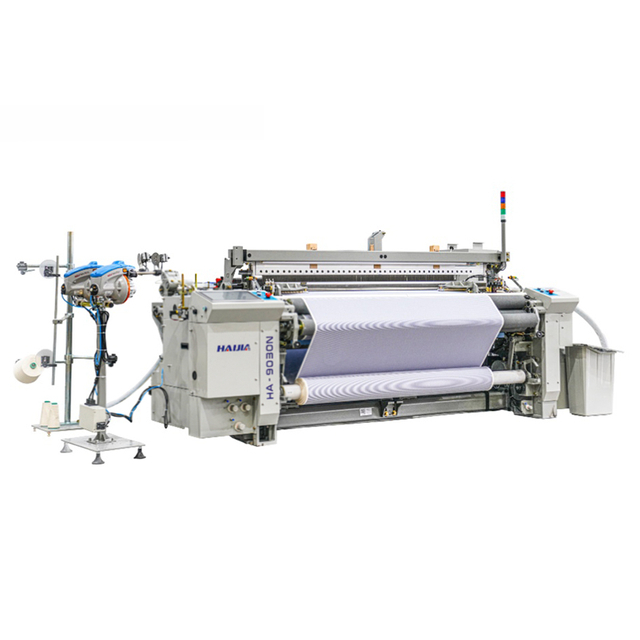
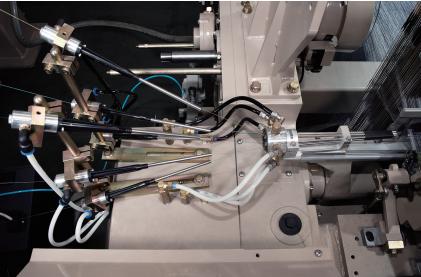
Air-Jet Looms: These machines provide maximum production speed for standard fabrics. They propel the weft yarn across the shed using a main nozzle and a series of relay nozzles. Air-jet weaving requires a high-quality, continuous compressed air infrastructure. Any fluctuation in air pressure results in weft stops and fabric defects. The timing of the relay nozzles must be perfectly synchronized with the flight of the yarn to maintain tension without blowing the yarn apart.
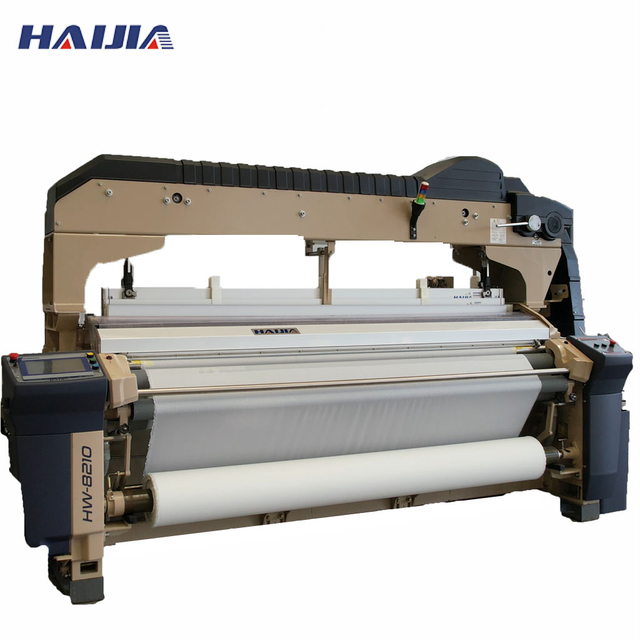
Water-Jet Looms: Highly efficient for synthetic, hydrophobic fibers like nylon and polyester. A high-pressure jet of water carries the weft yarn across the loom. This technology necessitates robust wastewater management and specialized drying equipment downstream. It cannot process natural fibers like cotton, which absorb water and lose structural integrity during insertion. Pump pressure and nozzle angle are the critical adjustment points here.
Rapier Looms: Offer unmatched versatility for complex patterns and diverse yarn types. Rigid or flexible rapier bands physically carry the weft yarn across the shed, meeting in the middle to transfer the yarn from the giver to the taker rapier. While they operate at slightly lower speeds than jet looms, they handle delicate, heavy, or highly textured yarns without issue.
Projectile Looms: Utilize a small metal projectile to grip and carry the weft. They are particularly effective for exceptionally wide fabrics, such as geotextiles or industrial canvases, where air or water jets lose their kinetic energy over long distances.
Scalability is a critical factor when selecting weaving equipment. Modular loom designs allow for future shedding motion upgrades. A facility might start with a basic cam shedding motion for plain weaves and later upgrade to a dobby or jacquard mechanism to produce complex, patterned fabrics without replacing the entire loom chassis.
Operational Parameters of Shuttleless Weaving Systems
Loom Type | Primary Insertion Mechanism | Optimal Materials | Production Speed | Key Infrastructure Requirement |
|---|---|---|---|---|
Air-Jet | Compressed air nozzles | Spun yarns, standard synthetics | Very High (up to 1200 RPM) | High-capacity air compressors |
Water-Jet | High-pressure water stream | Hydrophobic synthetics (Polyester, Nylon) | High (up to 1000 RPM) | Wastewater extraction and drying |
Rapier | Mechanical bands or rods | Complex, textured, or heavy yarns | Medium (up to 700 RPM) | Versatile yarn tensioning systems |
Projectile | Metal gripping projectile | Heavy industrial yarns, wide widths | Medium (up to 500 RPM) | Reinforced flooring for vibration |
Knitting machinery interloops yarn to create stretchable, conforming fabrics. The industrial sector divides primarily into circular and flat knitting technologies.
Evaluate circular machines for high-volume seamless tubular fabrics. These machines arrange needles in a continuous circle and rotate at high speeds, producing massive quantities of jersey, rib, or interlock fabrics used in t-shirts and activewear. Precision yarn feeding systems are critical here to maintain uniform loop length and prevent horizontal striping. Positive yarn feeders ensure exactly the same length of yarn is delivered to every knitting needle, regardless of the tension on the yarn package.
Contrast this with flat knitting machines, which excel at complex, shaped, or technical textiles. Flat v-bed machines can increase or decrease the knitting width dynamically, producing fully fashioned garment panels that require zero cutting. Modern flat knitting technology also dominates the technical footwear market, producing seamless shoe uppers from high-tenacity synthetic yarns. Key evaluation dimensions include gauge flexibility, needle bed durability, and software compatibility for rapid pattern changeovers.
Non-woven equipment produces fabric directly from fibers or filaments, bypassing the yarn spinning process entirely. This sector is expanding rapidly due to demand in medical, automotive, and filtration industries.
Web formation is the first step. Dry-laid systems use carding machines and cross-lappers to create the web, layering the fibers to achieve the desired weight. Spunlaid systems extrude melted polymers directly onto a moving conveyor, drawing the filaments with high-velocity air to orient the polymer chains for strength. Once the web is formed, it must be bonded.
Mechanical Bonding (Needle Punching): Banks of barbed needles rapidly penetrate the fiber web, entangling the fibers physically. This method produces dense, durable materials like automotive carpeting and geotextiles. The penetration depth and needle density per square centimeter dictate the final fabric density.
Hydroentanglement (Spunlace): High-pressure water jets entangle the fibers. This creates soft, drapeable fabrics ideal for medical gowns and sanitary wipes. The water pressure must be carefully profiled across multiple injector heads to ensure uniform entanglement without washing the fibers away.
Thermal Bonding: Heated calender rolls melt synthetic fibers together at specific contact points. This is common for lightweight hygiene products. Temperature control across the width of the roller must be exact to prevent over-melting or weak bonds.
Chemical Bonding: Liquid binders are sprayed or saturated into the web and then cured in an oven.
Evaluate non-woven machinery based on web formation uniformity, bonding strength consistency, and adaptability. The ability to process diverse raw materials ranging from natural fibers to extruded synthetic filaments provides a significant operational advantage.
This category includes machinery used for dyeing, printing, and chemical or mechanical finishing to achieve final fabric properties. Wet processing consumes massive amounts of water and thermal energy, making equipment efficiency a primary concern.
Batch (exhaust) dyeing offers flexibility for smaller, diverse runs. Fabric is loaded into a machine and circulated through a dye bath until the desired shade is achieved. Jet dyeing machines use a venturi nozzle to propel the fabric through a closed tube, minimizing tension and preventing creases in delicate synthetic blends. The speed of the fabric rope and the flow rate of the dye liquor must be balanced to ensure level dyeing without surface abrasion.
Continuous dyeing ranges provide superior consistency for high-volume production. Fabric moves continuously through padding mangles, steamers, and washing boxes. This method is highly efficient for long runs of a single color but requires significant downtime for cleaning during color changeovers. The pressure on the padding mangle rollers must be perfectly uniform to ensure equal dye pick-up across the entire width of the fabric.
Evaluating liquor ratio capabilities is essential for compliance and sustainability. The liquor ratio is the weight of the fabric compared to the volume of water required. Machines with ultra-low liquor ratios are critical for meeting stringent environmental regulations. They significantly reduce thermal energy consumption because there is less water to heat, and they minimize the volume of chemical effluent that must be treated downstream.
Finishing equipment stabilizes the fabric, applies chemical treatments, and dictates the final hand-feel.
Stenter frames are the backbone of the finishing department. They grip the fabric edges with pins or clips and transport it through a series of heated chambers. Performance metrics for stenters include heat distribution uniformity and precise tension control. Exhaust air heat recovery systems improve overall efficiency by capturing waste heat and using it to pre-heat incoming air. When heat-setting synthetic fabrics like polyester, the chambers must reach and hold exactly 190°C to 210°C to lock the molecular structure of the fiber.
Poorly calibrated stenter frames lead to dimensional instability in the final textile. If the fabric is stretched excessively, it will shrink drastically upon its first wash. Automated overfeed and width control sensors are mandatory for quality assurance. These sensors adjust the transport speed and chain width in real-time to lock the fabric into its optimal structural geometry.
Calenders utilize heavy, heated rollers to compress the fabric. Different roller configurations yield different effects. Friction calendering produces a high gloss by running one roller faster than the other, while embossing calenders press permanent three-dimensional patterns into thermoplastic fabrics.
Selecting industrial equipment requires a rigorous analysis of performance metrics against operational constraints.
Calculate the energy required per kilogram of processed material. High-speed machines may yield diminishing returns if energy spikes offset production gains. Pushing an air-jet loom to its absolute maximum RPM often results in exponential increases in compressed air consumption. Balancing throughput with energy efficiency ensures sustainable output. Procurement teams must request verified energy consumption data from vendors under real-world operating conditions, not just theoretical maximums. Look closely at the kWh/kg metric for spinning frames and the cubic meters of air per hour for weaving looms.
Assess machine compatibility with Manufacturing Execution Systems (MES). Modern textile machinery relies heavily on data analytics to minimize downtime. Look for equipment featuring open communication protocols like OPC UA or MQTT, which allow different brands of machines to report data to a central server.
Predictive maintenance sensors monitor vibration frequencies in high-speed spindles or bearing temperatures in carding cylinders, alerting technicians before a catastrophic failure occurs. Real-time defect detection systems use high-speed cameras and machine learning algorithms to identify broken filaments, oil spots, or weaving errors instantly, stopping the machine to prevent the production of off-quality yardage. Remote diagnostic capabilities allow vendor engineers to troubleshoot software issues from across the globe, drastically reducing mean time to repair.
Ensure machinery meets international safety standards, such as CE marking and ISO compliance. Focus on noise reduction, emergency stops, and operator interface accessibility. Textile manufacturing involves high-speed rotating parts, extreme heat, and hazardous chemicals. Light curtains and interlocking physical guards are non-negotiable for protecting personnel. If a guard is opened, the machine must brake to a complete stop instantly.
Ergonomics directly impacts operational consistency. If a machine requires operators to adopt awkward postures to thread yarn or clean filters, fatigue will lead to errors and decreased efficiency. Touchscreen interfaces should be intuitive, supporting multiple languages and utilizing clear visual schematics for troubleshooting.
Deploying next-generation manufacturing equipment introduces specific operational risks that must be mitigated during the planning phase.
Proprietary components complicate maintenance schedules. If a critical sensor fails and the vendor requires a six-week lead time for a replacement, the resulting downtime is catastrophic. Evaluate vendor Service Level Agreements and local technician availability before committing to a purchase.
Consider the sourcing logistics of OEM versus aftermarket parts. Machines built with standardized, commercially available pneumatics and electronics are significantly easier to maintain than those relying entirely on closed-ecosystem, proprietary hardware. Establish a robust internal inventory of high-wear items like reeds, heald wires, and spinning travelers prior to commissioning the new equipment.
Highly automated equipment requires a shift from manual operators to technically skilled machine supervisors. A worker who spent twenty years manually piecing broken yarns on a traditional ring frame cannot intuitively operate a fully automated, sensor-driven spinning block without comprehensive upskilling.
Factor in the duration of vendor-led training programs. Operational readiness requires hands-on training during the installation phase, followed by continuous education on software updates and advanced troubleshooting. Proper upskilling ensures smooth transitions during equipment upgrades and prevents operators from bypassing safety sensors to maintain familiar, outdated workflows.
Assess whether existing plant infrastructure can support next-generation machinery. Inadequate infrastructure compromises machine performance immediately.
HVAC and Humidity Control: Natural fibers require specific relative humidity levels to prevent static buildup and fiber breakage. Cotton spinning typically requires 60% to 65% relative humidity. Upgraded machinery running at higher speeds generates more ambient heat, requiring robust air conditioning and humidification systems to maintain these precise atmospheric conditions.
Reinforced Flooring: High-speed looms and heavy carding machines generate intense vibrations. Flooring must be structurally reinforced, often requiring 300mm thick concrete slabs, specialized epoxy coatings, and vibration isolation pads to prevent structural fatigue and maintain machine alignment.
Power Grid Stability: Modern electronics are highly sensitive to voltage fluctuations. Installing active voltage regulators and uninterruptible power supplies for control cabinets prevents software corruption during micro-outages.
The optimal manufacturing setup prioritizes operational synchronization, energy efficiency, and end-product requirements over raw machine speed alone. Integrating advanced machinery requires a holistic approach, ensuring that fiber preparation, fabric formation, and wet processing stages are perfectly balanced. Base vendor shortlists on their proven track record in your specific textile niche, local support infrastructure, and verifiable performance data.
With 27 years of development in shuttleless weaving technology, Qingdao Haijia Machinery Co.,Ltd. has built integrated capabilities in R&D, manufacturing, marketing, and after-sales service, with a particular focus on water jet and air jet looms. Backed by multiple manufacturing facilities and intelligent production capabilities, the company provides weaving equipment and solutions for textile manufacturers seeking reliable, efficient, and scalable production.
To ensure a successful equipment upgrade, execute the following next steps:
Conduct a comprehensive facility audit to identify infrastructure gaps in power stability, compressed air capacity, and climate control.
Define exact throughput requirements for each production stage in kilograms per hour to prevent isolated bottlenecks.
Request pilot testing with your specific raw materials to verify machine compatibility and output quality before finalizing specifications.
Arrange reference site visits to observe the proposed equipment operating in active, high-volume production environments.
Draft formal RFPs detailing strict integration requirements, safety standards, and sustainability targets.
A: Industrial textile machinery typically operates efficiently for 15 to 25 years, depending on the technology class and maintenance rigor. Heavy mechanical components like loom chassis can last decades, while electronic sensors, pneumatic valves, and software interfaces usually require upgrading or replacement every 7 to 10 years to maintain peak operational efficiency.
A: Choose air-jet looms for maximum production speed when weaving standard, uniform yarns, provided you have robust compressed air infrastructure. Opt for rapier looms if your production requires versatility, such as weaving complex patterns, heavy industrial yarns, or delicate novelty threads that cannot withstand the pneumatic stress of an air-jet system.
A: Felt and similar non-wovens require web formation and bonding equipment, bypassing yarn spinning. You need a carding machine or air-lay system to form the fiber web, followed by a mechanical needle-punching machine to entangle the fibers. Alternatively, thermal calendering or chemical bonding systems are used depending on the required density and application.
A: Industry 4.0 integrates IoT sensors, real-time data analytics, and machine learning into textile equipment. This allows machines to communicate with Manufacturing Execution Systems for predictive maintenance, automated defect detection, and dynamic speed adjustments. It minimizes unplanned downtime and optimizes energy consumption across the entire production floor.
A: Yes, many older mechanical machines can be retrofitted with aftermarket sensor packages. You can install optical yarn break detectors, digital tension monitors, and vibration sensors on legacy equipment. However, retrofitting cannot overcome fundamental mechanical speed limits or the lack of integrated, closed-loop control systems found in modern machinery.
A: Low-liquor-ratio machines drastically reduce the volume of water required per kilogram of fabric. This directly lowers thermal energy consumption, as there is less water to heat to dyeing temperatures. It also reduces chemical usage and minimizes the volume of wastewater that must be treated, significantly improving facility sustainability and compliance.