Tel: +86-532-83130887 Email: eiffel@qdhaijia.net

Views: 0 Author: Site Editor Publish Time: 2026-08-19 Origin: Site
Industrial textile manufacturing faces intense pressure on production speed and fabric quality. Traditional weaving methods simply cannot keep pace with modern volume demands. The global textile machinery market reflects this macro-economic shift. Analysts project the shuttleless weaving sector to grow from $8.2 billion in 2025 to $12.8 billion by 2033, representing a 5.3% CAGR. Modernization is no longer optional for textile mills aiming to remain competitive.
Legacy shuttle equipment creates severe operational bottlenecks. They suffer from high defect rates, excessive noise, severe vibration, and strictly limited production speeds. These older machines also demand constant manual intervention. Transitioning to a shuttleless loom serves as the industry standard for scaling production. This technology replaces the heavy shuttle with highly efficient weft insertion systems. We will evaluate the different mechanical approaches, their specific industrial applications, and the infrastructure required to implement them successfully.
Mechanism Shift: Shuttleless looms eliminate the traditional shuttle mechanism altogether, utilizing alternative weft insertion methods (air, water, rapier, projectile) to drastically increase picks per minute (PPM).
Targeted Applications: No single shuttleless machine fits all operations; selection depends strictly on yarn type (synthetic vs. natural), fabric width, and pattern complexity.
Operational ROI: While initial capital expenditure is higher, the ROI is driven by a lower defective rate, reduced labor costs, better energy efficiency per meter woven, and significantly higher production speeds.
Implementation Realities: Upgrading requires facility adaptations, including specialized infrastructure (e.g., high-capacity air compressors or water effluent treatment) and technical workforce retraining.
Table of Contents
Traditional weaving relies on a wooden shuttle carrying a small bobbin of weft yarn. This shuttle physically travels back and forth across the warp shed. A shuttleless system alters this fundamental dynamic. It draws the weft yarn directly from a large, stationary supply package located beside the machine. This continuous supply eliminates the need to constantly stop the machine to replenish empty bobbins. Operators mount large cones or cheeses of yarn on a creel, allowing the machine to run uninterrupted for hours or even days depending on the yarn count.
Eliminating the heavy shuttle drastically reduces the moving mass within the insertion mechanism. A traditional shuttle weighs between 400 and 500 grams. The insertion mediums in modern systems weigh a fraction of that amount. A stream of water or a burst of air has negligible mass. Even mechanical carriers like rapier heads or steel projectiles weigh significantly less than a loaded shuttle. Less mass translates directly to reduced inertia. This minimizes mechanical wear on the picking components, lowers vibration across the factory floor, and improves overall energy efficiency per meter of fabric produced.
Speed serves as the most visible differentiator on the production floor. Traditional shuttle equipment typically maxes out around 150 to 200 picks per minute (PPM). The sheer physical force required to accelerate and decelerate a heavy block of wood limits further speed increases. Modern equipment easily achieves multiples of that output. Certain pneumatic and hydraulic systems surpass 1,000 PPM in production environments. This massive increase in insertion speed makes them ideal for high-volume manufacturing environments where output volume dictates facility profitability.
Facility managers must identify the exact tipping point for equipment upgrades. Replacing legacy machinery becomes necessary when production volume demands exceed current capacity. It also becomes mandatory when defect thresholds compromise client contracts. High-speed fashion and technical textiles require flawless fabric rolls. If current machinery produces excessive stop-marks, broken picks, or uneven tension, an upgrade is required. You cannot fix inherent mechanical limitations with better maintenance; you must replace the insertion technology.
You must establish strict baseline metrics before evaluating new machinery. Key performance indicators include Picks Per Minute (PPM) and maximum fabric width capabilities. Energy consumption per meter woven provides another metric for evaluation. Evaluating these baselines ensures the selected technology aligns with actual production goals rather than theoretical maximums published in brochures. Plant engineers should also measure the current machine-to-operator ratio. Legacy systems often require one operator for every four to six machines. Modern systems allow a single operator to manage twenty or more machines due to automated stop motions and continuous weft supply.
Rapier technology utilizes flexible or rigid rods to carry the weft yarn across the shed. In a double rapier system, a giver rapier brings the yarn to the center of the fabric. A taker rapier meets it, grips the yarn, and pulls it through to the opposite side. This positive gripping action ensures precise control over the weft throughout the entire insertion cycle. Rigid rapiers require more floor space because the solid rods extend outside the machine width. Flexible rapiers coil around a wheel, saving significant space on the production floor.
These machines excel at handling complex patterns and multi-color weft insertion. They easily manage up to 16 different weft colors via electronic color selectors. They also handle a massive variety of yarn types. You can weave heavy industrial yarns, delicate silks, and highly textured novelty yarns on the same machine with minimal adjustments. The positive grip prevents yarn slippage, making it ideal for smooth or slippery filaments.
The primary trade-off involves speed. The physical movement of the rapier heads creates mechanical friction and limits acceleration. They generally operate slower than fluid-based insertion systems, typically running between 400 and 700 PPM depending on the width. However, their unmatched versatility makes them the backbone of fashion, shirting, and upholstery manufacturing where pattern changes happen frequently.
Projectile systems utilize a small, bullet-like metal object to grip the weft yarn. A torsion bar mechanism shoots this projectile across the warp shed. It travels through a series of guide teeth that keep it on a precise flight path. Once it reaches the other side, a conveyor system returns the empty projectile to the picking side. Multiple projectiles circulate through the machine simultaneously to maintain continuous operation.
This technology dominates the production of extra-wide fabrics. They can weave widths exceeding 5 meters without losing weft tension. They also excel at multi-width weaving, producing several separate rolls of fabric simultaneously on a single machine. They handle heavy industrial textiles, such as canvas, denim, and geotextiles, with ease. The sheer kinetic energy of the projectile allows it to pull heavy yarns across massive distances.
The trade-offs center around mechanical complexity. The torsion bar picking mechanism and the projectile guide systems require precise, specialized maintenance. The initial mechanical setup is intricate, demanding highly skilled technicians for tuning and alignment. The guide teeth must be perfectly aligned; otherwise, the projectile will crash, causing severe damage to the warp threads and the machine itself.
Air jet technology propels the weft yarn using compressed air. A main nozzle provides the initial acceleration. A series of relay nozzles, spaced across the width of the machine, fire in sequence to carry the yarn through the shed. A specialized profile reed guides the airflow, preventing the air from dispersing and keeping the yarn on track. Electronic valves control the timing of the nozzles down to the millisecond to optimize air consumption.
These machines represent the pinnacle of speed for standardized, high-volume fabrics. They dominate the production of cotton sheeting, lightweight synthetics, and standard denim. When sheer output volume serves as the primary KPI, pneumatic insertion provides the highest return on production time. Speeds regularly exceed 1,000 PPM on standard widths.
The operational trade-offs require careful consideration. You must invest heavily in high-quality air compressors and robust pneumatic infrastructure. Peak energy consumption can be high due to the constant demand for clean, dry compressed air. Moisture or oil in the air lines will ruin the fabric and foul the nozzles. They are also less versatile when handling heavy, highly textured, or extremely weak yarns, as the air stream cannot grip these materials effectively.
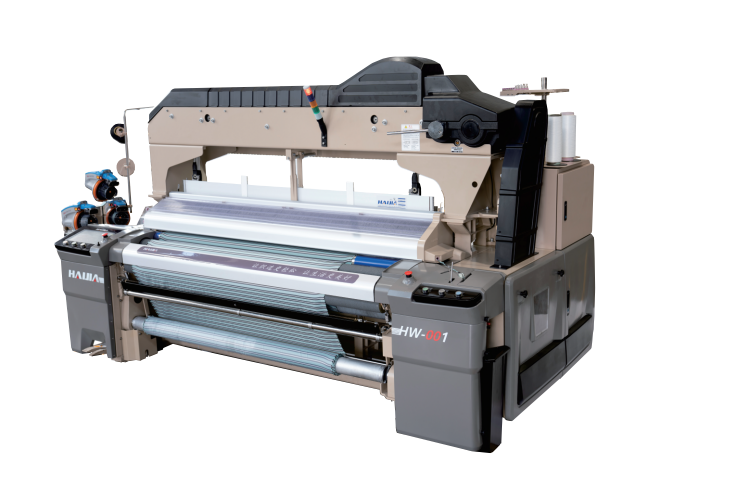
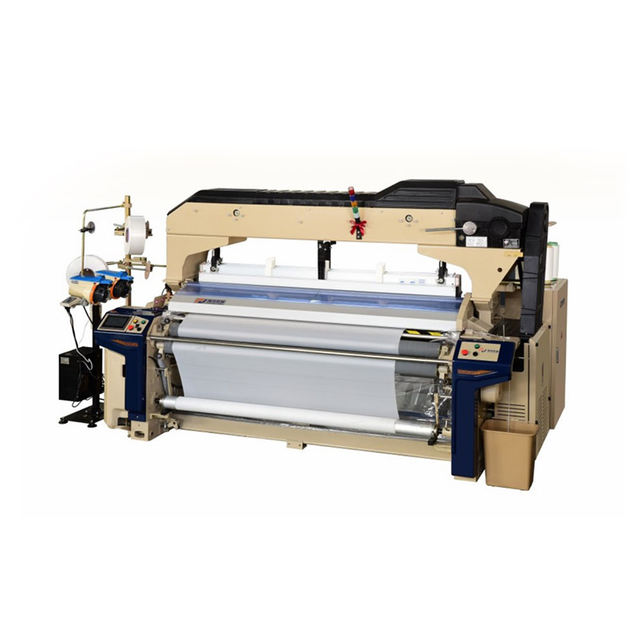
Water jet systems operate on a principle similar to pneumatic machines, but they use a pressurized stream of water for weft insertion. A specialized pump forces water through a nozzle, creating a high-velocity jet that carries the yarn across the shed. The cohesive nature of water keeps the jet tightly focused over long distances, eliminating the need for relay nozzles or profile reeds.
This technology is strictly optimized for hydrophobic yarns. It excels at weaving polyester, nylon, and fiberglass. Because water is denser than air, it provides excellent traction on smooth synthetic filaments. These machines run extremely fast and consume significantly less power than pneumatic systems, as pumping water requires less energy than compressing air. They are the standard for producing taffeta, umbrella fabrics, and synthetic linings.
The limitations are absolute. You cannot weave cotton, wool, or any hydrophilic materials on these machines. Natural fibers absorb the water, become too heavy to propel, and lose their structural integrity. Furthermore, the facility requires robust water filtration, recycling systems, and specialized drying infrastructure to remove moisture from the finished fabric before rolling.
Weaving Technologies Comparison
Technology Type | Insertion Medium | Primary Advantage | Ideal Fabric Types | Main Limitation |
|---|---|---|---|---|
Rapier | Rigid/Flexible Rods | Maximum Versatility | Fashion, Upholstery, Complex Patterns | Lower maximum speed |
Projectile | Metal Bullet | Wide-Width Capabilities | Geotextiles, Heavy Canvas, Multi-width | High mechanical complexity |
Air Jet | Compressed Air | Extreme Speed | Cotton, Standard Denim, Light Synthetics | High compressed air demand |
Water Jet | Pressurized Water | High Speed, Low Power | Polyester, Nylon, Fiberglass | Strictly limited to synthetics |
Evaluating production speed requires looking beyond simple RPM. You must measure the actual insertion rate, usually calculated in meters per minute (MPM). This metric multiplies the machine speed by the fabric width. While legacy equipment struggles to surpass 300 MPM of weft insertion, modern pneumatic and hydraulic systems routinely exceed 2,000 MPM. This exponential leap in output scalability redefines factory floor planning. You can produce the same volume of fabric with a fraction of the machinery footprint.
High-volume, rapid-turnaround production relies on continuous operation. The continuous weft supply from large stationary cones eliminates the downtime previously associated with shuttle bobbin changes. Operators spend less time stopping machines and more time monitoring fabric quality. This shift drastically improves the machine-to-operator ratio, allowing one technician to manage a larger bank of equipment. Automated weft repair systems on modern air jets can even resolve broken picks without human intervention, further increasing machine efficiency.
Quality control begins at the tensioning system. Modern equipment utilizes electronic warp let-off (ELO) and electronic fabric take-up (ETU) mechanisms. These servomotor-driven systems maintain perfectly uniform tension from the beginning of the warp beam to the end. Consistent tension eliminates stop-marks, uneven pick spacing, and fabric waviness. The machine automatically adjusts the let-off speed as the warp beam diameter decreases, ensuring the tension remains constant.
Electronic shedding mechanisms further reduce the defective rate. Precise control over the harness frames ensures clean shed formation, preventing warp breaks and weft entanglement. Improving fabric consistency at the weaving stage drastically impacts downstream processes. Dyeing and finishing facilities require uniform fabric to ensure even color absorption and chemical treatment. Reducing weaving defects directly lowers the rejection rate at final inspection, improving the overall yield of first-quality fabric.
The traditional weaving shed is notoriously loud. A room full of wooden shuttles slamming back and forth generates decibel levels that cause permanent hearing damage. Upgrading equipment drastically improves workplace ergonomics. Eliminating the shuttle reduces the ambient noise profile significantly. Many modern facilities operate well below the strict decibel limits that require heavy ear protection.
Reduced vibration also plays a critical role in facility health. Less mechanical pounding extends the lifespan of the factory floor and the building structure itself. Meeting OSHA or regional equivalent workplace safety standards becomes much easier. A quieter, less volatile working environment directly improves operator retention and reduces fatigue-related errors. Operators can communicate more effectively on the floor, leading to faster troubleshooting and better team coordination.
The apparel industry demands both speed and flexibility. Denim manufacturing heavily relies on air jet technology to produce massive volumes of standard yardage. The speed of pneumatic insertion keeps unit production time low for basic jeans and jackets. Modern air jets can handle the heavy cotton yarns required for denim while maintaining speeds over 800 PPM.
Conversely, high-end shirting and complex jacquard garments require the versatility of rapier technology. Fashion trends change rapidly, demanding quick changeovers between different yarn types and colors. Rapier machines handle delicate stretch yarns, metallic threads, and multi-color weft patterns without compromising fabric integrity. They allow mills to produce small, customized batches profitably.
Industrial textiles prioritize strength, width, and structural stability. Geotextiles used in civil engineering require massive widths to minimize seams during installation. Projectile machines excel in this sector, weaving heavy monofilament and multifilament yarns across extreme widths. The positive grip of the projectile ensures the heavy yarns are pulled straight and tight.
Automotive airbags demand absolute flawlessness and high-tenacity yarn handling. Heavy-duty rapier machines often handle these dense, tightly woven structures. Conveyor belts and sailcloth also rely on the positive gripping action of rapiers or the heavy-duty capabilities of projectiles to manage thick, rigid industrial yarns. These fabrics require high beat-up force to pack the yarns tightly together, a feature well-supported by heavy mechanical looms.
Home furnishings bridge the gap between industrial durability and fashion aesthetics. Bed linens and curtains require wide-width capabilities to avoid center seams. Air jet machines often produce standard cotton sheeting at high speeds, utilizing wide reeds to weave multiple panels simultaneously.
Heavy upholstery fabrics require pattern versatility and the ability to weave thick, textured yarns. Rapier machines dominate the upholstery sector. They easily manage chenille, bouclé, and heavy jacquard patterns required for sofas, chairs, and decorative drapery. The ability to switch between a fine background yarn and a thick, textured pattern yarn on the fly makes rapiers indispensable for home textiles.
Installing modern weaving equipment requires strict facility prerequisites. You cannot simply place high-speed machinery on an old, uneven factory floor. The equipment requires reinforced concrete flooring designed for specific vibration dampening. Improper flooring leads to machine walking, alignment issues, and premature bearing failure. Plant engineers must verify the load-bearing capacity of the slab before installation.
Climate control is equally critical. Pneumatic systems require precise humidity control. Cotton weaving demands roughly 70% relative humidity to prevent yarn breakage and reduce static electricity. You must install robust HVAC and humidification systems. Utility routing also requires planning. You need overhead or trenched channels for compressed air lines, water pipes, and heavy-duty electrical cables. Proper routing prevents trip hazards and allows for easier maintenance access.
The transition from legacy equipment to modern machinery represents a massive technological leap. You are moving from mechanical troubleshooting to mechatronic and software-based machine management. Mechanics who previously used wrenches and hammers must now interface with digital control panels, read error codes, and use diagnostic software.
Mitigate this risk through vendor-led training programs. Do not attempt to train staff internally without OEM support. Implement the new machinery in phased rollouts. Start with a small pilot bank of machines. Allow the technical team to master the electronic let-off systems, pneumatic valve timing, and digital stop motions before executing a full facility overhaul. This phased approach prevents catastrophic production halts and builds operator confidence.
To ensure a smooth transition, follow these specific implementation phases:
Conduct a full site audit to measure floor vibration tolerance and electrical grid stability.
Install and test all necessary utility lines, including compressed air or water filtration systems, before the machines arrive.
Deploy a single pilot machine for the maintenance team to disassemble, reassemble, and calibrate under OEM supervision.
Run a 30-day production trial on the pilot machine using your most difficult yarn types to establish baseline settings.
Roll out the remaining machines in batches of five to ten, ensuring the utility infrastructure can handle the incremental load.
Transitioning to modern weaving technology represents a strategic shift necessary for capturing a share of the rapidly expanding textile machinery market. Facilities that cling to legacy equipment will inevitably lose ground to competitors leveraging higher speeds, lower defect rates, and superior fabric consistency. Matching the exact insertion mechanism to your specific yarn and fabric requirements guarantees maximum operational efficiency.
Use a strict shortlisting logic when evaluating options. Choose pneumatic systems for maximum speed in standard cottons and light synthetics. Select hydraulic systems for high-speed production of purely hydrophobic synthetic filaments. Rely on rapier technology for complex patterns and multi-color fashion fabrics. Deploy projectile systems for extra-wide, heavy-duty industrial textiles.
For textile manufacturers looking for reliable weaving equipment solutions, Qingdao Haijia Machinery Co.,Ltd. provides professional textile machinery solutions with expertise in shuttleless weaving technology and industrial production requirements. With a focus on equipment performance, manufacturing quality, and customized applications, the company helps textile mills improve production efficiency and maintain stable long-term operations.
Take the following actionable steps to begin your modernization process:
Audit your current utility infrastructure, specifically evaluating compressed air capacity, water filtration capabilities, and floor load limits.
Calculate your specific production output on existing machinery to establish a baseline for performance improvements.
Request technical specification sheets from leading machinery manufacturers tailored to your exact fabric width and yarn denier requirements.
Schedule a pilot run with an OEM using your specific warp beams and weft yarns to verify actual production speeds and fabric quality.
A: The primary difference is the elimination of the heavy wooden shuttle. Modern machines use alternative methods like compressed air, pressurized water, flexible rapiers, or metal projectiles to draw yarn continuously from a stationary supply package. This drastically increases speed, reduces vibration, and eliminates the need for manual bobbin changes.
A: Air jet and water jet machines are the fastest. Under optimal conditions, pneumatic and hydraulic insertion systems can exceed 1,000 picks per minute. They are specifically designed for high-volume, rapid-turnaround production of standardized fabrics, significantly outpacing mechanical rapier or projectile systems.
A: No. Hydrophilic natural fibers like cotton and wool absorb water instantly. This makes the yarn too heavy to propel across the shed and compromises the structural integrity of the fiber. Hydraulic insertion is strictly limited to hydrophobic synthetics like polyester, nylon, and fiberglass.
A: While they produce fabric incredibly fast, they require continuous generation of clean, dry compressed air. Running high-capacity industrial air compressors demands significant electrical power and robust pneumatic piping. Any moisture or oil in the air lines will foul the nozzles and ruin the fabric.
A: They eliminate the need for manual bobbin changes required by traditional shuttles. Combined with electronic tensioning, automated stop motions, and continuous weft supply, this drastically reduces machine downtime. Consequently, a single operator can manage a much larger bank of machines simultaneously.
A: Modern machines offer better energy efficiency per meter of fabric woven due to higher output speeds. They also produce significantly less mechanical waste and noise pollution. However, hydraulic models require robust water effluent treatment and recycling systems to manage wastewater responsibly and prevent environmental contamination.