Tel: +86-532-83130887 Email: eiffel@qdhaijia.net

Views: 0 Author: Site Editor Publish Time: 2026-05-14 Origin: Site
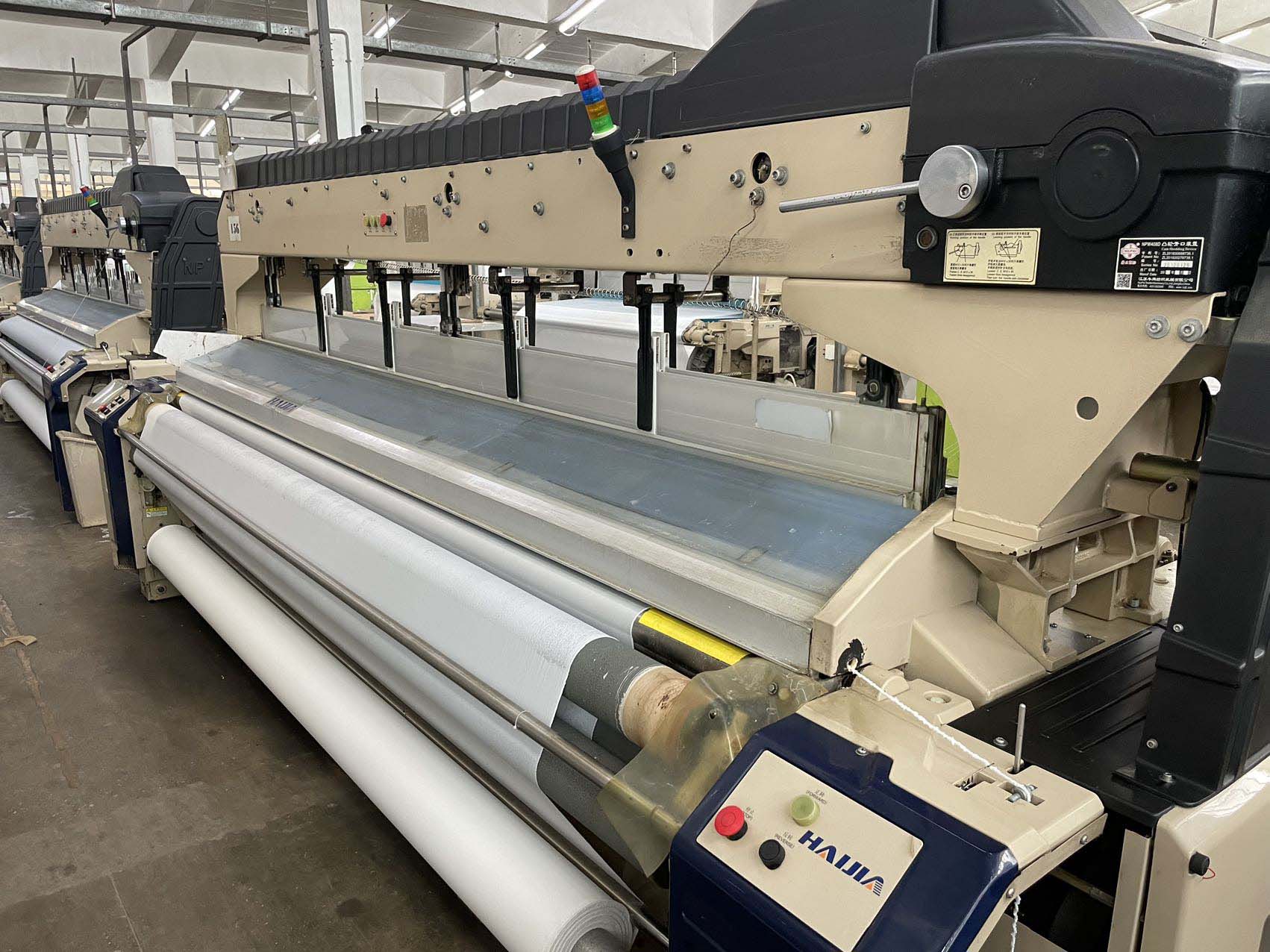
Transitioning to high-speed production for industrial fabrics demands strategic facility planning. You must balance rapid output against steep pneumatic energy expenses. Geotextiles, automotive interiors, and fiberglass require robust weaving solutions. While an Air Jet Loom reaches peak insertion rates up to 2,000 Picks Per Minute, it brings substantial infrastructure demands. Buyers must rigorously evaluate compressors and acoustic isolation before committing capital. You need a clear path to a 24-month return on investment. To avoid costly factory downtime, evaluate effective weaving efficiency rather than just motor speed. Factor in your complete compressed air infrastructure needs early. Sourcing directly from manufacturers guarantees robust after-sales support and genuine parts. This guide explores how you can select the right equipment for technical textiles. You will navigate upfront costs safely and assess fluid dynamics accurately. We will also outline a rigorous factory acceptance test to protect your investment.
Speed vs. Efficiency: Evaluate machines based on effective Picks Per Minute (PPM) rather than just motor RPM; target 90-95% weaving efficiency.
Infrastructure Costs: Air consumption is the hidden variable. Budget for VFD (Variable Frequency Drive) compressors with a 20–30% redundancy buffer.
Sourcing Strategy: Direct-to-manufacturer procurement mitigates the risk of refurbished parts and delayed technical support commonly associated with third-party traders.
Buyers often hesitate at the upfront price tag. Entry-level models start around $15,000. Premium European or Japanese tiers easily exceed $90,000. You must frame this cost against long-term operational throughput. An Air Jet Loom excels in high-volume manufacturing environments. Traditional shuttle options weave slower and demand more manual intervention. High-volume industrial fabric runs achieve a rapid financial return. You typically recover investments within 24 months. Older mechanical alternatives often stretch this recovery timeline to 36 months or more. The rapid payback stems directly from massive production increases. When you double your daily fabric output, the high capital expenditure amortizes quickly. You simply produce more sellable meters per shift.
These machines shine during continuous, high-speed production runs. They handle uniform, high-tensile synthetic yarns perfectly. Polyester, nylon, and fiberglass serve as ideal candidate materials. The pneumatic insertion mechanism propels strong yarns flawlessly across the shed. Yet, we must acknowledge specific material limitations transparently. Do not use this equipment for highly brittle fibers. Ultra-heavyweight raw fibers also struggle in these machines. Hairy materials disrupt the concentrated air stream. Fragile yarns often suffer severe damage from intense pneumatic pressure. This damage leads to frequent weft breakages and unacceptable machine downtime. Always match your specific yarn profile to the pneumatic capabilities. We recommend running small batch tests before scaling production.
Manufacturers frequently advertise RPM (Revolutions Per Minute) prominently. RPM simply measures the main drive motor's raw speed. It does not guarantee your actual daily fabric output. Instead, you must focus entirely on effective PPM. PPM dictates the actual number of weft insertions completed successfully. High-end industrial models typically achieve 1,000 to 2,000 PPM. A machine running at high RPM might suffer frequent yarn breaks. This scenario yields an incredibly low effective PPM. Always demand effective production metrics during your equipment evaluation. Target a sustained weaving efficiency rate between 90 and 95 percent. High efficiency ensures you maximize your factory floor space.
Nozzle architecture directly dictates your maximum fabric width limits. Single-nozzle systems push compressed air from one side only. They face strict physical limits regarding yarn propulsion distance. You can only weave widths up to roughly two meters. This design suits narrow technical tapes or specialized industrial rolls perfectly. Multi-nozzle systems offer significant advantages for wider fabric applications. They utilize intricate sub-nozzle relay systems to carry the yarn further. You can successfully produce wide-width fabrics up to 360cm. This expansion proves critical for manufacturing large-scale geotextiles. Wide home textiles also depend entirely on multi-nozzle configurations.
Modern industrial weaving relies heavily on advanced fluid dynamics. Top manufacturers use CFD (Computational Fluid Dynamics) to optimize nozzles. Precise internal air pathways reduce detrimental internal friction. They minimize wasted compressed air during every single insertion cycle. Kinetic energy drives the weft yarn across the open shed. You need concentrated, highly targeted air blasts to maintain yarn tension. Poorly designed nozzles scatter the air wildly. This scattering increases your energy bills and causes severe fabric defects. Always inquire about the engineering testing behind a manufacturer's nozzle design. Superior fluid dynamics separate premium machines from entry-level copies.
Air consumption remains a major hidden variable in weaving operations. Buyers frequently underestimate the required pneumatic facility infrastructure. Average consumption ranges from 0.4 to 0.8 cubic meters per minute. This baseline assumes a standard operating pressure of 6 to 7 bar. You must calculate your total facility demand carefully. Always implement a strict capacity redundancy rule. Specify factory air compressors featuring a 20 to 30 percent capacity buffer. Simultaneous machine starts create massive, sudden pressure drops across the line. A redundancy buffer prevents these drops from ruining your fabric quality. It also protects your sensitive electronic pneumatic sensors.
Compressor energy dominates ongoing operational expenses. You must seek out energy-efficient integrations proactively. Look for factory setups utilizing Variable Frequency Drive (VFD) compressors. VFDs adjust the motor speed to match actual facility air demand. This prevents wasteful, continuous full-speed motor operation. Advanced looms also feature electronic sequential valve activation systems. They only release air exactly when the yarn passes each sub-nozzle. Combined, these digital technologies reduce total energy consumption by 15 to 30 percent. Lower energy usage accelerates your return on investment significantly. It also helps your facility meet strict environmental sustainability targets.
High-speed pneumatic operations generate intense industrial noise. Operational volumes frequently exceed 90 dB(A) on the factory floor. You must account for strict acoustic isolation in your facility layout. Protect your floor workers utilizing sound-dampening enclosures. Mandatory hearing protection protocols are non-negotiable. Dust management represents another critical environmental control factor. High-speed weaving naturally generates microscopic airborne yarn particulates. These particulates rapidly clog precision sub-nozzles. Clogged nozzles disrupt fluid dynamics and cause immediate weft failures. Install high-capacity ambient filtration systems overhead. Keep the weaving hall meticulously clean to ensure continuous, reliable operation.
Procuring through third-party traders poses significant maintenance risks. Traders often lack deep technical expertise regarding complex pneumatics. Relying on outsourced, third-party technicians leads to prolonged downtime. Complex electronic dobby system failures require highly specialized diagnostic knowledge. Direct manufacturer procurement offers distinct, tangible benefits. You gain immediate access to factory engineers. Manufacturers also provide highly comprehensive operator training programs. Direct technical support minimizes costly interruptions and keeps your factory floor moving. We recommend evaluating manufacturers based on the following critical support criteria:
Verify genuine spare part availability and warehouse proximity.
Confirm direct access to IoT-enabled predictive maintenance software.
Review the depth of their provided operator training curriculum.
Assess warranty coverage for main drive motors and electronic components.
Industrial technical fabrics demand highly precise machinery specifications. Original Equipment Manufacturers (OEMs) offer deep customization options. They can engineer custom sub-nozzle angles for your specific yarn type. They provide positive weft supply systems utilizing precise servo-motor controls. These precise controls handle fragile or variable yarns effortlessly. OEMs also configure specific selvedge formations for your exact needs. You can choose from tuck-in, leno, or thermal selvedge options. A trader typically sells off-the-shelf, generalized configurations. An OEM matches the machinery exactly to your material requirements.
Never finalize a machinery purchase without a rigorous Factory Acceptance Test (FAT). You must verify performance under simulated, real-world production conditions. Ask the manufacturer to run your specific yarn. Follow these specific parameters to guarantee machine readiness before shipping.
Vibration and Noise: Assess the frame stability at peak PPM. Ensure the manufacturer uses heavy-duty cast-iron or steel. Excessive vibration degrades the expected 15 to 20-year machinery lifespan.
Fabric Quality: Inspect the woven sample meticulously. Look for start-up marks or broken picks. Verify precise warp tension control during sudden emergency stops.
Software Verification: Test the digital control panel thoroughly. Ensure automated defect detection sensors operate correctly. Confirm the software integrates smoothly into your existing factory ERP systems.
Inspection Parameters Chart
Inspection Area | Target Metric / Benchmark | Warning Signs to Avoid |
|---|---|---|
Frame Stability | Cast-iron base; minimal movement at 1,500+ PPM | Visible swaying; excessive harmonic vibration |
Fabric Output | Zero start-up marks; flawless selvedge edge | Inconsistent warp tension; frequent broken picks |
Pneumatic System | Stable 6-7 bar pressure; VFD compressor integration | Pressure drops during multi-machine startup |
Digital Integration | Seamless ERP connectivity; active IoT sensors | Delayed sensor feedback; locked proprietary software |
Procuring industrial weaving equipment requires holistic, long-term facility planning. It goes far beyond simply buying a standalone machine. You are integrating a high-performance pneumatic system into your production floor. Focus on long-term operational efficiency rather than just the cheapest initial sticker price. Evaluate your compressor capabilities, maintenance access, and overall energy strategy thoroughly. Establish direct relationships with reliable manufacturers to ensure continuous operational uptime. We recommend consulting directly with factory engineers. Run a customized lifecycle cost and air-consumption audit based on your specific fabric weight. Understand exactly how much infrastructure you need before placing an order. Protect your investment by prioritizing quality, robust fluid dynamics, and a comprehensive Factory Acceptance Test.
A: RPM measures the main motor's rotational speed. PPM (Picks Per Minute) measures the actual number of weft yarns successfully inserted per minute. Buyers must evaluate machines based on effective PPM. High RPM coupled with frequent yarn breaks results in remarkably low actual production output.
A: Standard industrial operations require 6 to 7 bar of continuous pressure. Each machine consumes roughly 0.4 to 0.8 cubic meters of air per minute. Consumption varies depending on the fabric width and nozzle configuration. Always include a 20 to 30 percent compressor capacity redundancy buffer.
A: No. They excel with uniform synthetics, fiberglass, and standard cotton. However, they struggle with highly abrasive, hairy, or fragile yarns. These complex fibers can easily disrupt pneumatic air flow. They often break under high-velocity air pressure, leading to frustrating machine downtime.
A: With rigorous preventive maintenance, top-tier commercial models operate reliably for 15 to 20 years. Maintenance must include cleaning sub-nozzles, calibrating sensors, and ensuring a clean, moisture-free compressed air supply. Heavy cast-iron or steel frames ensure critical long-term structural stability.